
Last updated November 15, 2026
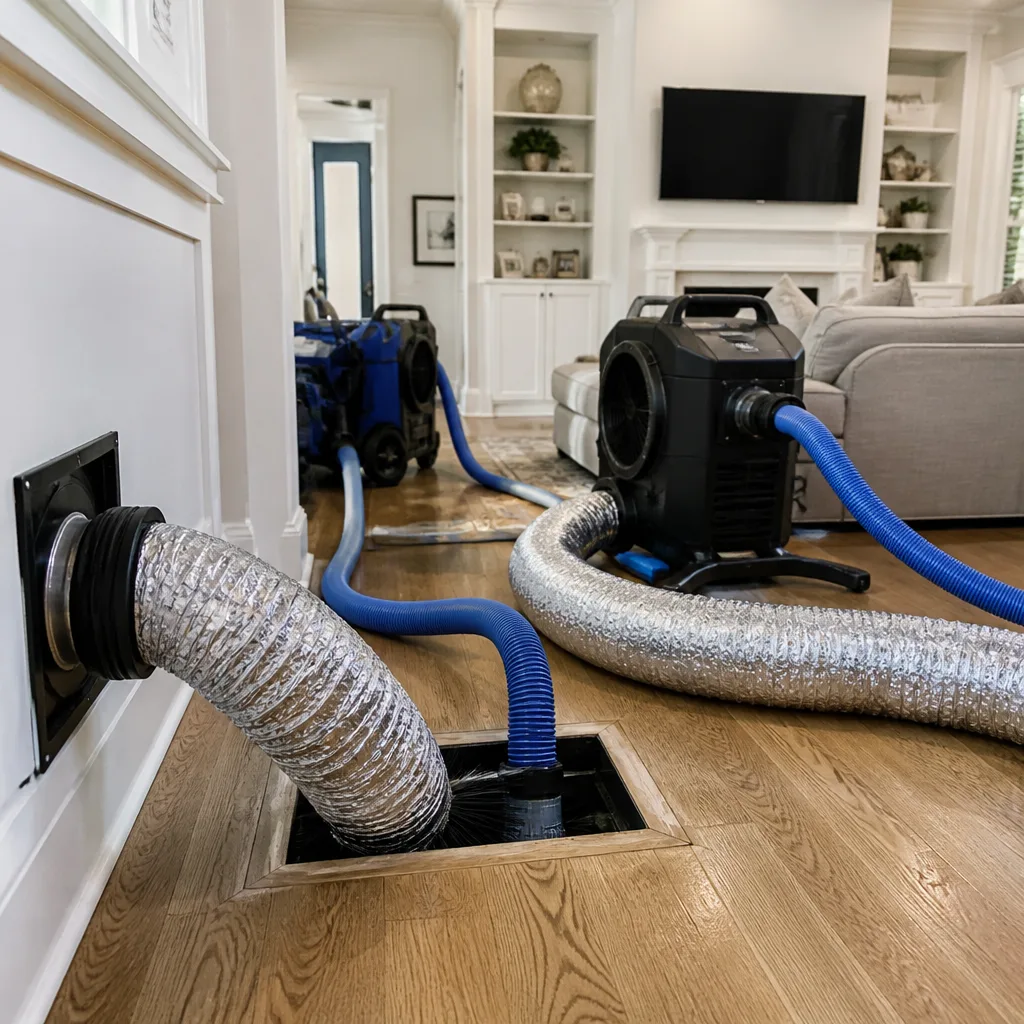 Whole-home duct cleaning
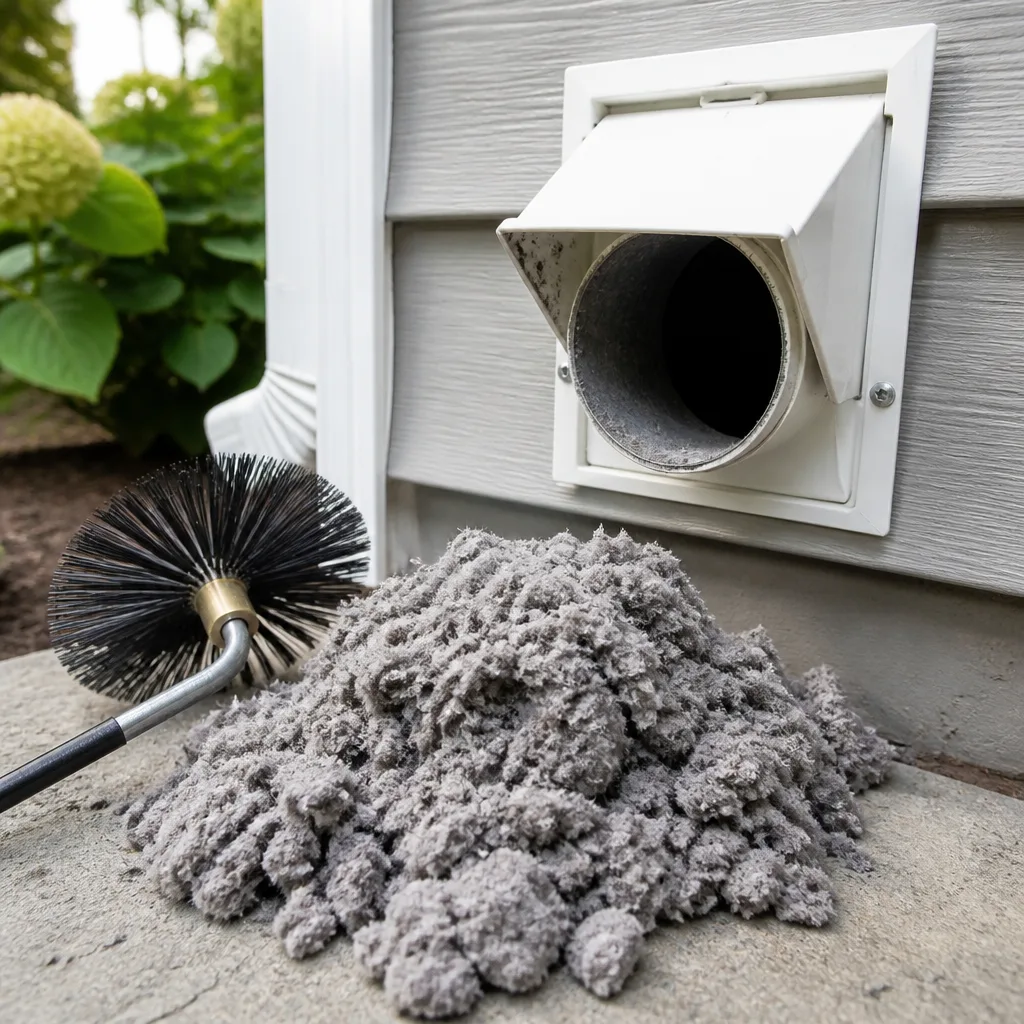 Dryer vent cleaning
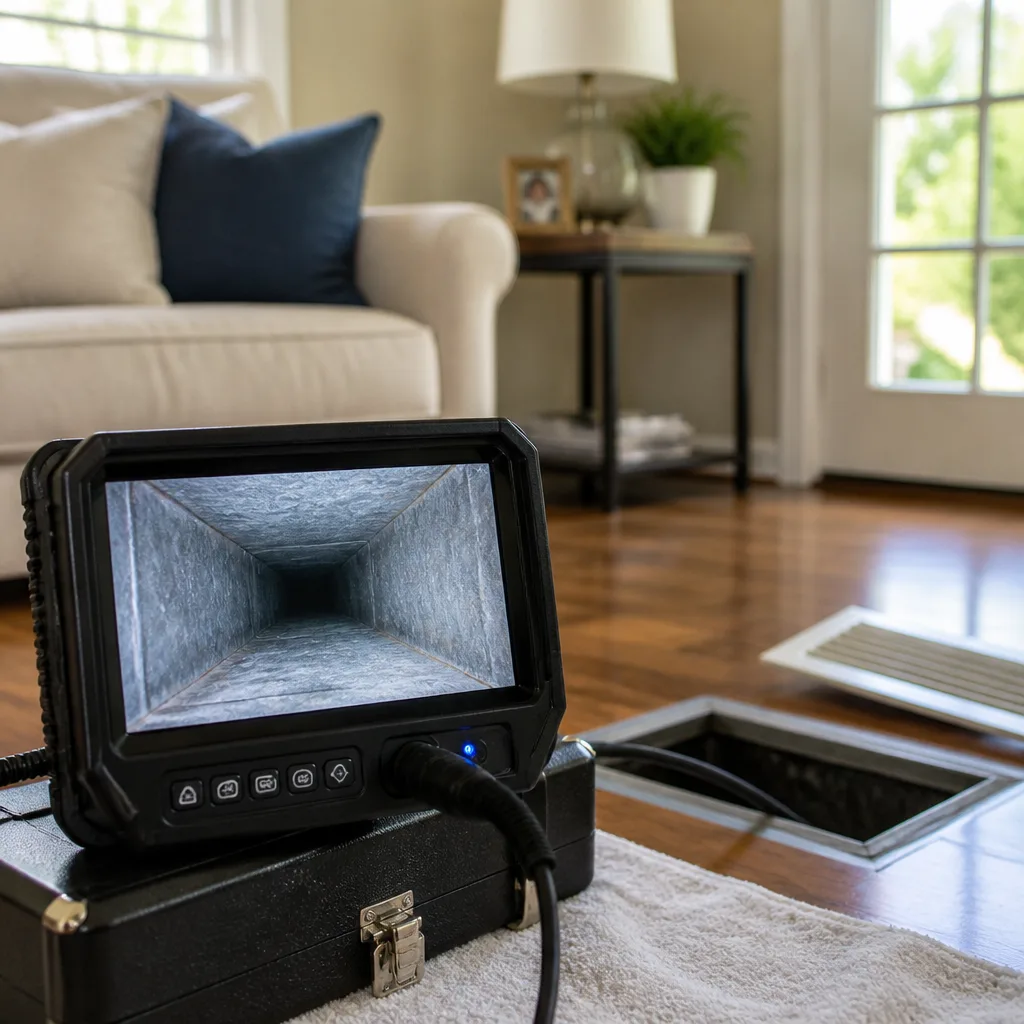 Camera inspection
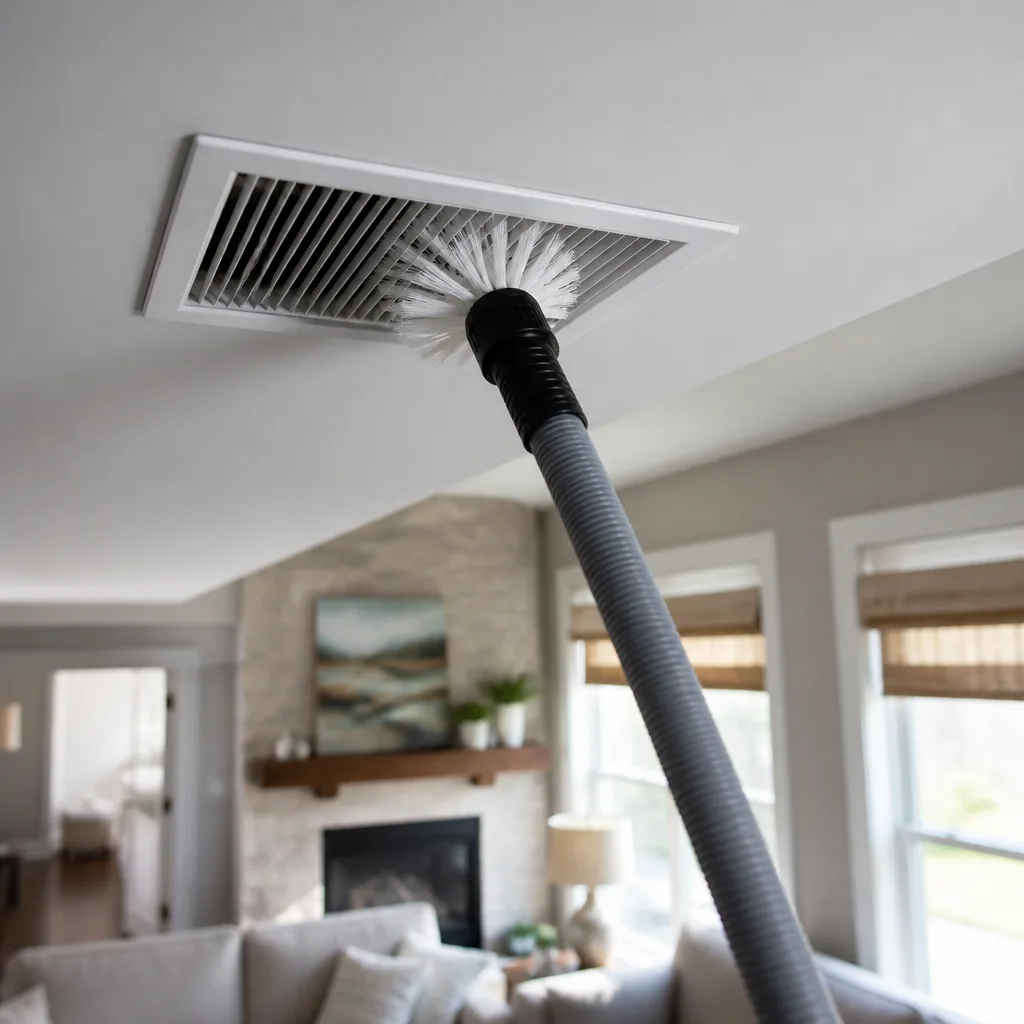 Sanitizing & deodorizing
Whole-system duct and dryer vent check with before-and-after photos - you see exactly what came out of your vents
That "$99 whole-house special" is a bait ad - the real number appears once they are in your hallway, or the "clean" is a shop-vac at the register. We photograph the inside of your ducts before and after instead.
Air Duct Cleaning Maintenance Schedule: What to Do and When
The standard “clean your ducts every three to five years” advice was written for a generic American house. It doesn’t account for a West Jordan home sitting in a high-desert valley where dust arrives on the wind, winter air runs dry enough to crack wood trim, and a whole generation of homes went up with fiberglass duct board rather than sheet metal. Two houses on the same street can need completely different schedules. What follows is a maintenance framework built around the variables that actually drive contamination rates here: construction type, occupancy, pets, allergy sufferers, and duct material. You’ll get a tiered schedule you can match to your own home, a separate timeline for your dryer vent, and a filter trick that tells you when to move your cleaning date forward.
Quick Answer
Most West Jordan homes should plan on professional duct cleaning every three to five years, but heavy shedders, recent renovators, and homes with allergy sufferers often need it every two to three years. Dryer vents run on a faster clock entirely: inspect annually and clean every one to two years. Filter replacement frequency is your best early warning sign that the schedule needs to move up.
Styles & brands we work with
- Whole-home duct cleaning
- Dryer vent cleaning
- Camera inspection
- Sanitizing & deodorizing
Table of Contents
- Why West Jordan’s Climate Changes the Math
- A Tiered Schedule Built Around Your Home
- Duct Material and Home Age: What You’re Actually Cleaning
- Your Annual Homeowner Checklist
- What Only Professional Equipment Can Do
- Dryer Vent: The Separate and More Urgent Timeline
- Using Filter Intervals as a Leading Indicator
- Common Mistakes to Avoid
Why West Jordan’s Climate Changes the Math
National duct cleaning intervals assume a house that breathes moderate, humid air most of the year. West Jordan doesn’t offer that. The valley sits in a high-desert basin with low relative humidity, dry summers, and a winter pattern that traps cold air and particulate matter close to the ground during inversion periods. When a valley holds its air in place for days, everything that settles on rooftops and landscaping also settles into the outdoor air your system draws in.
Here’s what that means in practical terms for a West Jordan home:
- Dust loads arrive faster. Fine particulate from bare ground, dry landscaping, and construction activity around the valley gets pulled into return air and deposited on duct walls. In humid climates, some of that material clumps and stays put; dry air keeps it loose and mobile, so it recirculates through the supply side.
- Dry winters mean static and fine debris. Low humidity raises static charge inside duct runs, which makes light dust cling to duct surfaces and register grilles. A grille that fuzzes over within weeks of cleaning is often a humidity story, not a cleaning failure.
- Inversion season concentrates what you breathe. During winter inversions, outdoor air quality degrades and windows stay shut. Your HVAC system is running a closed loop for weeks at a time, recirculating whatever is already in the ducts with no fresh-air flush to dilute it.
- Heating season is long. A furnace that runs from fall into spring moves a large volume of air through the same ductwork for months. Every hour of runtime is a dust-deposition event.
None of this means every West Jordan home needs annual duct cleaning. It means the baseline interval written for a temperate, humid climate should be shortened for many homes here, and the rest of this guide is about figuring out whether yours is one of them. If you want the foundational version of the process first, start with our air duct cleaning page and come back here for the timing.
A Tiered Schedule Built Around Your Home
Instead of one universal rule, we sort homes into three tiers based on the conditions that actually accelerate contamination. Find the tier that matches your household and use it as your starting interval. Then adjust with the filter indicator in a later section.
Tier 1: Standard Household (every 4 to 5 years)
This is the smallest group in West Jordan, but it exists. You qualify if you have no pets, no allergy sufferers in the home, no recent renovation, a home built after the mid-1990s with sealed sheet metal ductwork, and filters that still look reasonably clean at the two-month mark. Even here, inversion seasons mean the ducts aren’t truly idle, so five years is the outer edge rather than a comfortable rule.
Tier 2: Elevated Load (every 2 to 3 years)
Most West Jordan homes land here. You’re in this tier if any two of the following apply:
- One or more pets, especially dogs that shed or cats with fine undercoat
- A household member with allergies, asthma, or sensitivity to dust
- A home built before the mid-1990s, when fiberglass duct board and less-sealed joints were common
- Any renovation, remodeling, or drywall work in the past two years
- A filter that visibly loads up within one to two months of replacement
- Persistent dust settling on surfaces faster than you can keep up with
If you have a dog and a family member with seasonal allergies, don’t wait for a second criterion. Pets plus allergies alone justifies the two-year end of this range, especially in a valley where the outdoor air gives your system plenty to work with.
Tier 3: High Load (every 12 to 18 months)
A smaller group, but the one where ignoring the schedule has real consequences. You’re here if you have multiple heavy-shedding pets, a recent major renovation that generated drywall dust or sawdust in the return air, visible mold or musty odor traced to the duct system, or a household member with a diagnosed respiratory condition. Homes recovering from water damage or pest intrusion also belong in this tier for at least the first cleaning cycle. After the first thorough cleaning, you can often step down to Tier 2 once the source of the load is gone.
Whichever tier fits, the schedule is a starting point, not a fixed calendar. A West Jordan home that adds a puppy and finishes a basement remodel in the same year has moved up a tier whether or not the calendar says so.
Duct Material and Home Age: What You’re Actually Cleaning
The type of ductwork in your West Jordan home determines both how fast it soils and what a cleaning can realistically accomplish. This is where the age of the house matters more than the age of the homeowner.
Sheet metal ductwork (rigid galvanized steel)
The cleanest scenario. Smooth interior surfaces release debris well under rotary brush agitation, and joints can be sealed. Rigid metal ductwork in a well-sealed system can go the full four to five year interval in a low-load home. The weak points are the joints, the boots at each register, and any flex connector between trunks. Debris collects at the transitions and at the bottom of vertical runs.
Fiberglass duct board
Common in homes built from the 1970s through the 1990s across the Salt Lake Valley. The interior surface is fibrous and slightly porous, which means it holds fine dust more tenaciously than metal. Brush agitation has to be controlled so the lining isn’t damaged, and the material itself can shed fibers over time in a dry climate. If your West Jordan home has duct board, lean toward the shorter end of your tier interval and make sure whoever cleans it knows how to work with the material rather than treating it like sheet metal.
Flexible duct runs
Widely used for the final connections to registers. Flex duct has a corrugated interior that traps dust in the ridges, and the sagging sections collect debris at low points. Aggressive brushing can tear the liner, so cleaning has to be done with the right tooling and moderate agitation. Sagging flex runs are also a repair issue, not just a cleaning issue.
What home age tells you
- Pre-1980: expect a mix of metal trunks and duct board, likely with some retrofitted flex. More joints, more leakage, faster soil accumulation.
- 1980s to 1990s: the duct board era. Shorter intervals, careful agitation.
- 2000s and later: better sealing and more metal, but still vulnerable to dust loading in a high-particulate valley.
If your inspection turns up disconnected runs, crushed flex, or torn duct board, cleaning alone won’t solve the problem. That’s where our Duct Cleaning West Jordan approach to duct repair comes in: we fix what we find rather than cleaning around a compromised system and leaving you to discover it later.
Your Annual Homeowner Checklist
Some maintenance is yours to do, and it’s the part that keeps the professional interval from shortening. Do these once a year, ideally in early fall before heating season starts in earnest. This is a task list, not a duct cleaning guide: none of it requires opening the duct system itself.
- Replace the HVAC filter on schedule. Check it monthly during heavy-use months and replace at the interval the manufacturer specifies. Note how loaded it is each time, because that observation feeds the indicator method below.
- Vacuum the return grilles. A grille clogged with dust and pet hair restricts return airflow and pushes dust past the filter into the system. Remove the grille, vacuum both faces, and reinstall it.
- Remove obstructions from supply registers. Furniture, rugs, and curtains pressed against registers reduce airflow and cause dust to settle in the run. Give every supply register clear space.
- Check accessible duct connections. Look at the joints you can reach in an unfinished basement or utility area. Listen for whistling or feel for air escaping at seams. You’re looking for obvious disconnections, not diagnosing the whole system.
- Inspect the dryer vent exterior termination. Check that the outdoor flap opens freely and that no lint is visible around the hood. This is a look, not a cleaning.
- Clean around the outdoor condenser unit. Clear leaves, dry grass, and debris from around the unit so airflow isn’t restricted. Dust pulled in through a clear unit loads your system more predictably.
- Note any changes in the house. New pet, new baby, renovation planned, water damage, musty smell. Write it down so you know when to revisit your tier.
None of this replaces professional cleaning, and none of it lets you skip the professional interval. But a home where the filter is changed on time and the returns aren’t clogged stays cleaner longer, and that gives you room at the longer end of your tier.
What Only Professional Equipment Can Do
Here’s where most West Jordan homeowners get stuck: nobody hands you a tool that lets you look inside the ducts. A flashlight through a register shows you the first six inches and nothing else. What’s actually happening in the trunk lines, the plenum, and the boots hidden behind finished walls is invisible from the living room.
Professional equipment serves three distinct purposes that no homeowner tool can replicate:
1. Agitation that reaches the duct walls
Dust bonds to duct surfaces. Vacuum alone pulls the loose material out of the air stream but leaves the film on the wall, which reseeds the system within months. Rotary brush agitation physically scours the interior surfaces. We use Rotobrush for exactly this reason: it’s purpose-built for duct interiors, with the brush heads and reach to clean the run rather than just the register. In our experience, the difference between a brushed duct and a vacuumed duct shows up six to twelve months later when the dust settles again.
2. HEPA-rated extraction under negative pressure
Cleaning a duct without controlled extraction just redistributes the dust into your house. Professional systems pull the loosened debris out under negative pressure through HEPA-rated filtration, so what comes off the walls goes into a collection unit, not into your living room air. We run Nikro HEPA extraction equipment for this stage, and it’s the same class of equipment professional indoor air quality contractors use.
3. Containment and air scrubbers
On jobs where the load is heavy, or where a renovation has left fine drywall dust throughout the system, we set up Abatement Technologies filtration and containment equipment to keep the work area clean while the job runs. This is the layer most low-bid crews skip because it takes equipment and time.
If you’re already thinking about filtration upgrades, Honeywell, Aprilaire, and Guardsman media filters are the names worth knowing. A higher-efficiency filter catches more before it reaches the ducts, but it needs a system that can handle the airflow restriction. That’s a conversation worth having on site, not a product you swap in blind.
Dryer Vent: The Separate and More Urgent Timeline
Your dryer vent is not part of your HVAC duct system and should never share its schedule. HVAC ducts carry air you breathe; the dryer vent carries hot, moisture-laden air plus lint, and lint is a fuel source. A clogged dryer vent is a fire-safety issue, not a housekeeping issue, and it runs on a much shorter clock than the rest of your ductwork.
Our recommended timeline:
- Inspect every 12 months. This applies to every household. Check the exterior termination flap for lint buildup, and confirm the flap opens freely during a drying cycle.
- Clean every 12 to 24 months. Lean toward the annual end if your household runs multiple loads per week, has a long or winding vent run, uses the dryer heavily for towels or pet bedding, or vents through a route with several elbows.
- After any dryer performance change. Clothes taking longer than one cycle to dry, the dryer cabinet feeling hot to the touch, or the exterior flap not opening during the cycle all warrant an inspection before the schedule comes around.
A dryer that’s heating but not drying efficiently is often pushing air through a partially clogged vent. If the vent is the cause and it’s been ignored for a while, the fix may also involve replacing crushed or kinked vent sections, which is why we treat dryer vent work as its own service rather than a checkbox afterthought. If you haven’t looked at yours in a couple of years, our dryer vent cleaning service covers inspection and cleaning in one visit.
Using Filter Intervals as a Leading Indicator
This is the simplest diagnostic in the whole guide, and almost nobody uses it. Your filter replacement interval is a direct readout of how much particulate is moving through your system. When it starts shrinking, your ducts are telling you the cleaning date needs to move up.
How to read it
Establish your baseline. Note the date you replace the filter and the date it’s visibly loaded with a mat of gray dust and hair. If your baseline is two to three months, your system is in reasonable shape and you can hold your tier interval. Track it for a full year so you account for the heating season, when most homes load filters faster.
Then watch for these shifts:
- The filter loads noticeably faster than your baseline. If a filter that used to last two months now looks loaded at one, the system is pulling more material from somewhere. Often that somewhere is the ducts, though it can also be a compromised filter box or a return leak drawing dusty attic or crawlspace air.
- You’re seeing matted gray-gray fuzz early. Fiberglass and duct-board dust has a slightly fuzzy, fibrous look in the filter that’s different from ordinary household dust. If you notice that, it’s a signal the duct interior itself is contributing.
- The filter loads fast even after you improved filtration. Upgrading to a Honeywell or Aprilaire media filter should reduce what reaches the duct surfaces, not increase what lands on the filter face. If the load gets heavier after an upgrade, something else is going on, and it needs an on-site look.
Keep a small note on the filter frame with the install date. That one habit turns filter changes from a chore into a diagnostic, and it’s what tells you to shorten your West Jordan interval before the calendar does.
Frequently Asked Questions
Most West Jordan homes need professional cleaning every three to five years, with homes that have pets, allergy sufferers, or a recent renovation needing it every two to three years, and high-load homes needing it every 12 to 18 months. The valley’s dry air and winter inversion seasons push many homes toward the shorter end. Call (888) 351-4348 for an exact assessment of your ducts.
Yes, for most homes. The valley’s dry climate keeps dust loose and mobile rather than letting it clump, winter inversions keep windows shut and the system recirculating for weeks, and a long heating season means more air passes through the ductwork than in a milder climate. Homes here typically sit one tier shorter than the national guideline suggests.
Your filter replacement interval is the clearest early sign. If a filter that used to last two months now loads in one, or you’re seeing visible dust fuzz on surfaces within days of cleaning, the system is likely pulling material from compromised ducts. Persistent musty odor, visible dust streaks at registers, and uneven airflow between rooms are also signals. Call (888) 351-4348 to get a professional assessment before deciding.
No. The dryer vent should be inspected annually and cleaned every 12 to 24 months, which is much more frequent than HVAC duct cleaning. Lint accumulates faster, and a clogged dryer vent is a fire-safety concern rather than an air-quality one. Heavier laundry use and longer vent runs push you toward the annual end.
Yes. Homes built before the mid-1990s often have fiberglass duct board with more joints and porous interior surfaces, which holds fine dust more tenaciously than sheet metal. Homes with fully sealed metal ductwork can often hold longer intervals, while older homes in West Jordan generally need to follow the shorter end of their tier.
Vacuuming grilles and changing filters helps, but it doesn’t reach the duct interior. Dust bonded to duct walls needs brush agitation, and loosened debris needs HEPA-rated extraction under negative pressure so it doesn’t redistribute into your living space. There’s no homeowner tool that does both. Call (888) 351-4348 for a free estimate on the professional cleaning your home actually needs.
See the difference
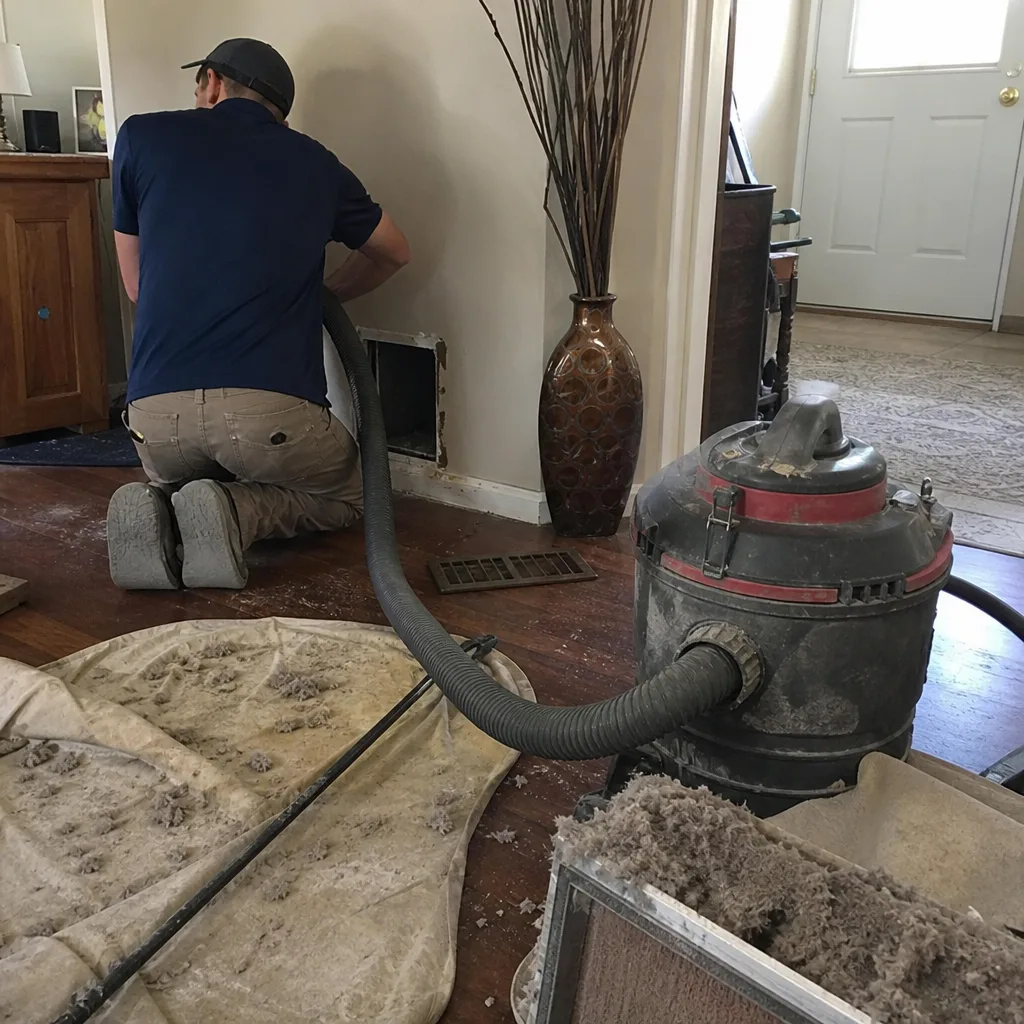 Before
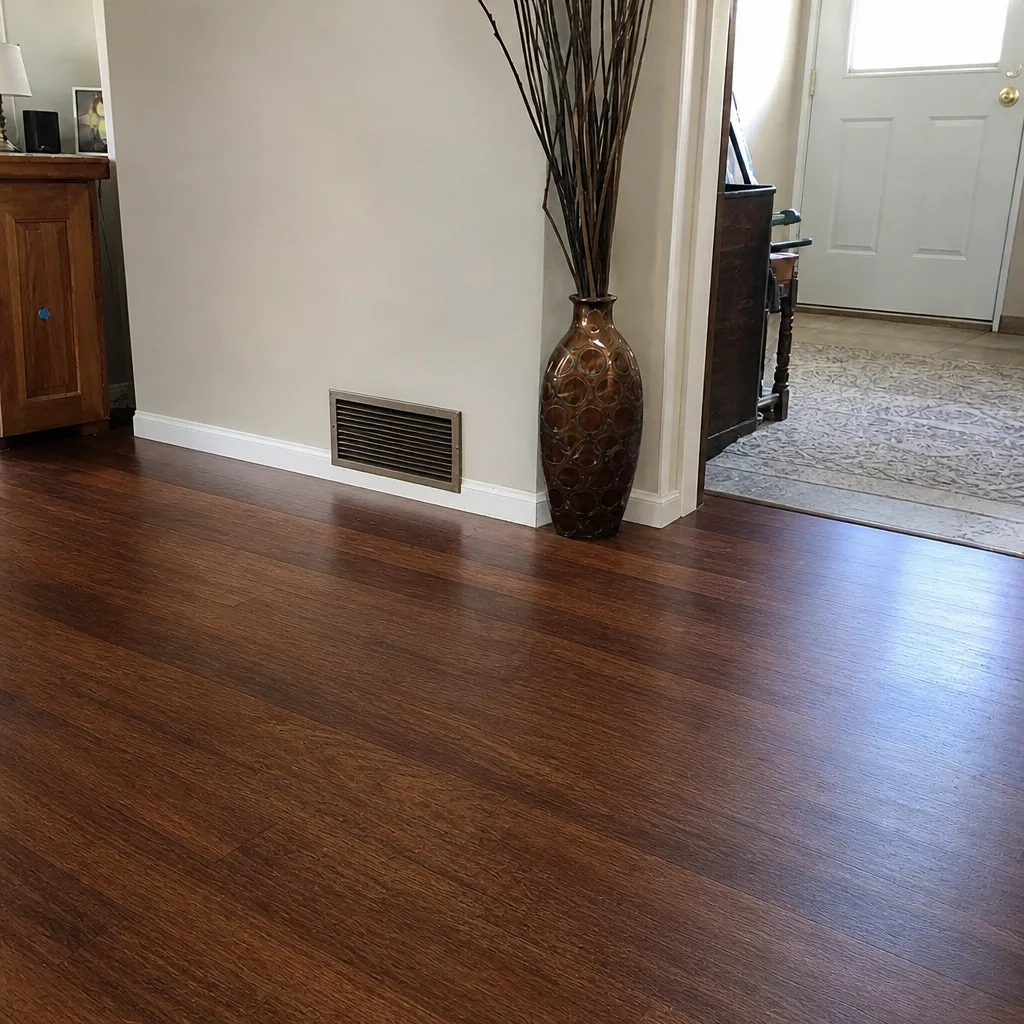 After
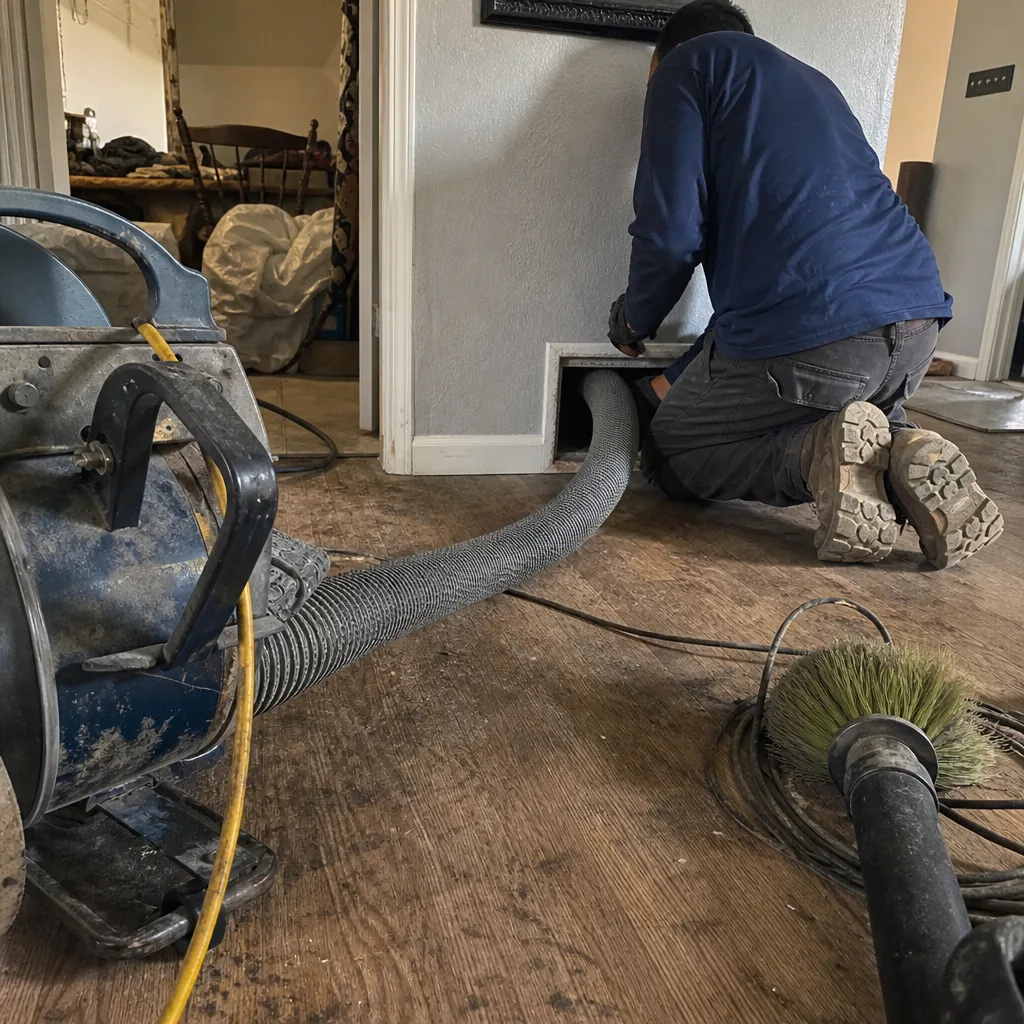 Before
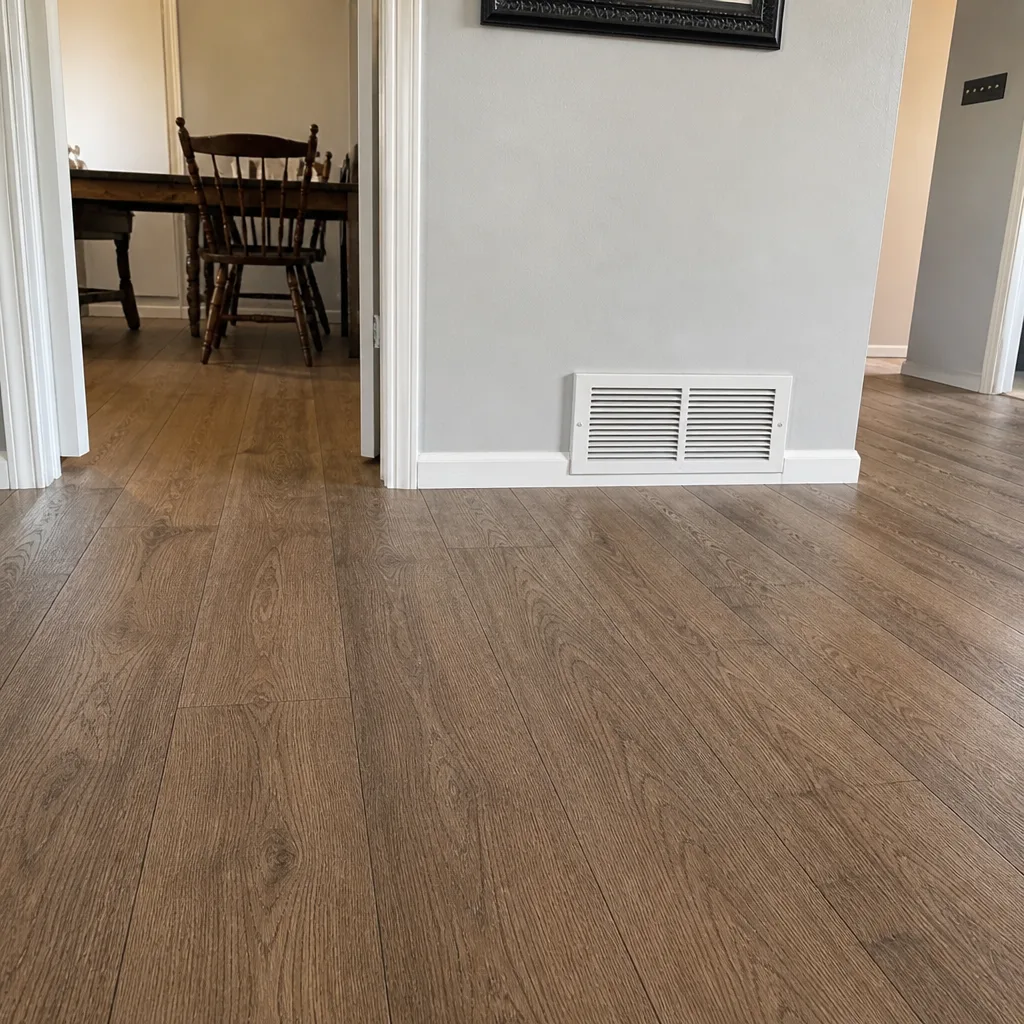 After
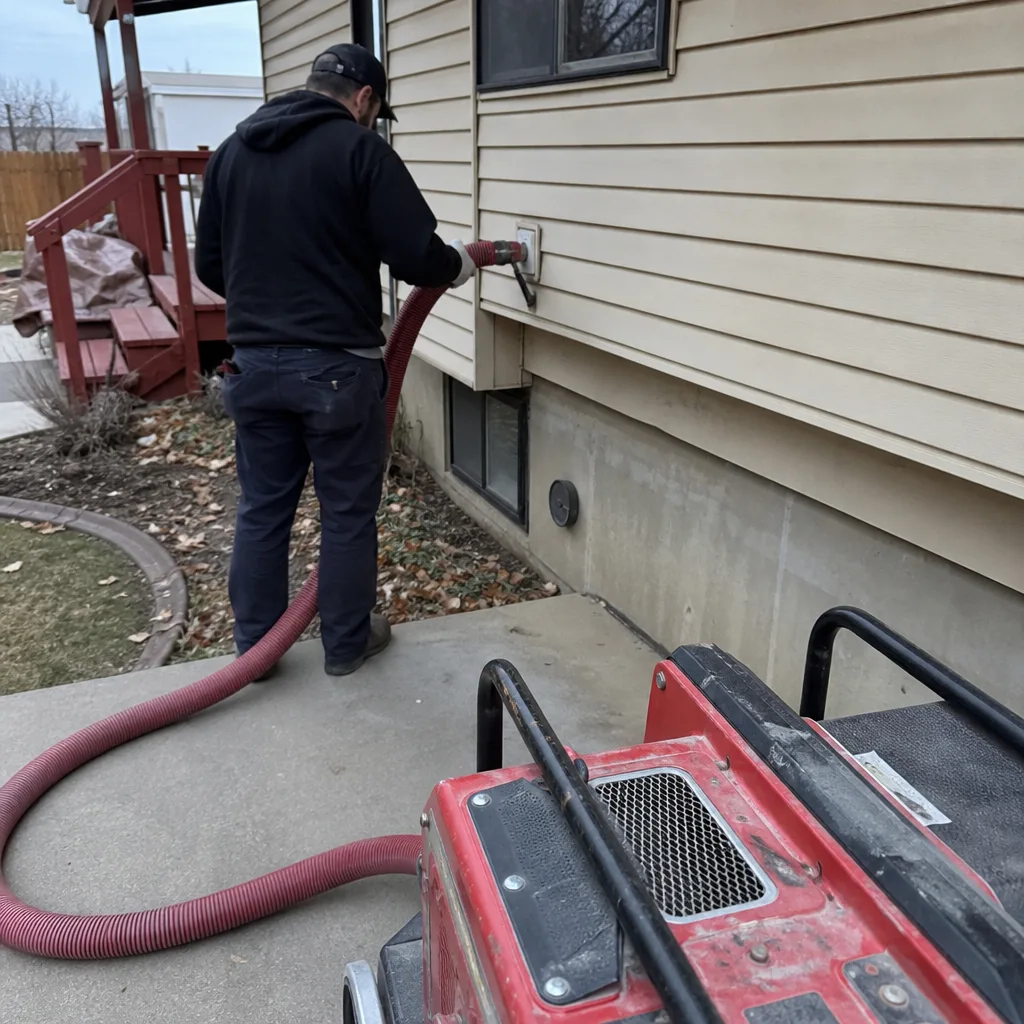 Before
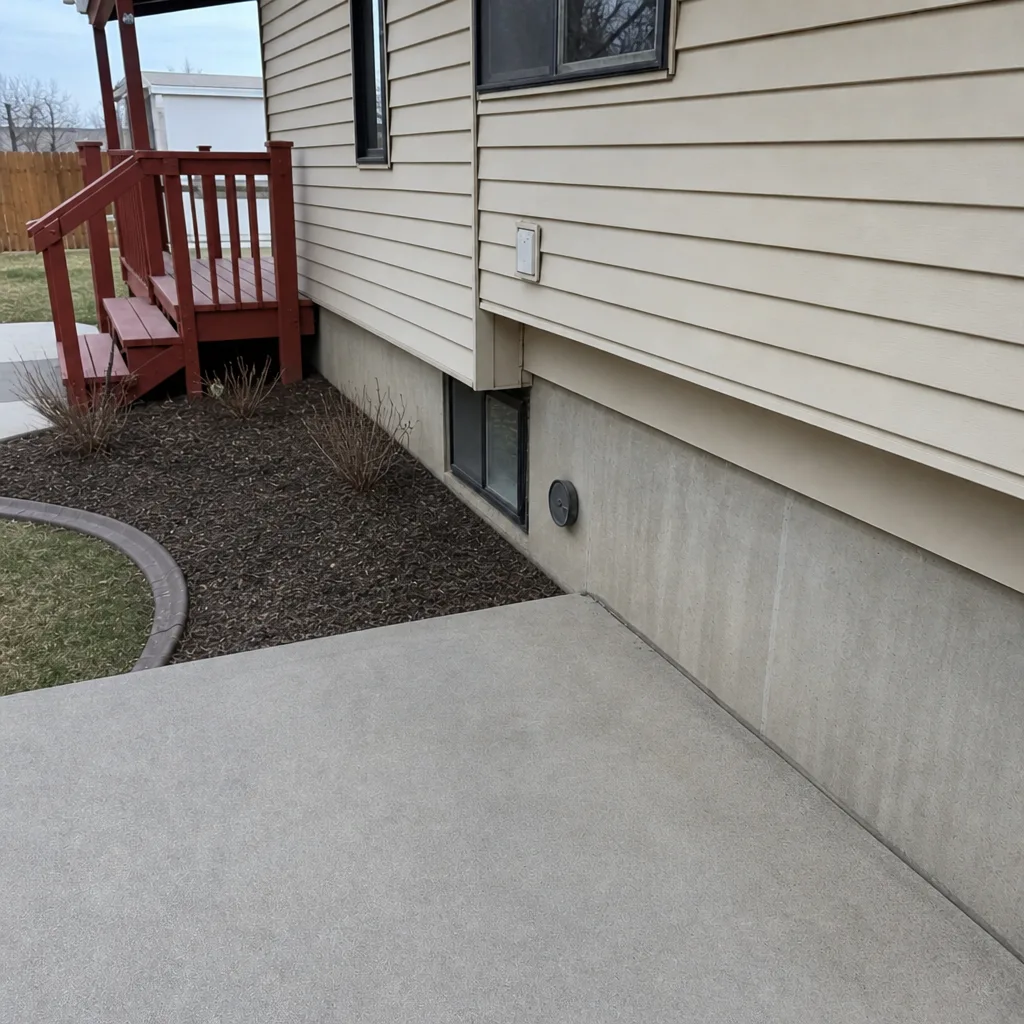 After
Common Mistakes to Avoid
- Following the national “every three to five years” rule without checking your own conditions. That advice assumes a temperate, humid climate. A West Jordan home with a dog, a recent remodel, and winter inversions is not that house. Adjust your interval to your tier, or you’ll wait too long.
- Cleaning ducts without also cleaning the dryer vent at the right interval. These run on separate clocks. A homeowner who cleans ducts on schedule and ignores the dryer vent for years may be facing the more serious of the two risks without realizing it.
- Treating a filter that loads fast as a reason to buy a thicker filter instead of investigating. Faster filter loading is a diagnostic signal. Upgrade the filter if the system supports it, but first find out why the load increased. A higher-efficiency filter on compromised ducts just catches the symptom.
- Ignoring musty odor or visible dust at the registers. These point to a duct interior problem that cleaning or repair may solve. Dust accumulating faster than you can wipe it away is a system issue, not a housekeeping failure.
- Letting a renovation finish without a duct cleaning. Drywall dust and sawdust are fine, mobile, and easily drawn into return air. A West Jordan home after a basement finish belongs on the high-load schedule at least once before dropping back.
- Assuming a vacuumed duct is a cleaned duct. Without brush agitation, dust bonded to the duct wall is left in place and reseeds the system within months. If the crew shows up with a shop vac and a hose, ask whether they’re brushing the duct interior. If the answer isn’t specific, that’s the answer.
- Skipping the annual inspection because the cleaning date hasn’t come around. The inspection isn’t a cleaning. It’s how you catch a crushed flex run, a disconnected boot, or a clogged dryer vent between scheduled cleanings. Call (888) 351-4348 if you haven’t had your system looked at in a while.
When to Call a Professional
Some signs are your schedule doing its job; others mean you should move the date up or get an inspection now. Call a professional if you notice any of the following: musty or “dirty sock” odor when the system kicks on, dust settling on furniture within days of a cleaning, visible dust trails or dark streaks around supply registers, uneven airflow between rooms, a filter that’s loading far faster than your baseline, a household member whose allergy symptoms improve away from home, a recent renovation that produced drywall dust, or a dryer that takes longer than one cycle to dry clothes. Any of these: call (888) 351-4348. Duct Cleaning West Jordan offers free estimates in West Jordan – call (888) 351-4348. We answer 24/7. Fast dispatch from 7am to 7pm, Sunday through Friday.
The Bottom Line
The best maintenance schedule for your home isn’t a number pulled from a national article. It’s a tier built around your pets, your household’s health, your home’s age, and the type of ductwork behind your walls, adjusted whenever your filter starts loading faster than it used to. For most West Jordan homes, that puts HVAC cleaning on a two- to five-year cadence and dryer vent cleaning on an annual-to-biennial one. Check your filter interval this month. If it’s running shorter than it did last year, you’ve found your next cleaning date. Call (888) 351-4348. We answer 24/7. Fast dispatch from 7am to 7pm, Sunday through Friday. If you’ve reworked your filter interval and still aren’t sure when to move, look up West Jordan in our service pages and get a free estimate.
Written by the team at Duct Cleaning West Jordan.