
Last updated November 15, 2026
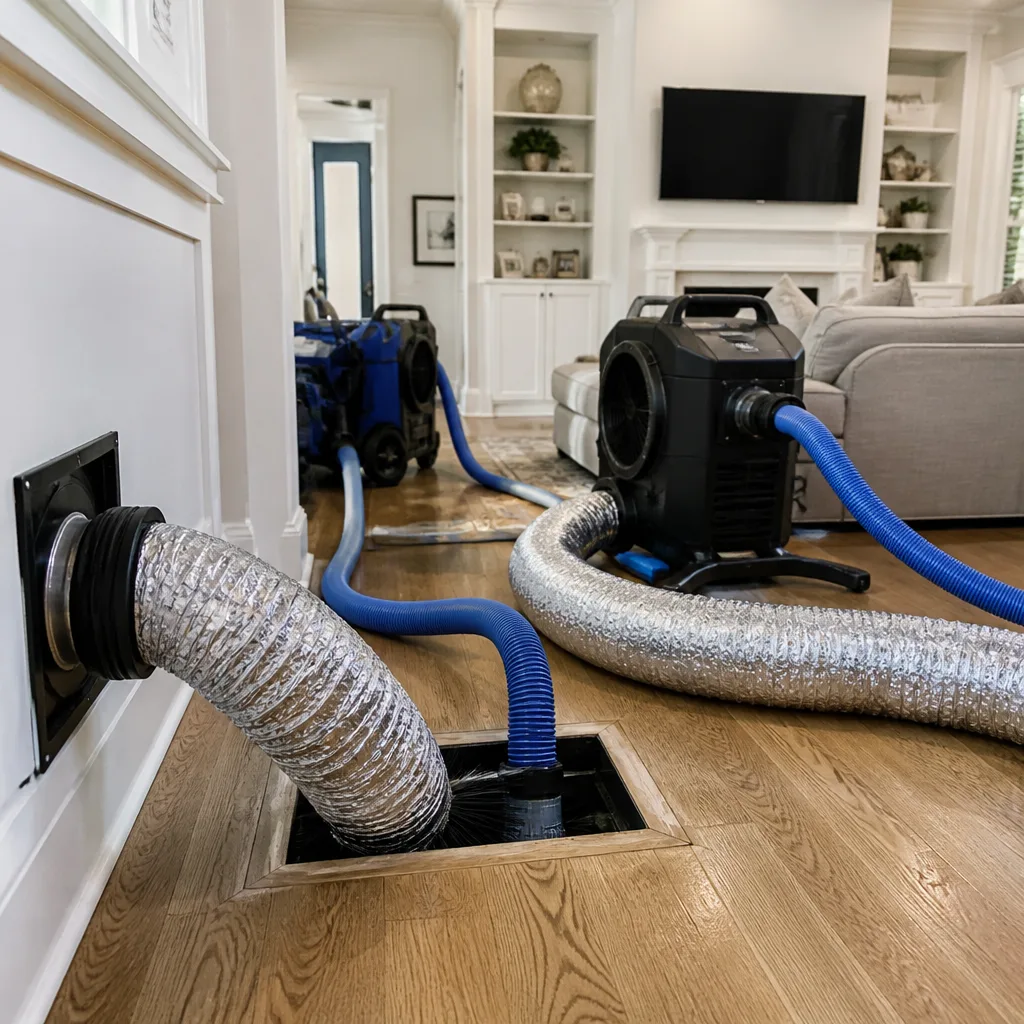 Whole-home duct cleaning
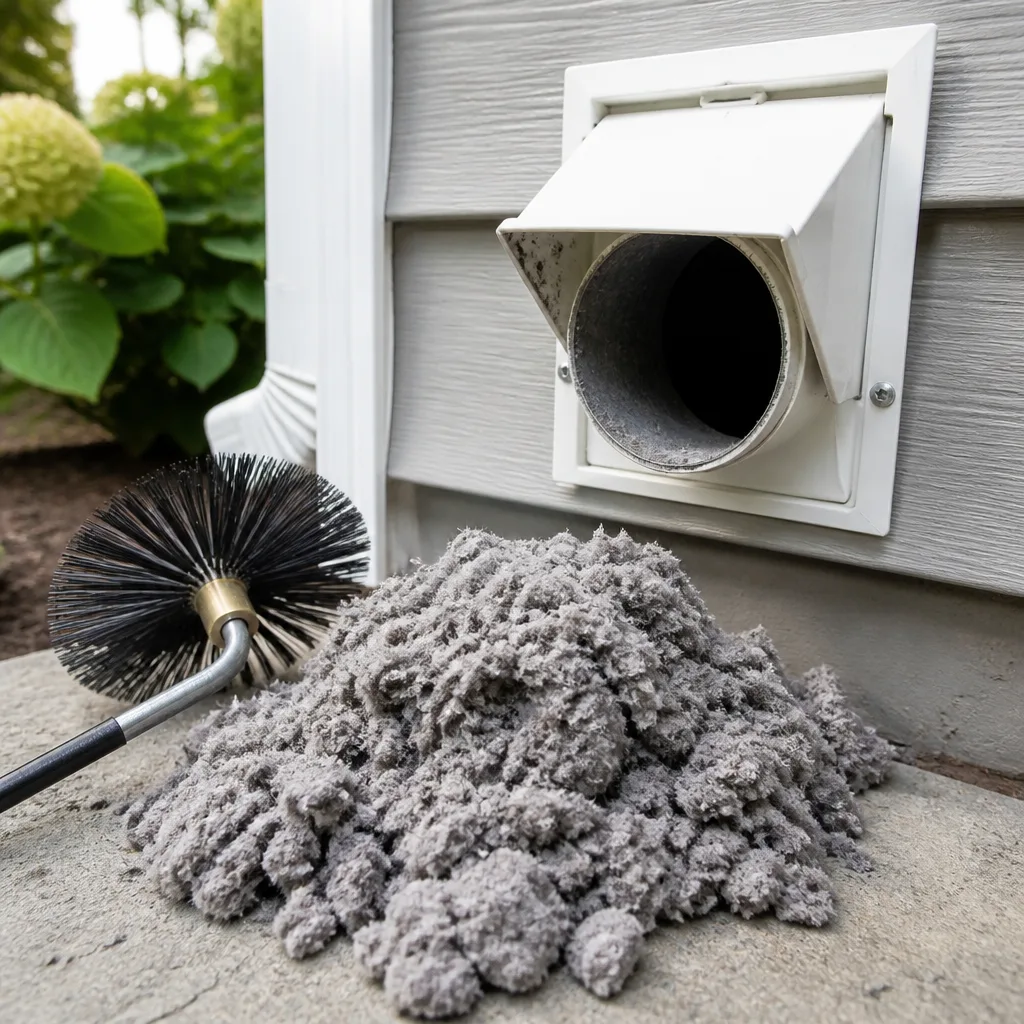 Dryer vent cleaning
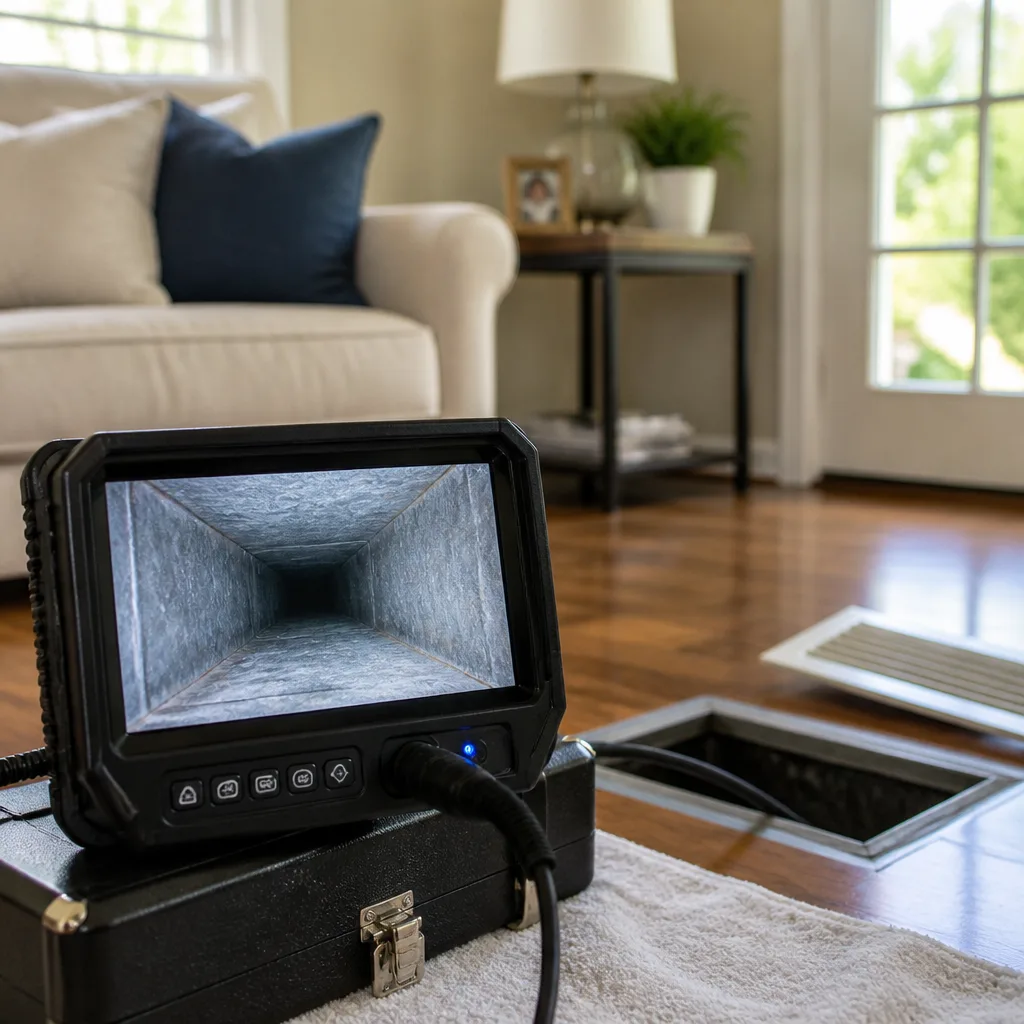 Camera inspection
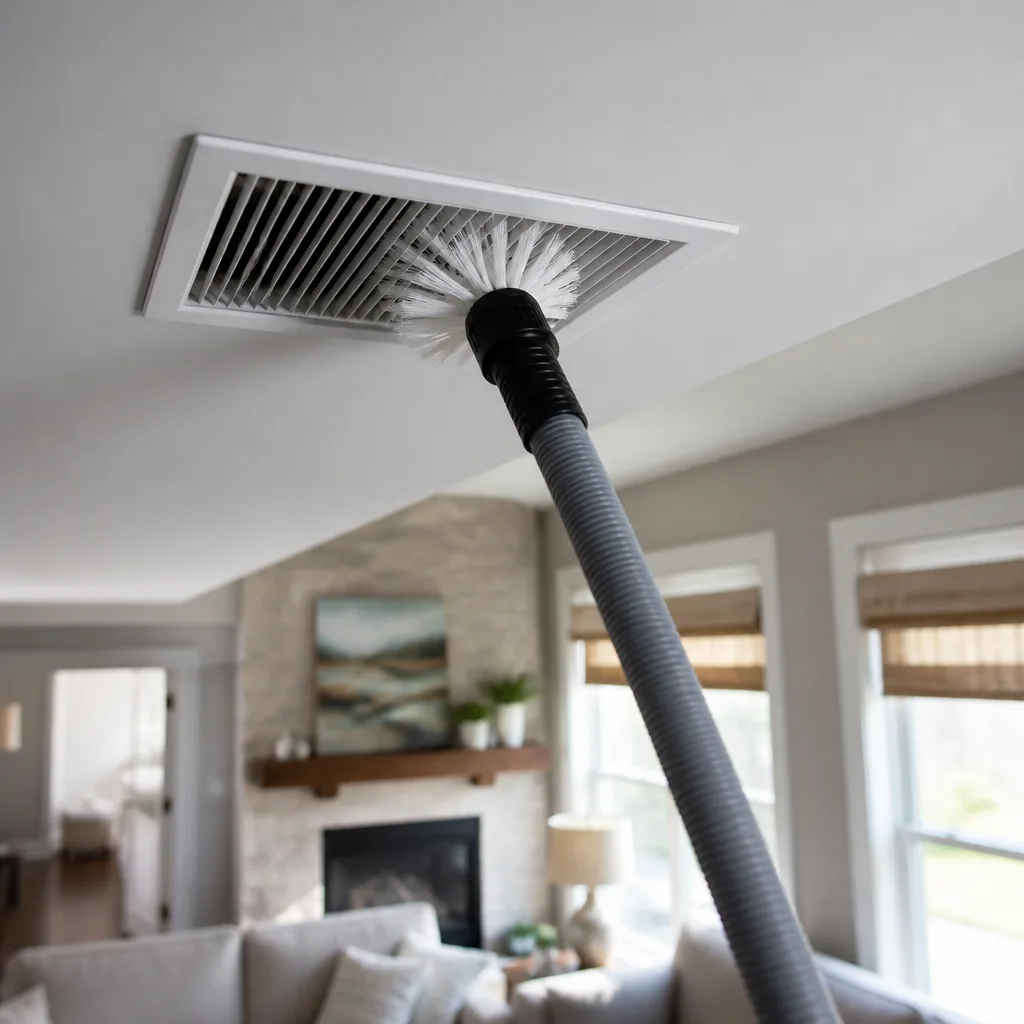 Sanitizing & deodorizing
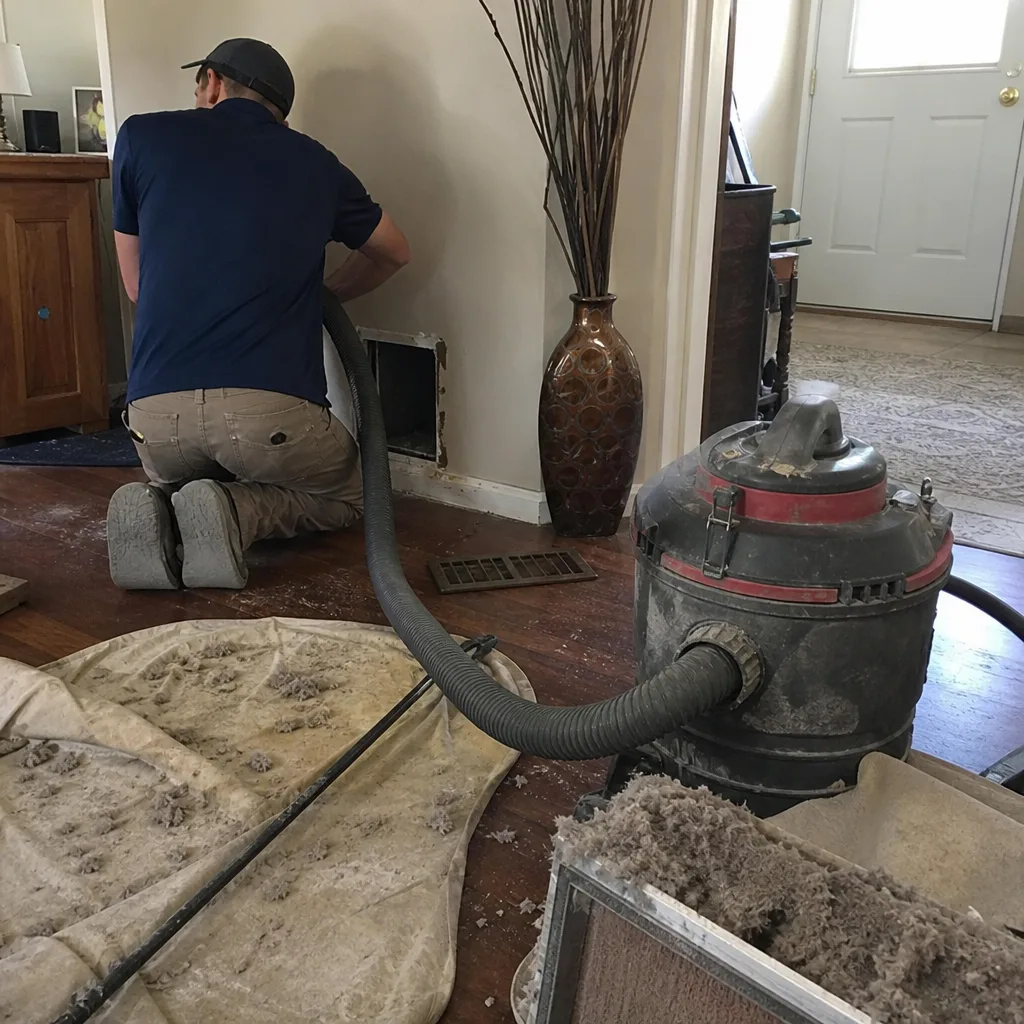
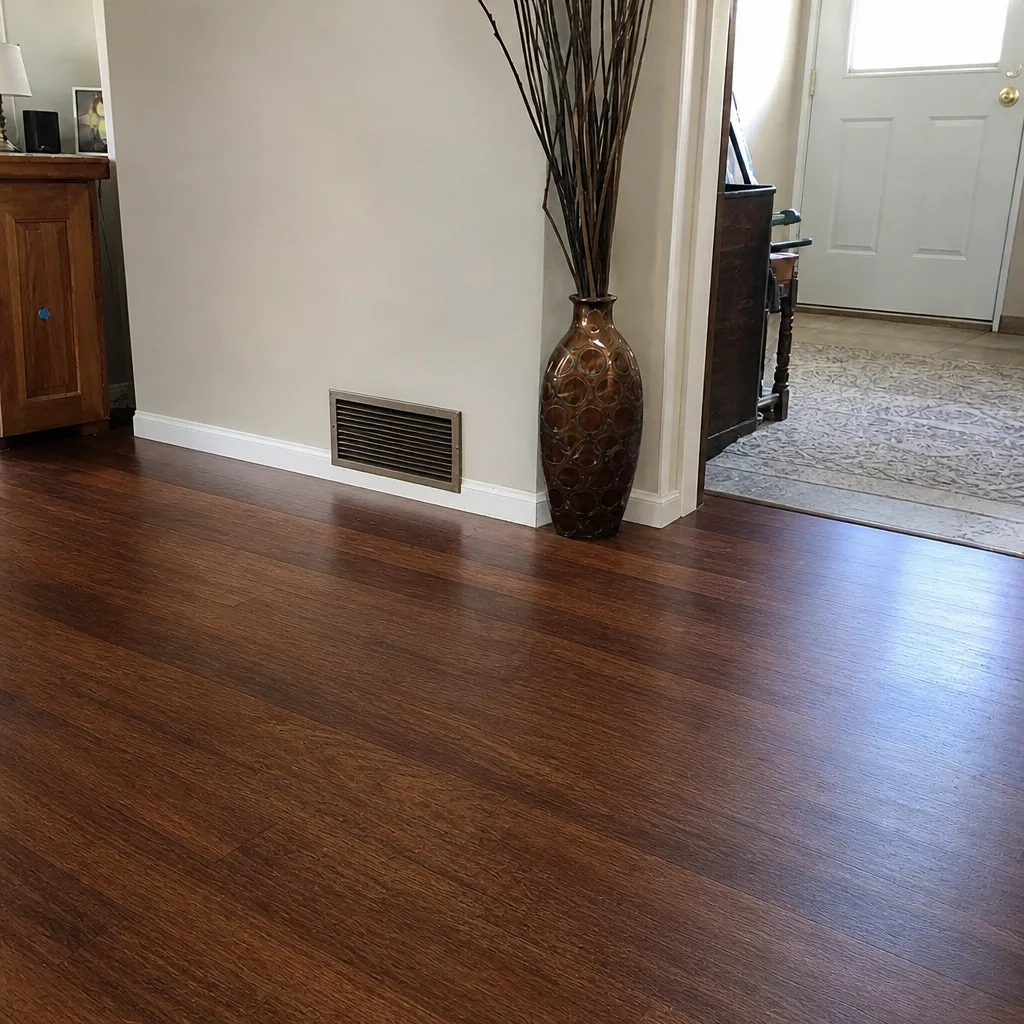
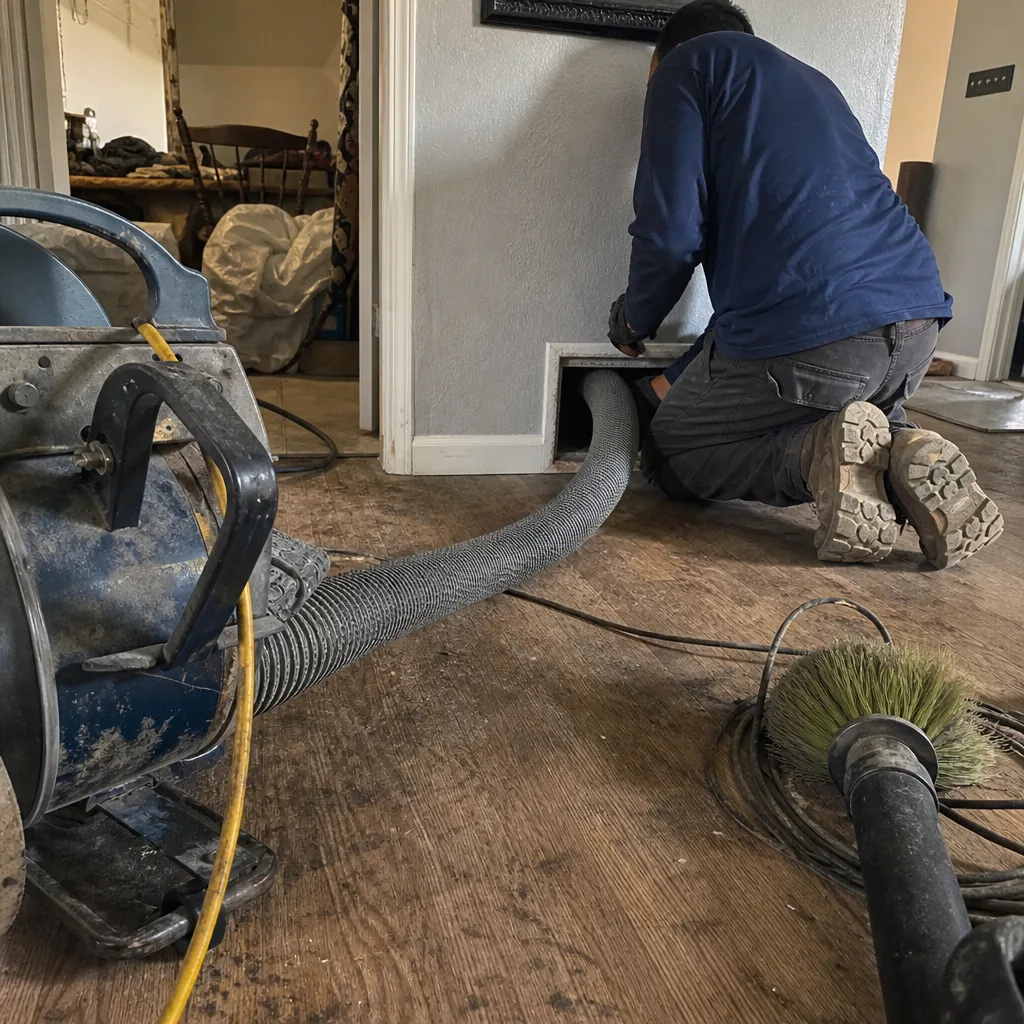
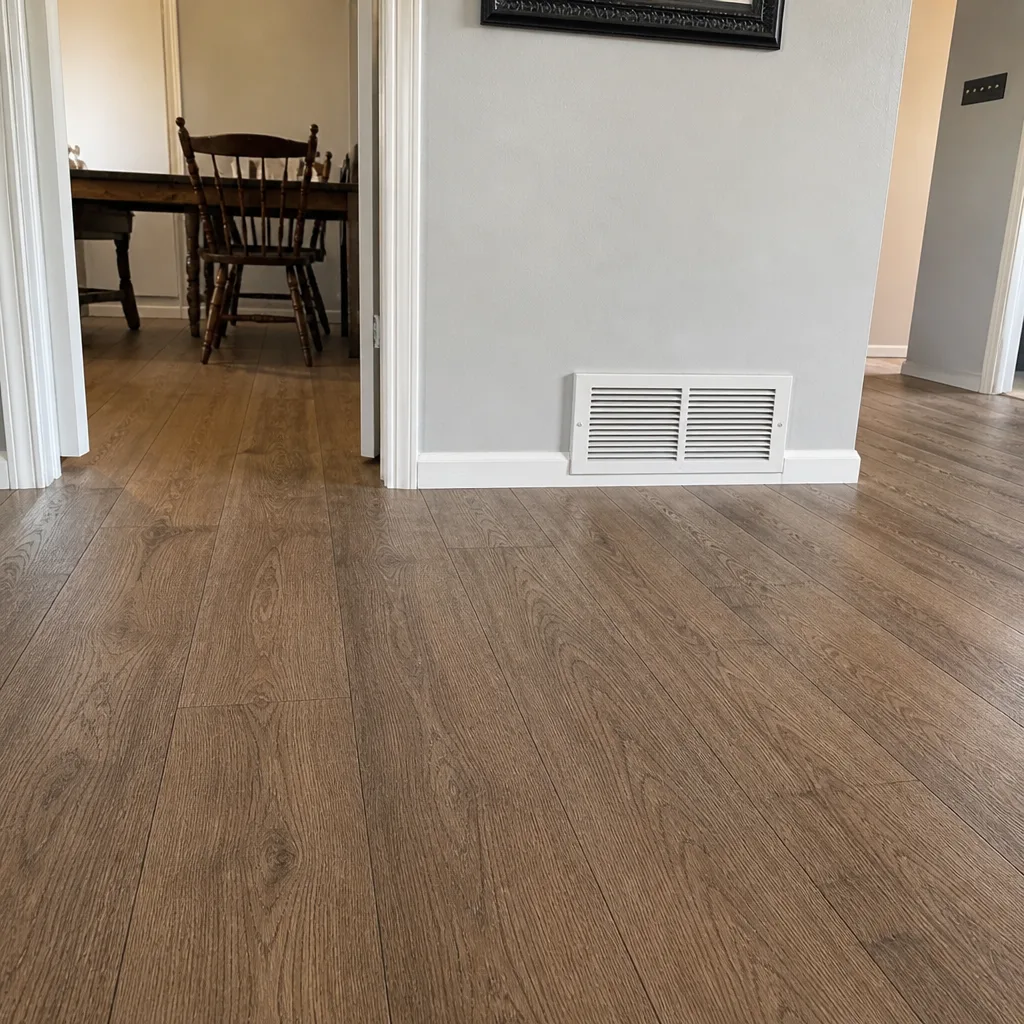
Whole-system duct and dryer vent check with before-and-after photos - you see exactly what came out of your vents
That "$99 whole-house special" is a bait ad - the real number appears once they are in your hallway, or the "clean" is a shop-vac at the register. We photograph the inside of your ducts before and after instead.
Air Duct Cleaning Troubleshooting in West Jordan: Common Problems and How to Fix Them
If a duct cleaning didn’t fix the musty smell, the dust film on the furniture or the room that never warms up, the cleaning wasn’t necessarily bad. It was aimed at the wrong problem. In our experience, nearly every duct complaint homeowners bring us in West Jordan traces back to one of three root causes: airflow restriction, contamination buildup, or duct leakage. Cleaning solves the second one well and barely touches the other two. This guide is the diagnostic walk-through we’d give a neighbor – how to read each symptom, figure out which root cause is behind it, and know what actually fixes it. Some of that work is duct cleaning West Jordan homeowners book through us, and some of it is a repair or an airflow conversation you’d take to an HVAC contractor.
Styles & brands we work with
- Whole-home duct cleaning
- Dryer vent cleaning
- Camera inspection
- Sanitizing & deodorizing
Quick Answer
Air duct problems that survive a cleaning are almost always one of three things: restricted airflow (a sizing, filter or blockage issue that cleaning won’t fix), duct leakage (and that needs repair, not another vacuum pass), or contamination that wasn’t fully removed the first time. Figure out which by watching the symptom – is the problem that air isn’t moving, that air is dirty, or that air is escaping? The answer determines whether you need cleaning, repair, or an HVAC conversation about system design.
Table of Contents
- The Three Root Causes Behind Every Duct Complaint
- Contamination, Leakage, or Sizing: Telling Them Apart
- What Each Odor Is Telling You
- Why One Room Is Always Hotter or Colder
- Was the Last Cleaning Done With the Wrong Equipment?
- When It’s the Dryer Vent, Not the Ducts
- What Professional Equipment Can and Can’t Do
- Common Mistakes to Avoid
- When to Call a Professional
- Frequently Asked Questions
- The Bottom Line
The Three Root Causes Behind Every Duct Complaint
Walk into any West Jordan home with a duct complaint and the symptoms sound almost identical: dust, smells, rooms that don’t heat evenly. Underneath, the mechanics split into three buckets, and they require different work.
- Contamination buildup. Dust, pet dander, construction debris and biological growth have collected on the interior duct walls or in the air handler. The system moves air fine, but that air picks up particles before it reaches your rooms. Cleaning with rotary agitation and HEPA extraction addresses this at the source.
- Airflow restriction. The air can’t get where it needs to go at the volume the system was designed for. That happens with an undersized return, a filter gone too dense for the blower, a crushed flex run or a closed damper. Cleaning a restricted system won’t change the restriction.
- Duct leakage. Air is escaping before it reaches the room. A run separated at a joint behind a self-taped seam, an unsealed trunk connection, or a section of flex duct torn at the collar all bleed conditioned air into walls, attics and crawlspaces. Cleaning won’t fix a leak – and in the wrong hands, cleaning can make one worse.
The first honest step with any duct complaint is figuring out which bucket you’re in. If we come out and find that the system needs duct repair rather than cleaning, we say so. Cleaning around a leak doesn’t fix the leak – it just hides it until you notice the same symptoms next season.
Contamination, Leakage, or Sizing: Telling Them Apart
This is the diagnostic part most homeowners skip. The symptoms overlap, but the mechanics are distinct, and how you tell them apart is what determines whether you book cleaning or start a different conversation entirely.
- Watch where dust accumulates. Dust settling evenly across furniture throughout the home points to contamination – the system is moving particles, not air that’s clean. Dust concentrated at supply registers or along walls near joints points to leakage pulling unfiltered attic or wall-cavity air back into the return.
- Listen to the system under load. A strong whoosh from the return with weak flow from supply registers in far rooms means the system is undersized or blocked, not dirty. Cleaning doesn’t add airflow; it only restores whatever the system was designed to deliver.
- Check the blower compartment. Dust caked on the air handler and evaporator coil means contamination is present regardless of what the ducts look like. It also means dust is bypassing the filter somewhere upstream.
- Look for localized stains or streaks. Streaking on drywall above registers, or a bright ring of dust at a ceiling grille, is leakage – air is diffusing out where it shouldn’t. Duct repair, not cleaning, addresses this.
- Check temperature at the register vs. the room. A noticeable drop between the register output and room temperature across a short distance points to leakage at joints. If the register output itself is feeble, look at airflow.
In our experience in West Jordan, homes built quickly in the 1990s and 2000s often end up with an undersized return or a run of flex duct crushed behind a joist. The homeowner has had the ducts cleaned twice, and the system is genuinely cleaner – the problem was never contamination. Two cleanings, no fix. That’s the case that needs the sizing conversation with an HVAC contractor rather than another cleaning.
What Each Odor Is Telling You
The type of odor is diagnostic information. Each of the three common smells points to a different underlying issue and a different follow-up.
Musty, damp-earth smell
Musty odor points to biological growth – mold spores colonizing a moist section of duct or the air handler interior. Moisture needs to be diagnosed and corrected before cleaning sticks. That means checking the drain pan, the drain line, and any return duct run through a humid crawlspace. Cleaning without finding the moisture source just resets the clock.
Dry, dusty, “car exhaust” smell when the system kicks on
A dry dust hit at startup is contamination in the air handler, blower wheel and ducts. This is the cleanest case for air duct cleaning with rotary agitation and HEPA extraction. Cleaning the whole system – not just the ducts, but the coil, blower and drain pan – is what resolves it.
Urine, ammonia, or a sharp animal smell
That’s almost always evidence of rodent or pest activity in the duct runs. Cleaning alone won’t fix it if the biology is present – feces, urine and nesting material need to be removed, the void needs sanitizing, and any damaged duct section needs duct repair or replacement. Confirm the pest source is gone before the ducts get cleaned. In our experience, homes near the Jordan River corridor and the older residential blocks of West Jordan turn up more pest-related duct findings than the newer subdivisions further west, simply because the older homes offer more entry points.
An odor only in one room
A musty smell confined to one room is usually that room’s run – a section of flex duct with a tear, sitting in damp soil in a crawlspace, or crushed against a joist causing condensation. Zone-level inspection with a camera and pressure readings is what narrows it down.
Why One Room Is Always Hotter or Colder
Uneven room temperature is rarely a duct cleaning problem, no matter what you’ve read. Cleaning can help if airflow is genuinely being choked by a debris blob or a crushed section, but in our experience the more likely explanations show up well before cleaning comes into it.
The technician’s first checks, in order:
- Filter condition and MERV rating. A filter too dense for the blower starves the whole system. A cheap one sold as “super allergen” often trades airflow for filtration. A standard filter that’s changed on schedule moves air better than an expensive one that’s clogged.
- Return sizing. Undersized returns are common in West Jordan homes built during fast-growth building cycles. The blower can’t pull what it needs, so the far end of the house starves first.
- Damper position. A balancing damper to a far room may be partly closed from a previous owner’s adjustment. It’s easy to overlook and easy to correct.
- Register and grille obstruction. Furniture over a register, nailed-down carpet blocking a floor supply, or a mismatched grille affects local airflow more than most homeowners realize.
- Duct leakage on the offending run. A separated joint behind a wall drops pressure at the far register. This is a duct repair issue.
- Room-level heat load. A west-facing room with more window area than its neighbors will run warmer on summer afternoons even with perfect airflow. This is not a duct problem – it’s a building physics problem.
Only after those five mechanical checks come up clean does cleaning the ducts make sense as a next step. If you’ve already had ducts cleaned and the room is still off, the answer is almost certainly in items one through six.
Was the Last Cleaning Done With the Wrong Equipment?
Homeowners commonly book a cleaning, notice no improvement, and assume the ducts didn’t need it. Often the ducts did need it – the wrong tool was used. Consumer-grade vacuums and shop vacs repurposed for duct work don’t reach the walls of a duct run and don’t agitate dust that’s been bonded to the surface for years. The inspection takes ten minutes and you can do it yourself.
Here’s what to look for at accessible register points after a cleaning:
- Dust still clinging to duct walls. Look through the supply boot and into the run with a flashlight. After a proper cleaning, the walls should look like galvanized metal, not coated in dust.
- Debris that only moved. If there’s dust on the floor of the duct run rather than removed entirely, the technician may have blown it downstream without pulling it out. Proper extraction removes debris, not relocates it.
- No before-and-after photos. A professional crew documents what they clean. Rotobrush systems with onboard cameras and Nikro HEPA extraction setups both allow the technician to see inside the run – which means they can show you what they found and what they removed.
- Dust on the air handler and blower. If the coil, blower wheel and drain pan weren’t part of the cleaning, the ducts were cleaned around the dirtiest parts of the system.
- No containment at the supply registers. Proper cleaning uses negative pressure with HEPA-rated equipment so the debris goes into the machine, not into your rooms. If dust settled briefly all over the house during the cleaning, containment wasn’t in place.
Equipment matters here in a way it doesn’t in most trades. We run Rotobrush rotary brush systems for wall contact and agitation, and Nikro equipment for HEPA-rated negative-air extraction. The combination is what gets a duct that’s been collecting dust for a decade actually clean. Shop vacs and blowers move dust around; they don’t remove it from the wall.
When It’s the Dryer Vent, Not the Ducts
A surprising number of “duct symptoms” homeowners bring us in West Jordan turn out to be dryer vent symptoms. The two systems run through the same walls and often confuse the diagnosis.
Tell them apart with these signals:
- Extra humidity and heat in the laundry room when the dryer runs points to a clogged dryer vent. Excess moisture bleeding back into the room is a vent restriction, not a duct issue.
- Clothes taking two cycles to dry is a vent symptom. Duct contamination doesn’t touch dry times.
- A musty smell that gets worse after laundry often means lint and debris are backed up in the vent run. Lint is organic and holds moisture, and it feeds growth.
- The dryer itself feeling hot to the touch on top is a warning sign of restricted venting. Lint buildup is a fire-safety concern, and we treat dryer vent cleaning as its own safety-focused service for that reason – not an add-on bolted onto a duct cleaning visit.
- Lint visible at the exterior vent flap. If the outside flap barely opens or is caked with lint, the vent is restricted. Cleaning resolves that; duct cleaning does not.
When we’re doing an air duct cleaning in a West Jordan home, we check the dryer vent run separately and tell the homeowner what we find. It’s a different system, different equipment, different problem – and worth treating that way instead of hosing it down with the same vacuum pass.
What Professional Equipment Can and Can’t Do
Understanding what the tools are for helps you evaluate the quote you’re about to get. Cleaning equipment is not one universal tool, and knowing what each one is built to do protects you from a crew that shows up with the wrong one.
What professional equipment does well:
- Rotary brush systems agitate the dust, dander and biological material that’s physically bonded to duct walls. Without agitation, the material stays put.
- HEPA-rated negative-air extraction pulls the loosened debris into a sealed container, keeping it out of your living space. Nikro is built for that.
- Containment equipment, like the Abatement Technologies line, seals off the work area so debris doesn’t migrate while cleaning happens. This is standard practice on any dusty job, and if it’s skipped, the “cleaning” is spraying dust around.
What professional cleaning can’t do:
- Fix airflow restriction. Cleaning a duct run that’s undersized leaves it undersized. That’s a design issue.
- Repair leaks. A separated joint, torn flex section or failed seal needs actual duct repair, not more cleaning.
- Solve a building envelope problem. A hot west-facing bedroom with too much glass area stays warm even after thorough duct cleaning.
Knowing the difference saves real money. If we come out on an air duct cleaning call in West Jordan and the diagnostic points to leakage or sizing rather than contamination, we’ll tell you that. We fix what we find, but we don’t sell cleaning as a solution to problems that cleaning can’t fix.
Common Mistakes to Avoid
- Booking another cleaning without diagnosing the first one’s failure. If the smell or uneven room persisted after a cleaning, the cleaning probably addressed the wrong root cause. Ask for the diagnostic steps before booking round two.
- Trusting a coupon price as the whole price. The low teaser usually covers a partial job or a per-vent rate, and the final invoice is much larger. Ask for one flat price per system in writing before work begins.
- Skipping the air handler during cleaning. Cleaning only the ducts while leaving the blower wheel, coil and drain pan loaded with dust means the system reintroduces contamination the first time it runs.
- Assuming a stronger filter is better. A filter too dense for the blower starves airflow and makes the whole house feel worse. In West Jordan’s dry, dusty summers, a standard filter on a schedule outperforms a high-MERV one that’s clogged.
- Treating dryer vent cleaning as an afterthought. Restricted venting prolongs dry times and creates a fire-safety concern. If the laundry room is humid and the dryer takes two cycles, that’s the dryer vent, not the ducts.
- Ignoring a musty smell after cleaning. If the smell returns within weeks, moisture is still present in the system. Cleaning without finding the moisture source resets the same problem.
- Skipping before-and-after documentation. You should be able to see what was cleaned. Reputable crews photograph the ducts before and after. If nobody offered, ask.
When to Call a Professional
Call in a professional when: a dust film returns to furniture within weeks of cleaning; a musty smell persists after cleaning; you suspect pest activity in the ducts; the dryer takes two cycles to dry a standard load; you see visible dust coating inside the supply boot; or a previous cleaning was done without documentation and you’re unsure what’s actually clean. Those are the cases where a camera inspection with proper equipment – Rotobrush for agitation, Nikro for HEPA extraction, Abatement Technologies containment for the work area – tells you what’s happening inside the system without guessing.
Our technicians have up to 11 years of experience, know Honeywell, Aprilaire and Guardsman filtration and air quality products by name for whole-home conversations, and won’t try to sell you a cleaning as a solution to a problem it won’t fix. For West Jordan homes, we also work directly with the perimeter of the system on duct repair – not just the interior vacuuming.
Duct Cleaning West Jordan offers free estimates throughout West Jordan – call (888) 351-4348. We answer 24/7. Fast dispatch from 7am to 7pm, Sunday through Friday.
Frequently Asked Questions
If dust returns within weeks, either the cleaning addressed contamination but left the source – such as an unfiltered return or a leaking run pulling attic air – or the cleaning didn’t fully remove debris from the duct walls. In our experience, the second is more common: a shop vac and a blower move dust around, but only a rotary brush with HEPA extraction pulls it off the wall and into the machine. Call (888) 351-4348 for a diagnostic inspection with proper equipment. Estimates are free.
We only quote per job after seeing the system, because home size, duct layout, the number of registers and the amount of buildup all change what a proper cleaning takes. The pricing principle we work on is one flat price per system, agreed in writing before any work starts, with no per-vent charges that balloon at the end. Book the free estimate and you’ll know the number in advance. Call (888) 351-4348.
Cheap quotes usually reflect a smaller job than what you need – half-system cleaning, no air handler cleaning, no containment, or a shop vac repurposed for duct work. That’s how the low coupon becomes a much larger invoice once the technician is on site. We tell you the full-scope price up front with proper equipment, and we don’t add to it later. Call (888) 351-4348 for an exact quote.
Ask for before-and-after photos of your own ducts. The technician sees inside the ducts with a camera during the cleaning – on our jobs you see what they see. If a crew comes without equipment that can show interior condition, you’ve learned something useful. Schedule an inspection with photos by calling (888) 351-4348. Estimates are free.
Most homes in West Jordan benefit from cleaning on a several-year cycle, more often if there’s ongoing remodeling dust, pet dander in the home, or a household member with air-quality sensitivity. The trigger should be a symptom – dust returning, musty odor, visible buildup at the supply boot – rather than a calendar year. When the symptom comes back, call (888) 351-4348 for a diagnostic check. Estimates are free.
Almost never on its own. Uneven room temperature points to airflow restriction, a leak on that specific run, a closed damper, an oversized filter, or a genuine building-load issue – none of which cleaning fixes. A proper diagnostic checks those six items first. If the airflow problem turns out to be a torn or separated section of duct, that’s a repair issue. Call (888) 351-4348 and we’ll walk through the diagnostic on site. Estimates are free.
The Bottom Line
Most duct “problems” are symptoms, and the three root causes – contamination, leakage and airflow restriction – require three different solutions. If a cleaning didn’t fix the dust, the smell or the uneven room, it was aimed at the wrong cause. Ours is the diagnostic-first approach: find the cause, recommend the right fix, and be honest when cleaning won’t solve it. In West Jordan, that means houses with quick-built returns, dry summer dust loads, and dryer vents that cloud the diagnosis. When you’re ready for a proper inspection – built around Rotobrush, Nikro and Abatement Technologies equipment – call (888) 351-4348 for a free estimate. We answer 24/7. Fast dispatch from 7am to 7pm, Sunday through Friday.
Written by the team at Duct Cleaning West Jordan.
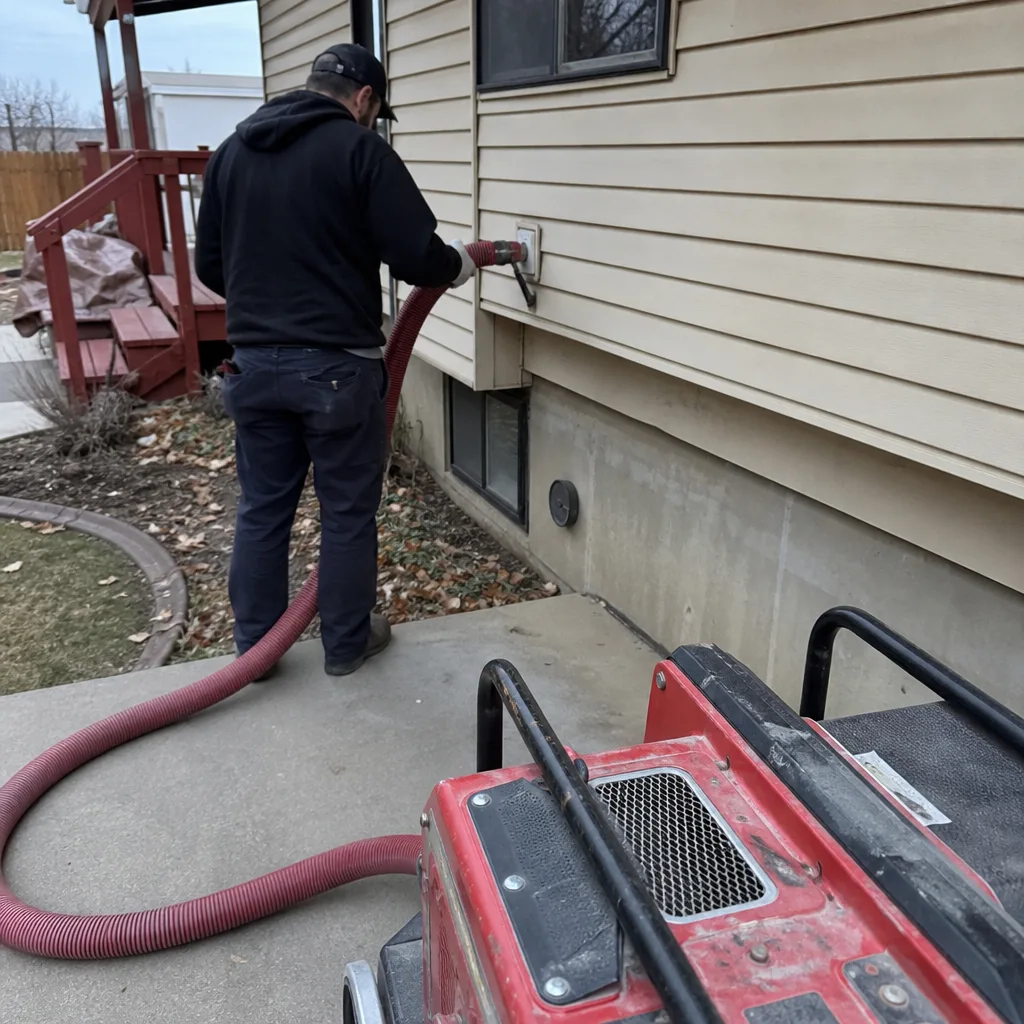
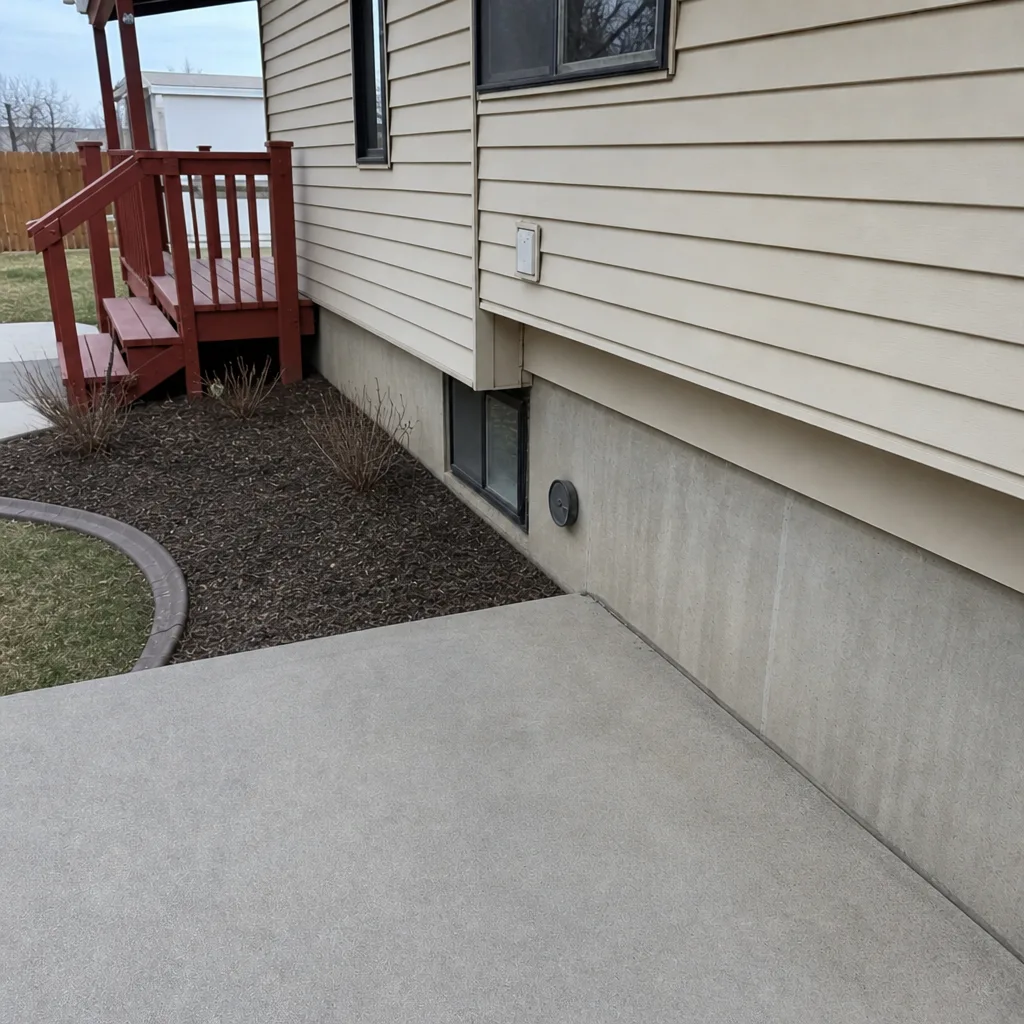
See the difference
 Before
 After
 Before
 After
 Before
 After