
Last updated November 15, 2026
 Whole-home duct cleaning
 Dryer vent cleaning
 Camera inspection
 Sanitizing & deodorizing
Whole-system duct and dryer vent check with before-and-after photos - you see exactly what came out of your vents
That "$99 whole-house special" is a bait ad - the real number appears once they are in your hallway, or the "clean" is a shop-vac at the register. We photograph the inside of your ducts before and after instead.
Air Duct Cleaning Warning Signs: A West Jordan Homeowner’s Reference Guide
Visible dust on a supply register doesn’t automatically mean your ducts need cleaning. But black streaking around the register frame almost certainly does. That distinction matters more than most homeowners realize, and getting it wrong costs money in both directions: you either pay for a cleaning you didn’t need, or you ignore a real problem until it’s spread through the whole system. Homes along the western bench of West Jordan deal with a specific combination of fine desert dust, long heating seasons, and tightly built modern construction that makes duct condition worth reading carefully rather than reacting to on instinct. This guide walks through what each warning sign actually means, how to tell normal from not-normal, and when a signal is worth a call versus a calendar note. By the end you’ll have a clear framework for reading your own system.
Quick Answer
The reliable warning signs of a duct problem are black or dark streaking around register frames, visible mold or musty smell from a supply vent, uneven room temperatures that persist after filter changes, a dryer that suddenly takes two cycles to dry a load, and lint collecting around the dryer door or on the exterior wall behind it. Ordinary light gray dust on a register face is normal and not a reason to book a cleaning. Anything that smells like burning, or any sign of moisture inside a duct, is a call-today category.
Styles & brands we work with
- Whole-home duct cleaning
- Dryer vent cleaning
- Camera inspection
- Sanitizing & deodorizing
Table of Contents
- What to Look For at Your Supply and Return Registers
- HVAC Performance Signals That Point to Duct Problems
- Reading the Three Smells: Musty, Burning, Chemical
- Dryer Vent Warning Signs and Why They’re Fire Risks
- When to Call Immediately vs. When to Monitor
- How West Jordan’s Climate and Housing Shape Duct Condition
- What Professional Equipment Actually Looks Like
- Common Mistakes to Avoid
What to Look For at Your Supply and Return Registers
Start with your eyes, at the registers themselves. A supply register is where conditioned air enters a room; the return pulls air back to the system. Both tell you something about what’s happening inside the ductwork, but they show it differently.
Normal dust accumulation on a register face is light gray or off-white, evenly distributed, and wipes off with a dry cloth leaving no mark underneath. That’s air movement depositing ordinary household particulate on a surface, and virtually every home in West Jordan has it to some degree. It is not a cleaning signal by itself.
What does warrant attention:
- Black or dark streaking around the register frame. This is the single most reliable visual signal of a duct problem. It usually means air is escaping around the boot where the register meets the drywall, pulling dark particulate from the wall cavity or attic into the airstream. It can also indicate moisture that’s feeding microbial growth at the seam. Either way, the register is telling you the seal is compromised and something is getting into the air that shouldn’t be.
- Visible debris discharge. Chunks of insulation, drywall dust, or fibrous material blown out of a supply vent when the system kicks on. This means material inside the duct is breaking down or was left behind during construction.
- Mold or dark spotting inside the duct throat. Shine a flashlight up into the supply boot. A clean galvanized or flex liner looks uniform. Dark spotting, fuzzy growth, or a mottled surface points to moisture problems that need to be addressed at the source, not just vacuumed out.
- Debris buildup patterns on the return grille. A return that clogs noticeably faster than the rest of the house suggests the return path is undersized or the duct run itself is loaded with debris.
Our technicians have up to 11 years of experience and see this diagnostic work at registers across West Jordan constantly. The pattern in bench-side homes tends to be streaking around registers on exterior walls, because those boots sit closest to the wall cavity where dust collects.
HVAC Performance Signals That Point to Duct Problems
Your system tells you about duct restriction through its behavior long before you’d notice anything at a register. The three performance signals worth tracking are uneven room temperatures, longer runtime, and rising utility bills, in that order of reliability.
- Test room temperature spread. On a day when the system has been running steadily for at least an hour, take a thermometer into three rooms on the same floor. A spread of more than a few degrees between rooms suggests an airflow imbalance that often traces to a leaking or crushed duct run. If one room is consistently cold in winter and hot in summer, that room’s supply duct is the first place to look.
- Time the runtime. Note how long your furnace or air handler runs to satisfy the thermostat. If that time has crept up over a season or two without a weather explanation, the system is working harder than it was, and restriction in the ductwork is one cause.
- Watch the bills. A gradual increase in gas or electric cost with no rate change and no change in habits points to efficiency loss. Restricted or leaking ducts force the blower to push against more resistance, and that cost shows up month over month.
The trick is context. West Jordan sits at the eastern edge of the Salt Lake Valley, and summer afternoons in the western part of the city run hot while winter inversions push cold air against the Oquirrh foothills. Seasonal swings explain a lot of bill variation. What isn’t explained by weather is a room that never quite matches the rest of the house no matter the season, or runtime that keeps climbing year over year. When two of these three signals show up together, a duct inspection is worth the phone call. Our air duct cleaning service starts with an assessment, not a sales pitch.
Reading the Three Smells: Musty, Burning, Chemical
Smell is the most underused diagnostic tool homeowners have, and it’s the one that most clearly separates “monitor” from “call now.” There are three categories, and they mean different things.
Musty or earthy smell
A musty, wet-basement smell from a supply vent points to moisture and microbial growth somewhere in the duct system, typically a run through an unconditioned space like an attic or crawlspace where condensation forms on the duct exterior in winter or where a leak has allowed damp air in. This is not an emergency, but it won’t resolve on its own. It needs a moisture source investigation plus a proper cleaning with HEPA-rated extraction, which is why we run Nikro equipment built specifically for negative-air containment during duct work. Ignoring a musty smell usually means it spreads to more rooms over a heating season.
Burning smell
Any burning odor from a vent or register is a stop-everything signal. Shut the system down at the thermostat and call a technician. Possible causes include a motor overheating, dust burning off a heating element or heat exchanger, or debris making contact with a hot surface. From a duct perspective, a burning smell can also indicate lint or debris accumulating near a component it shouldn’t reach. Do not run the system to “see if it clears.” A burning smell is a call-today category every time.
Chemical or solvent smell
A sharp chemical or solvent odor from the vents often traces to a nearby source being drawn into the return: fresh paint, household cleaners, or volatile compounds from a garage or workshop. Short-lived, one-time smells usually resolve with ventilation. A persistent chemical smell with no obvious source is worth investigating, because it can point to a leak path between an attached garage and the return ductwork, a common issue in newer West Jordan subdivisions where garages are tightly built against the house.
The theme: musty means moisture, burning means call now, chemical means find the source. If a smell persists after two days or shows up in more than one room, that’s your prompt to schedule an inspection.
Dryer Vent Warning Signs and Why They’re Fire Risks
Dryer vent problems announce themselves as inconvenience, and homeowners quietly adjust: a load that used to take one cycle now takes two, or three. That inconvenience is actually a warning light. Lint is highly flammable, and a dryer vent that’s loaded with it is a fire risk sitting inside a wall.
The warning signs:
- Loads taking longer than they used to. If the same size load at the same setting takes meaningfully more time, airflow through the vent has dropped.
- The exterior wall or door around the dryer feels unusually hot. Heat that isn’t escaping through the vent is backing up into the appliance and the wall cavity. This is the most serious of the dryer signals.
- Lint accumulating around the dryer door or behind the appliance. Some lint on the lint screen is normal; lint collecting around the door seal or visible at the base of the dryer means the airflow is escaping at the wrong points.
- A smell of heated lint or a noticeably damp laundry room. Moisture that should vent outside is staying indoors.
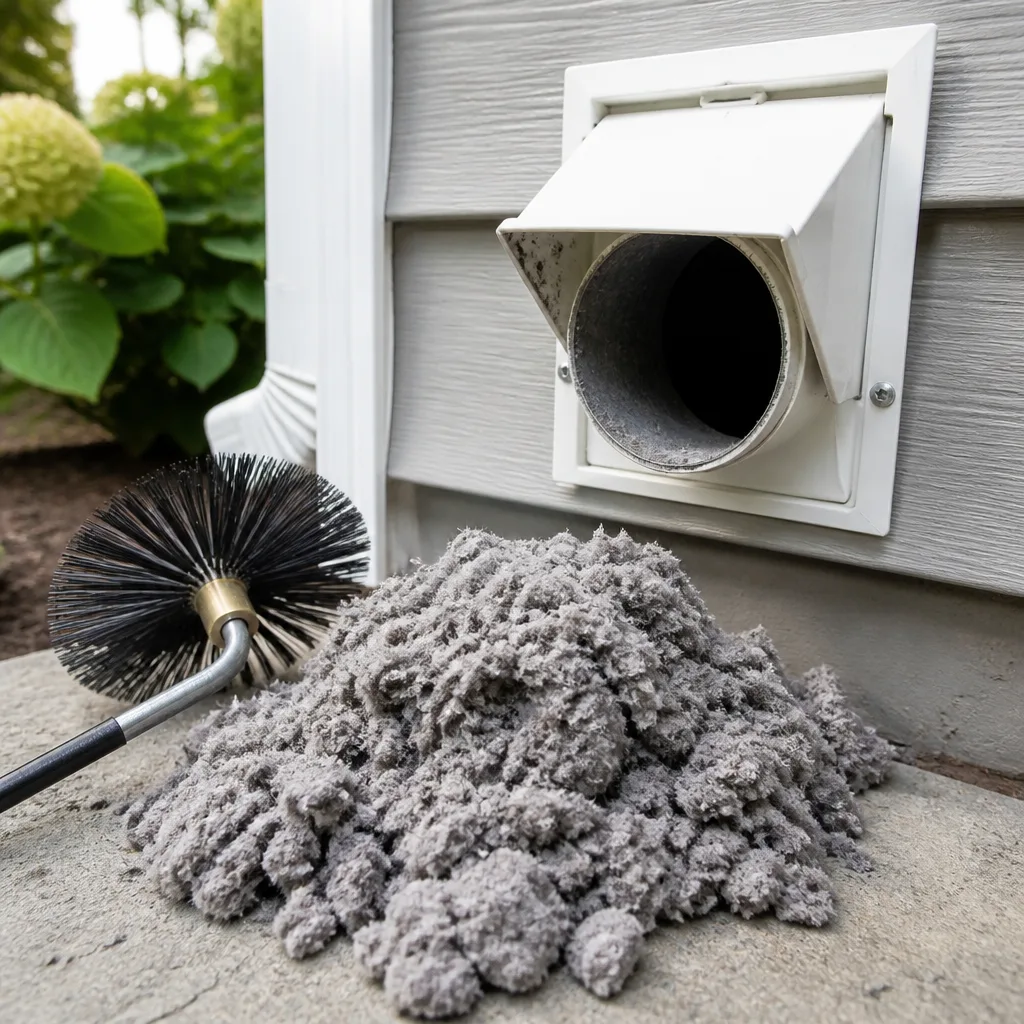
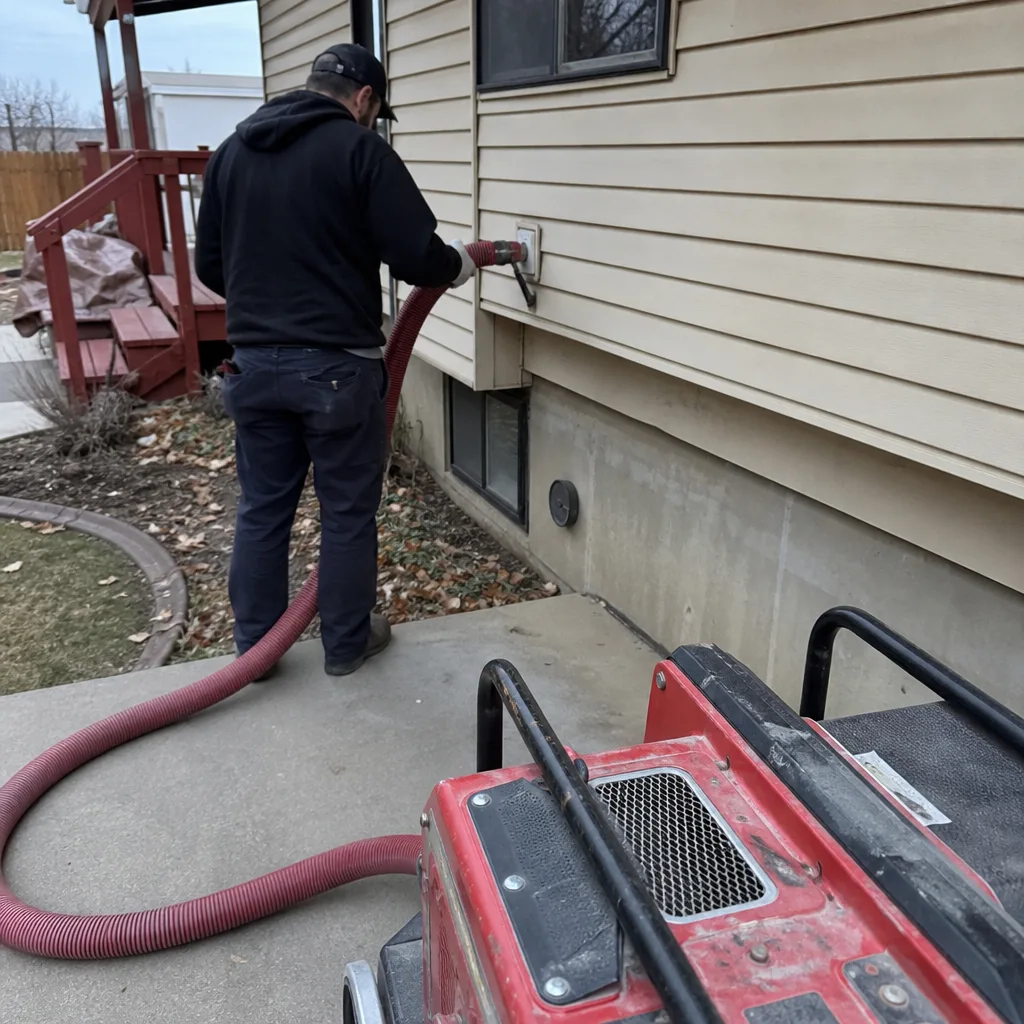
Dryer vent cleaning is a fire-safety service, not a checkbox add-on to a duct cleaning, and we treat it that way. We run it as a dedicated service separate from whole-home duct work because the inspection is different and the risk category is different. The dryer vent cleaning work we do covers the full length of the run, including the wall cavity section most homeowners never see, and verifies airflow at the exterior termination before we call it done. If your dryer is taking longer than it used to, that’s a call today, not a someday.
When to Call Immediately vs. When to Monitor
Here’s the decision framework. Read down the list until you hit a category that matches what you’re seeing.
- Call today, system off until inspected: any burning smell, smoke visible at a register, a dryer wall that’s hot to the touch, or debris discharged from a supply vent in quantity.
- Call within the week: persistent musty smell from more than one vent, dark spotting inside a supply boot, black streaking around three or more registers, or a dryer that consistently needs two cycles.
- Book an inspection next visit, monitor quietly: a single room that’s persistently a few degrees off, one register with black streaking, or a light but consistent dust film on return grilles faster than the rest of the house.
- Normal, no action: light gray dust on register faces, occasional dust on front-facing furniture, a slight musty note after long vacations. These are within range for any home in West Jordan.
The category that trips up most homeowners is the middle one. Persistent smell and visible spotting are easy to explain away as seasonal or “just this house.” In our experience they rarely resolve without opening up the system and finding the source. The top category speaks for itself; you don’t need a rule to act on a burning smell.
If you’re between categories, take photos of each register and the dryer hookup, and note when each symptom appeared. That record makes the inspection call shorter and more accurate.
How West Jordan’s Climate and Housing Shape Duct Condition
West Jordan sits on the eastern bench of the salt lake valley’s west side, tucked against the Oquirrh foothills. The climate does specific things to ductwork that homeowners here should know about.
First, the dust. Fine particulate from the surrounding desert and the dry, windy spring season loads filter media and settles in duct runs faster than in greener climates. That’s why light dust on registers shows up faster here, and why filter replacement attention matters more in West Jordan than in milder zones.
Second, the temperature swing. Long heating seasons and hot summers mean the HVAC system runs far more hours per year than the national average. More runtime means more air movement, more particle deposit on duct walls, and more thermal cycling on the duct joints, which gradually loosens seals. Homes in the older neighborhoods near the city center often have original rigid ductwork with decades of this cycling behind it. Newer subdivisions on the western edge usually have flex duct, which delivers well when installed tight but can sag, kink, or pull loose at connections if the run wasn’t routed carefully.
Third, construction dust in newer homes. Dust from drywall, framing, and stone work migrates into duct systems during finish and lingers long after the owners move in, which is why a first-occupancy cleaning is often the sensible first step for a home built in the last several years.
Fourth, winter inversions. Cold air pooling along the bench, combined with the heating season, means more time spent indoors and more reliance on the HVAC system to move and filter household air. What’s in the ducts matters more here in winter.
All of this means the “is this normal?” call is genuinely harder in West Jordan than in a milder climate. A quick review of your own home against these factors is often more useful than comparing to a friend’s house in another state. When you’re ready for a proper look, duct cleaning West Jordan starts with an inspection, not a booking.
What Professional Equipment Actually Looks Like
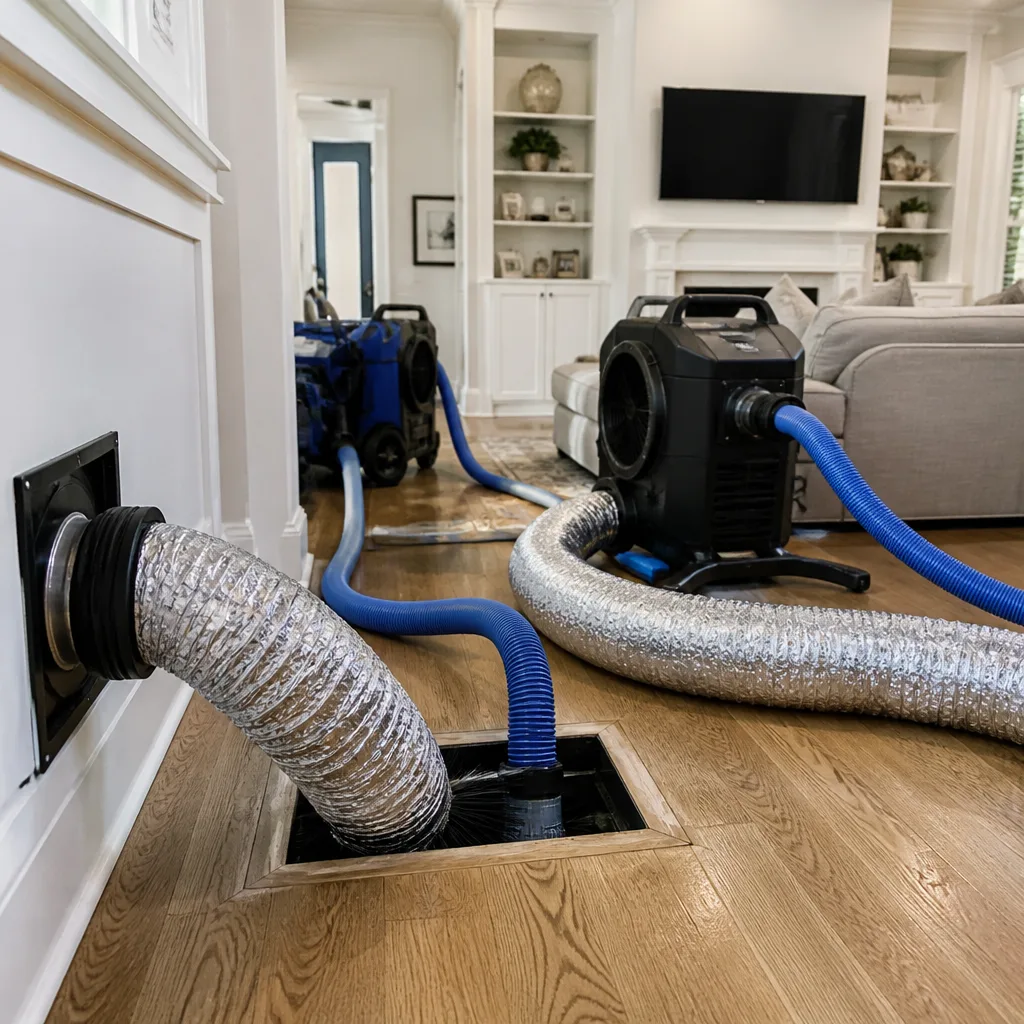
One of the reasons duct cleaning gets an unfair reputation is that a lot of what’s sold as duct cleaning is done with a shop-vac, a pressure hose, and no containment. That combination agitates debris inside the system and can leave more airborne particulate in the home than it removes.
Proper equipment looks like this:
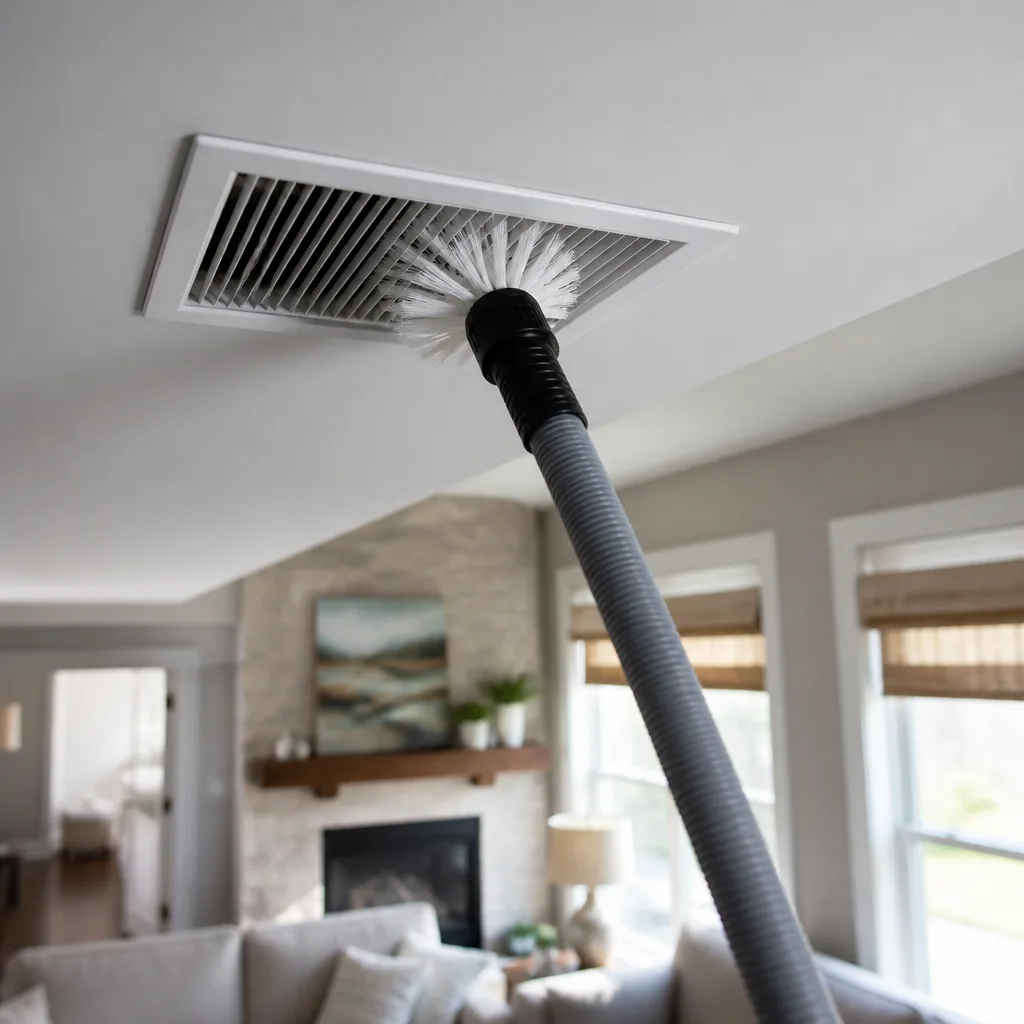
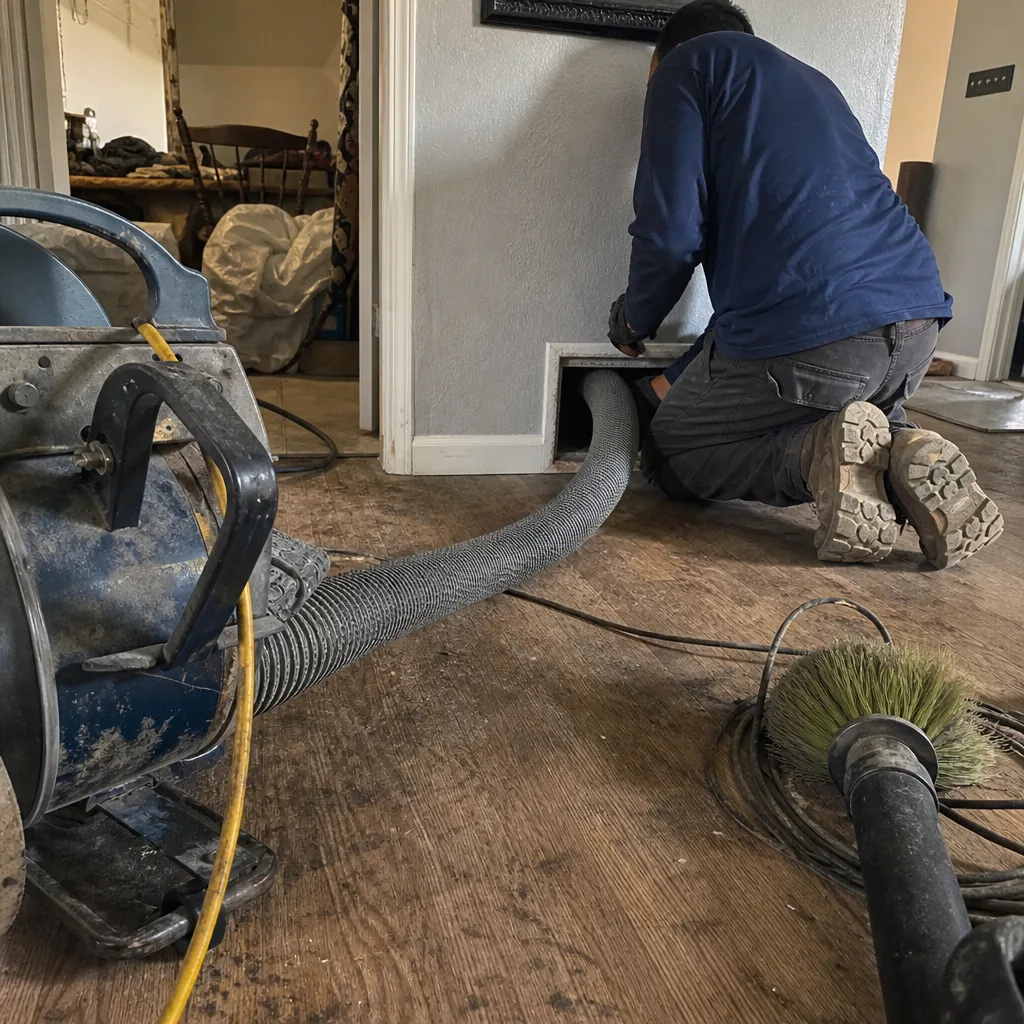
- Rotobrush rotary brush agitation. A rotating brush is fed into the duct run and physically agitates the duct wall, lifting adhered debris off the liner so extraction can capture it. Without mechanical agitation, dust that’s stuck stays stuck no matter how strong the vacuum is.
- Nikro HEPA-rated negative-air extraction. The system is placed under negative pressure with HEPA filtration on the exhaust, capturing fine particulate before it can escape into the living space. Nikro is a name trusted in professional indoor air quality work specifically for this.
- Abatement Technologies containment and filtration. Purpose-built HEPA filtration and negative air machines used by contractors who need real containment on the job.
- Whole-home filtration knowledge. Registers and duct runs are half the picture; the filter at the air handler is the other half. Familiarity with Honeywell, Aprilaire, and Guardsman filter products lets us talk through whole-home filtration choices rather than just clean a duct run and leave the owner with no path forward.
What separates this from a low-bid job is simple: the tools are built for duct work specifically, not borrowed from another trade. We also handle air duct repair as its own service, so if we find a disconnected joint, a crushed run, or a compromised boot during cleaning, we can fix it at the source instead of cleaning around the problem and leaving it for you to discover later. That “we fix what we find” approach is the difference between a cleaning and a solution.
Common Mistakes to Avoid
- Booking a cleaning off a light dust film alone. Light gray dust on register faces is normal and doesn’t need a service call. If that’s the only symptom, wait and watch the more reliable signals instead.
- Assuming black streaking is “just old registers.” Streaking around the frame usually means an air-seal problem, not a cosmetic one. Spray-painting over it hides the signal without fixing the leak.
- Ignoring a dryer that needs two cycles. That extra cycle is a fire-risk signal, not a quirk. Dryer vents in West Jordan clog faster than average because of local dust, and heat building against the wall cavity is a real hazard.
- Running the system when it smells like burning. Shut it off and call. Running it to “see if it clears” is the most common dangerous mistake we hear about.
- Using a shop-vac on a supply vent yourself. Consumer vacuums don’t have the containment or filtration to handle duct debris. They agitate more than they remove and can redistribute fine particulate back into the room.
- Skipping filter attention between cleanings. A properly sized filter replaced on a sensible interval does most of the work for household air quality in a dusty climate. Cleaning a duct system and then running a clogged filter wastes both.
- Trusting a quote that doesn’t specify the whole system. Per-vent pricing and teaser coupons are the setup for a bait-and-switch. A real quote covers the whole system as one flat price agreed before work starts.
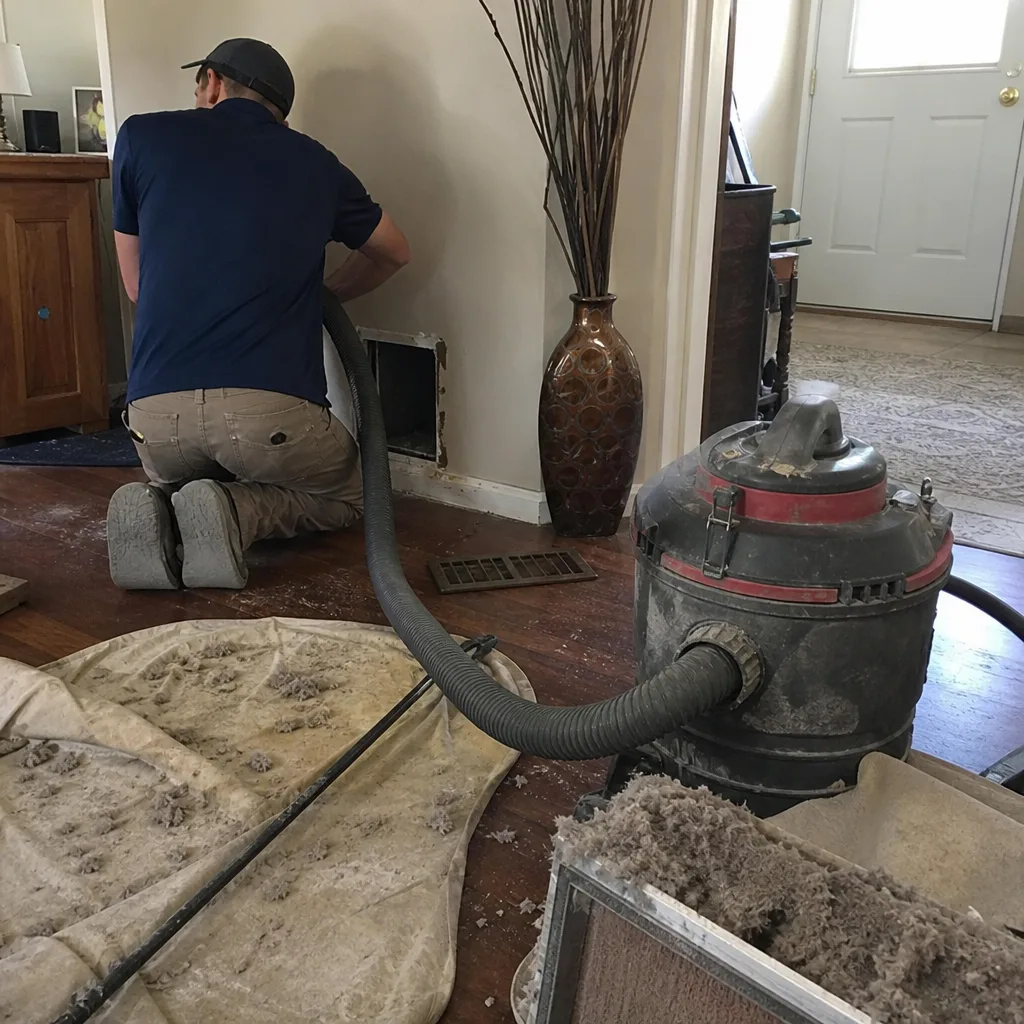
The last mistake is worth a bit more explanation. If a quote looks dramatically cheaper than every other quote you’ve gotten, ask two questions before booking: is the price per system or per vent, and will you photograph before-and-after inside my actual ducts? A crew that can’t answer both clearly is the crew that will invent charges on site. This is exactly why we work to one flat price per system, agreed in writing before any equipment comes into the house, with before-and-after photos of your own ducts on request.
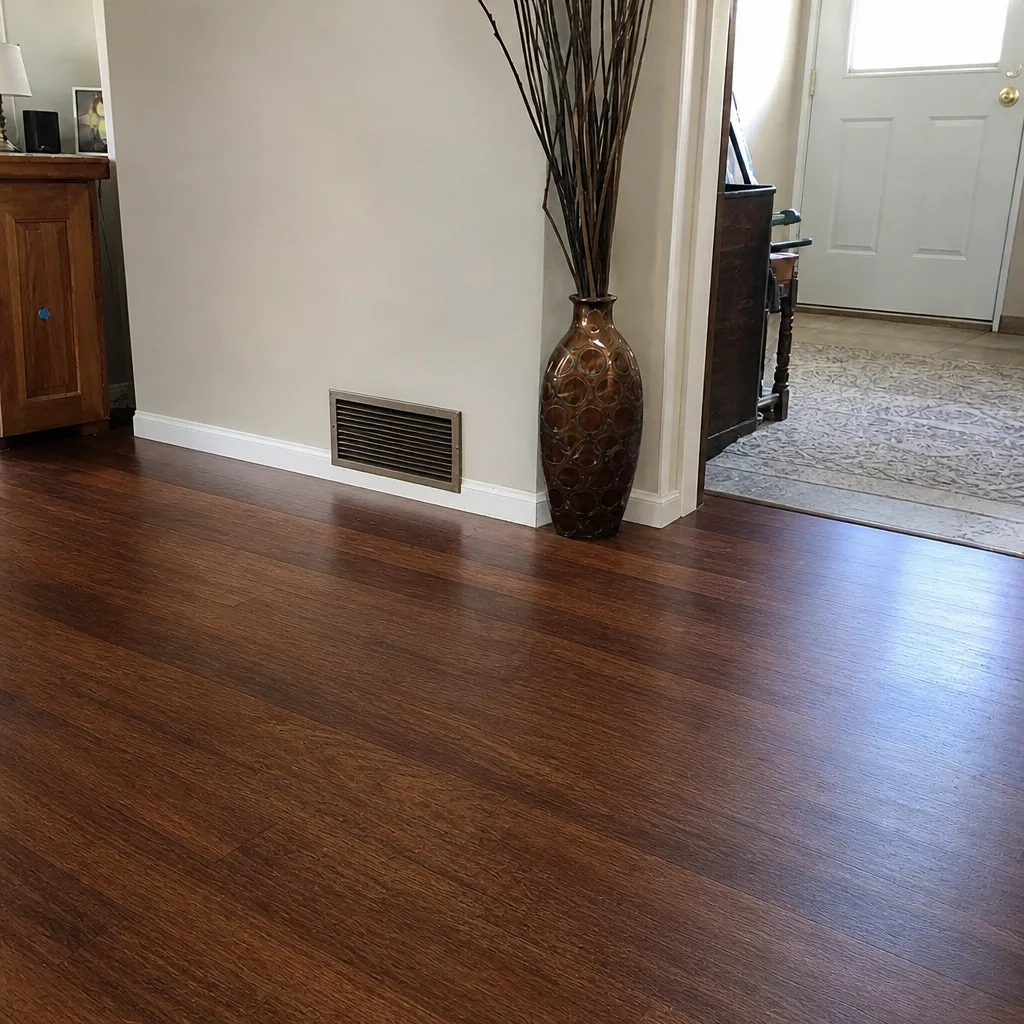
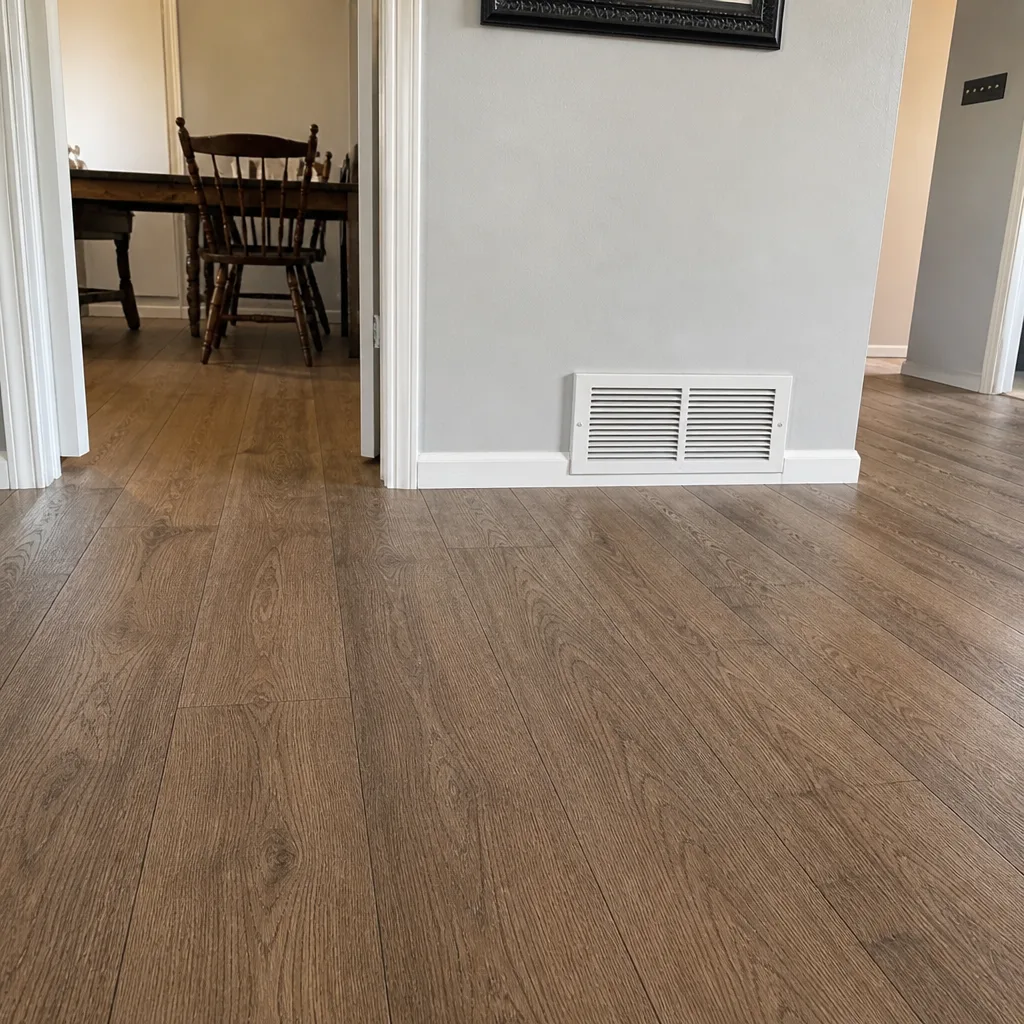
See the difference
 Before
 After
 Before
 After
 Before
 After
When to Call a Professional
You don’t need to call for light dust on a register or a slight musty smell after a vacation. You do need to call when any of the following is true: burning smell from a vent, a dryer wall that’s hot to the touch, visible mold or dark spotting inside a duct boot, multiple registers with black streaking, a room that’s consistently off by more than a few degrees, or a dryer that needs two cycles to finish a normal load. Those symptoms don’t resolve with a filter change, and left alone they tend to get worse over a heating season. Duct Cleaning West Jordan offers free estimates in West Jordan: call (888) 351-4348. Our technicians have up to 11 years of experience, and we bring Rotobrush and Nikro equipment built for this work specifically. We answer 24/7. Fast dispatch from 7am to 7pm.
Frequently Asked Questions
The most reliable signals are visible in the system, not assumed: black streaking around register frames, dark spotting inside a supply boot, debris blown out of a vent, or persistent musty smell from more than one supply. Light gray dust on register faces is normal and doesn’t itself justify a cleaning. Call (888) 351-4348 for a free estimate and an honest read on what you’re seeing.
Dust has more than one source: filter condition, air-sealing at the register boots, and infiltration at doors and windows all matter as much as duct cleanliness. In our experience, homes with heavy dust film on return grilles usually have a filter issue or a boot-seal leak, not a duct-loading problem. That’s why a proper inspection starts at the air handler and works outward. Call (888) 351-4348 and we’ll help you sort out which one is your situation.
Not a call-now emergency, but it’s a real signal and won’t clear on its own. Musty smell usually means moisture is reaching a duct surface and microbial growth has started, often on a run through an attic or crawlspace. Left alone, it spreads to more rooms as air cycles. Shelve it and you’re paying for coverage later. Call (888) 351-4348 to schedule an inspection.
Most homes in West Jordan do fine with a cleaning on a multi-year interval, not annually, if the filter is changed regularly and the system is properly sealed. Homes with heavy dust exposure, first-occupancy construction dust, or visible register symptoms move to the front of the line. There’s no universal schedule; condition drives it. Call (888) 351-4348 and we’ll give you an honest read on where your system actually sits.
Assume duct first. A dryer that suddenly needs a second cycle almost always has reduced airflow through the vent, which is the fire-risk path. Before booking a repair on the appliance, get the vent checked. If the wall behind the dryer feels hot, treat it as a same-day concern. Call (888) 351-4348 for a dryer vent inspection.
Because they aren’t quoting the same job. Low teaser prices usually trip into per-vent charges, equipment “add-ons,” or work done with consumer-grade tools that agitate debris more than they remove. We work to one flat price per system, agreed before work starts, and we bring Rotobrush and Nikro equipment purpose-built for duct work. Call (888) 351-4348 for a free estimate and compare the line items, not the headline price.
The Bottom Line
Most duct problems give you readable signals weeks before they show up in air quality or your energy bill. Light gray dust is normal. Black streaking, musty or chemical smell, debris discharge, and persistent room-to-room temperature gaps are not. Burning smell and a hot dryer wall are call-today categories. West Jordan’s dusty climate, long heating season, and mix of older rigid duct and newer flex systems make it worth checking these signals on a schedule rather than relying on instinct. If any of the signals in this guide match what you’re seeing, or if you’d rather have a trained eye confirm your read, call (888) 351-4348 for a free estimate. We answer 24/7. Fast dispatch from 7am to 7pm, Sunday through Friday. What you breathe matters, and the tools we bring – Rotobrush, Nikro, and Abatement Technologies – are built for this work.
Written by the team at Duct Cleaning West Jordan.