
Last updated November 15, 2026
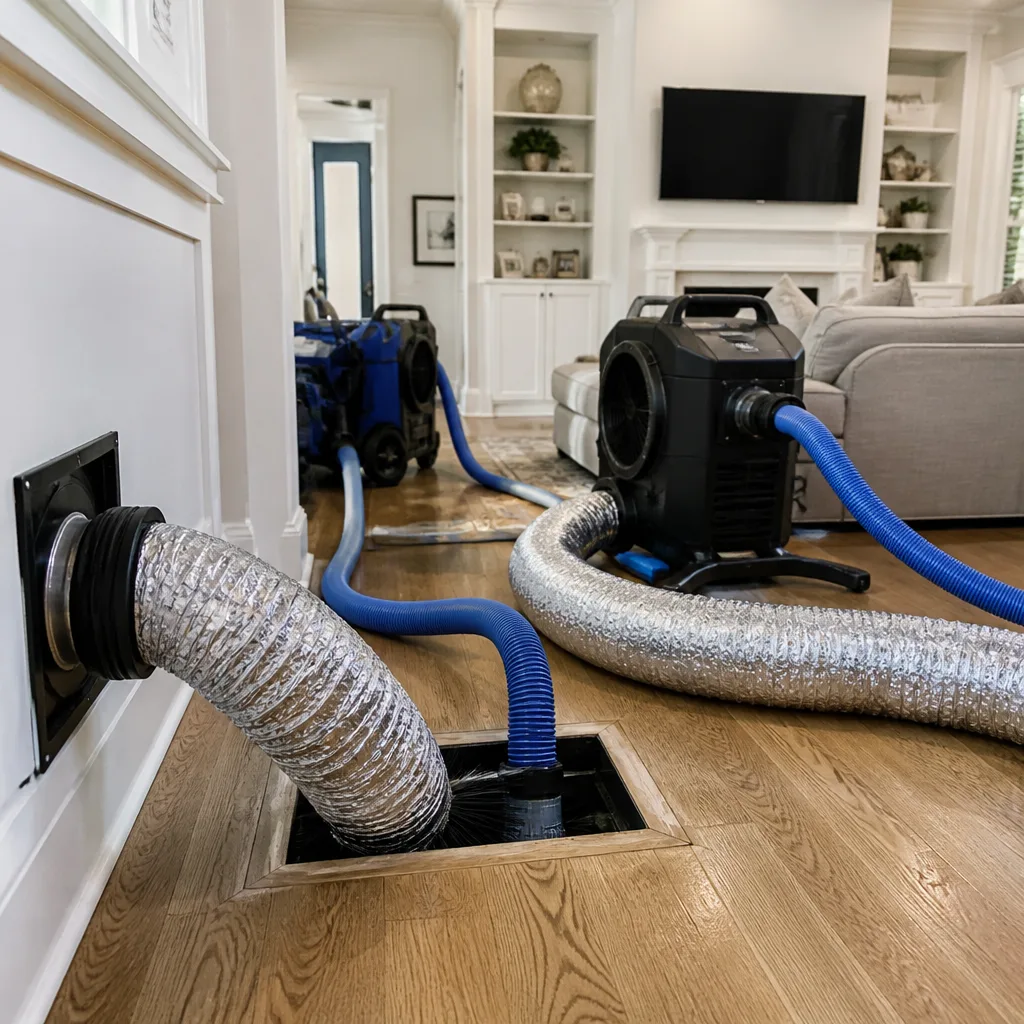 Whole-home duct cleaning
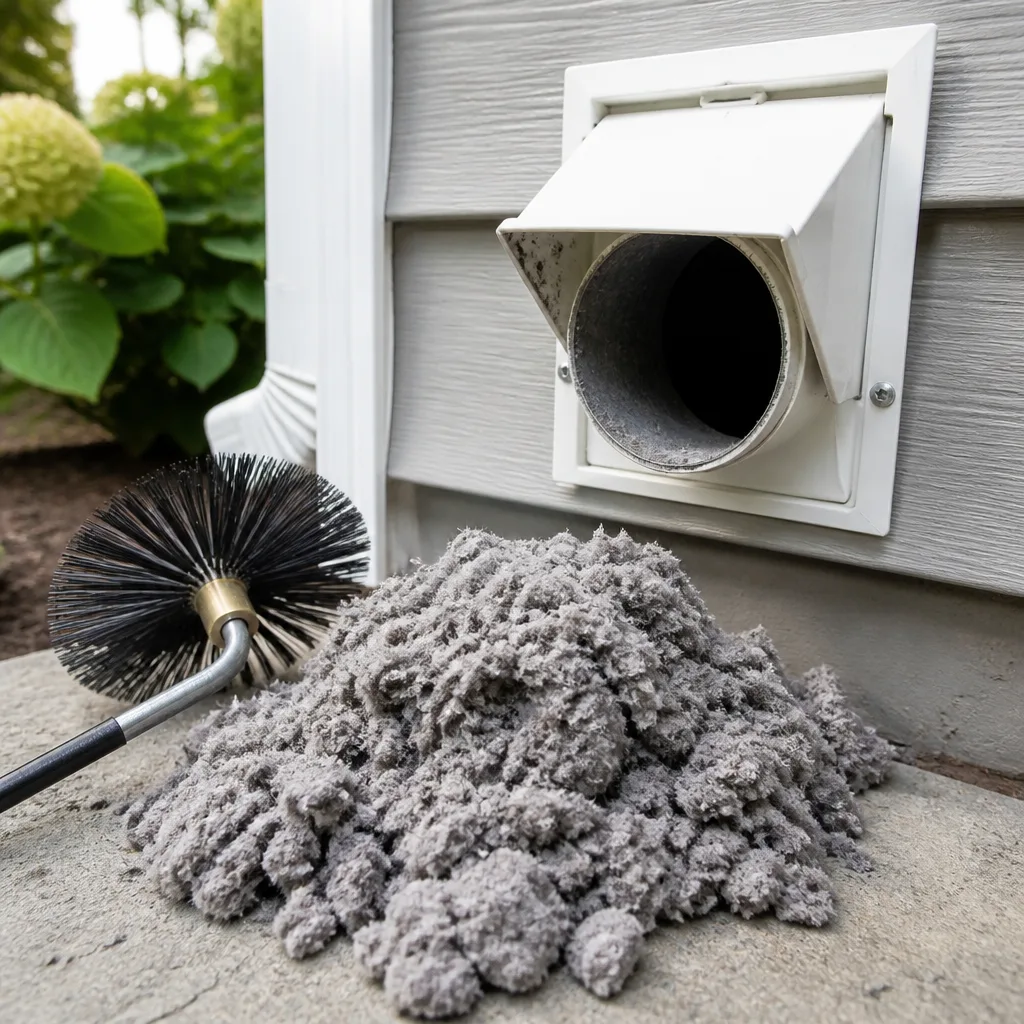 Dryer vent cleaning
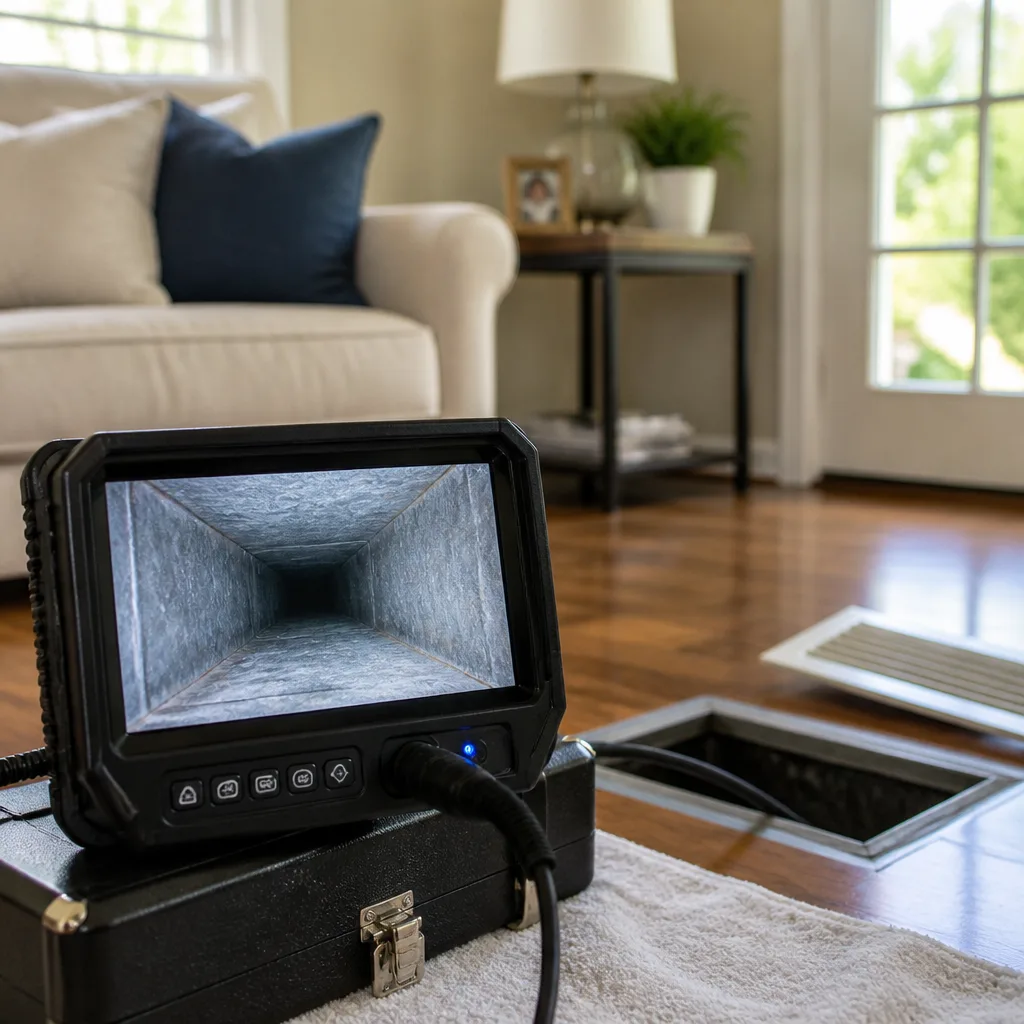 Camera inspection
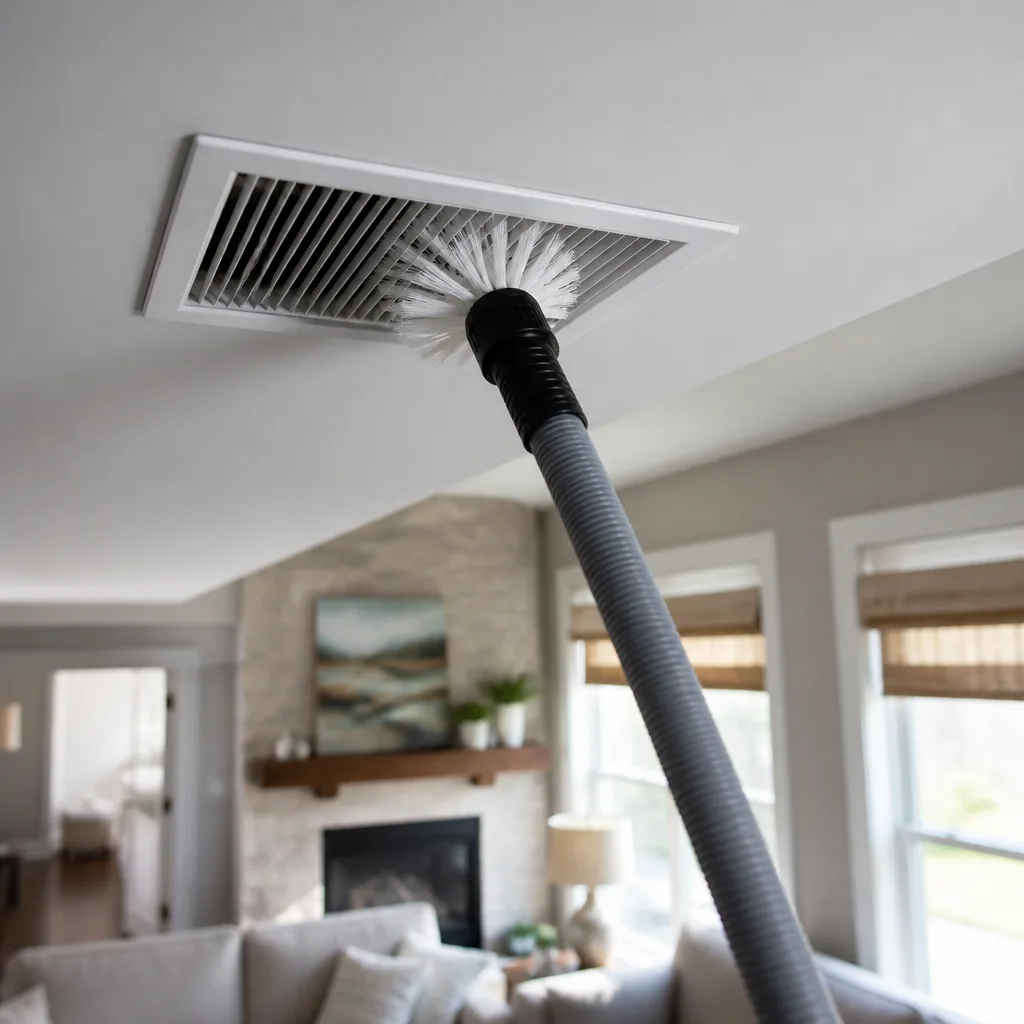 Sanitizing & deodorizing
Whole-system duct and dryer vent check with before-and-after photos - you see exactly what came out of your vents
That "$99 whole-house special" is a bait ad - the real number appears once they are in your hallway, or the "clean" is a shop-vac at the register. We photograph the inside of your ducts before and after instead.
Air Duct Cleaning Permits, Codes & Inspections in West Jordan, UT: What You Need to Know
No permit is required to clean your ducts. That single fact trips up a lot of homeowners, because the next fact surprises them: the moment a technician cuts into a trunk line, re-seals a plenum, or adds a new access panel, that’s mechanical work under Utah code, and mechanical work in West Jordan needs a permit. Skip it and you can end up owning unpermitted modifications to your home’s air system, a problem that surfaces during a sale, an insurance claim, or a city inspection. In this guide we walk through where cleaning ends and repair begins, what the Utah Mechanical Code says, how to check that a contractor pulled the right permit, and what a code-compliant duct repair actually looks like compared to a duct-tape patch.
Quick Answer
Routine air duct cleaning in West Jordan does not require a permit because it involves no alteration to the mechanical system. Duct repair, duct modification, or duct replacement generally does require a mechanical permit through the West Jordan City building department, and the work must meet Utah Mechanical Code (UMC) standards. When in doubt about which category your job falls into, confirm with the city’s building department before work starts.
Styles & brands we work with
- Whole-home duct cleaning
- Dryer vent cleaning
- Camera inspection
- Sanitizing & deodorizing
Table of Contents
- Cleaning vs. repair: where the permit line sits
- How the Utah Mechanical Code applies to duct work
- What West Jordan City requires for duct modification
- How to verify your contractor pulled the right permit
- How unpermitted duct work affects insurance claims
- What a code-compliant duct repair looks like
- Questions to ask before any duct repair begins
- Common mistakes to avoid
- When to call a professional
Cleaning vs. repair: where the permit line sits
The clearest way to understand the permit question is to separate two kinds of work that often get lumped together. Cleaning removes debris from inside the duct system. It connects a machine to the existing system, agitates the duct walls, and extracts what comes loose. Nothing is altered, built, or added. A permit is not part of the picture because the system’s mechanical components stay exactly as they were.
Repair is different. The moment a technician removes and replaces a section of ductwork, cuts an opening for a new return, re-lines a plenum connection, or adds an access panel that didn’t exist, they’re changing the mechanical system. That’s where the permitting question enters.
- Cleaning: no permit needed. No cut, no alteration, no new components.
- Cleaning with a new access panel cut: usually a mechanical permit, because you’re cutting into duct.
- Sealing a leaking joint with mastic: depends on the scope. Sealing an existing joint during cleaning is typically treated as maintenance; opening and reconstructing a joint is repair.
- Replacing flexible duct with rigid duct: permit required. This is a material change to the system.
- Replacing a damaged trunk line or plenum: permit required. This is mechanical work under UMC.
- Resizing a return: permit required. Airflow changes affect the system as a whole.
The distinction matters in West Jordan because housing stock varies from older neighborhoods near the Jordan River to newer subdivisions farther west, and the duct systems reflect that. Older homes more often have duct problems serious enough to need repair rather than just cleaning, which raises the permit question in more of those jobs. If you’re not sure which category your job belongs in, our team at Duct Cleaning West Jordan can look at the system and tell you plainly whether the work is cleaning, repair, or both.
How the Utah Mechanical Code applies to duct work
The Utah Mechanical Code (UMC) is the state’s adopted model code for HVAC and ductwork, and it governs how duct systems must be constructed, sealed, supported, and connected. West Jordan adopts the UMC through its building department, so the same code that governs installation applies to repair and alteration.
The provisions that come up most in duct repair work involve:
- Sealing requirements: duct joints, seams, and connections must be sealed to a defined standard depending on the system’s pressure classification and location. Taped joints are not equivalent to sealed joints under the code.
- Support and clearance: duct must be supported at required intervals and kept at required clearances from combustibles and from surfaces that could cut or crush flexible duct.
- Material requirements: replacement duct must be of a type and rating approved for the application. Cloth duct tape used as a structural patch is a classic example of a repair that fails the code.
- Connections at equipment and plenums: connections to the air handler, coil, and plenum must be made with approved materials and sealed. Panned return cavities and plenum connections come up often in older systems.
- Access: access is required for inspection and maintenance at specific points in the system, such as the air handler and certain duct components.
In our experience, the most common code problems we see in duct repair work are undersized replacement duct, cloth tape holding joints together, flexible duct crushed or kinked in a way that restricts airflow, and plenum connections that were never sealed properly. Each of these affects both system performance and code compliance. A permit inspection is designed to catch them; without one, they can sit unnoticed in a wall cavity for years.
You can read the adopted UMC provisions through the Utah Division of Professional Licensing and confirm how West Jordan has adopted them by calling the city’s building department directly. For more on how we handle ductwork condition issues on the repair side, see our service page for air duct cleaning and duct repair.
What West Jordan City requires for duct modification
West Jordan City’s building department issues mechanical permits for duct alteration work. The city follows the Utah state adoption of the UMC, and the permit process is designed to verify that the work is planned and inspected to code. What that means for a homeowner is straightforward: if a contractor is doing duct repair or modification, a permit should be pulled before the work begins.
Two things are worth knowing about permits in West Jordan:
- The permit needs to be pulled before work starts. A permit pulled after the work is done is a different process. Inspectors may require opening walls to verify concealed work, and that’s a lot more invasive than if the permit had been pulled in the first place.
- The permit is tied to the property address, not the contractor. The record follows the home, which is why unpermitted work comes up during a sale or an insurance claim years later.
It’s worth being specific about the West Jordan climate context here. Summers run hot and dry and winters get cold enough for furnaces to run hard for months. Duct systems in West Jordan homes go through wide swings in operating load, which puts stress on joints, connections, and sealed plenums. That’s one reason duct repairs in West Jordan matter beyond tidy airflow: a joint that lets go in a panned cavity or a plenum that’s not sealed properly can leak conditioned air into an attic or crawlspace for a full season before anyone notices. Code-compliant repair keeps those connections where they belong.
When a contractor is doing duct repair in West Jordan, the mechanical permit and the code-inspection record are the paper trail that confirms the work was done to standard. Ask to see the permit number and the address on it before work begins.
How to verify your contractor pulled the right permit
This is easier than most homeowners expect, and the whole process can be done in a few minutes. The steps:
- Ask the contractor directly, in writing, whether a mechanical permit is required for the scope of the job. A reputable contractor will know the answer, and will tell you plainly if a permit is required. If the answer is “we don’t pull permits for that,” treat it as a red flag when the scope involves repair or altering ducts.
- Ask for the permit number before work begins. You don’t need to be technical about it. You just need to see the number and know it’s been issued for your property address.
- Call the West Jordan City building department to confirm. They can tell you whether a permit is open on your property and whether the scope described on it matches the work you’re having done.
- Ask when the inspection is scheduled. For most mechanical permits, an inspection is part of the process. You want to know that step is happening, not just that a permit was issued.
- Get the final sign-off. The permit is only truly closed when the inspection passes. The city record will show this.
What we’ve observed is that many homeowners never think to ask. The permit question only surfaces when something goes wrong, and by then the work is behind drywall. Ask early and ask in writing.
Verify the scope, not just the permit. A permit for one part of the job doesn’t necessarily cover another part. If the scope changes mid-job, the permit needs to reflect that change before the extra work happens.
How unpermitted duct work affects insurance claims
When a duct-related problem turns into a claim, home insurers look at the same records a buyer would: what work was done, when, and whether it was permitted and inspected. Unpermitted alterations to mechanical systems can complicate a claim in ways that are easy to avoid by pulling a permit from the start.
What insurers commonly look for during an HVAC-related damage assessment:
- Permits on file for any duct or mechanical alteration the claim touches.
- Inspection records showing the work was checked and passed.
- Work order details describing the scope and the materials used.
- Contractor documentation showing the job was done by a licensed professional.
Why this matters specifically for duct repair: a common claim involving ductwork stems from a poorly sealed or improperly connected duct joint leaking into an attic or wall cavity over time, or from a plenum connection that creates a condensation issue that eventually damages adjacent materials. If the duct work was unpermitted, the insurer has a legitimate question to ask about whether the loss was caused by non-compliant work.
Permitted and inspected duct work won’t stop every claim from being scrutinized, but it removes the unpermitted-work question entirely. The permit record is evidence that the work was done to code. If you’re having a duct repair done in West Jordan in connection with an insurance-related issue, bringing the permit paperwork into the record makes the eventual claim simpler.
What a code-compliant duct repair looks like
Here’s where the difference becomes visible. A code-compliant duct repair and a duct-tape patch can look similar on the surface, especially from outside the system. But under the UMC, the two aren’t equivalent, and the long-term outcomes diverge quickly.
A code-compliant repair generally involves:
- Removal of the damaged section rather than covering it over, so the failure mode doesn’t continue.
- Replacement duct of the same or improved material rating, correctly sized for the airflow requirement of that branch.
- Sealing of all joints, seams, and connections using approved mastic or approved foil tape (not cloth duct tape, which fails the code and typically fails in the field within a few seasons).
- Proper support at required intervals so the duct doesn’t sag, kink, or crush under its own weight.
- Correct clearances from combustibles and from surfaces that could damage flexible duct.
- Sealing of the plenum connection and any duct boot connections at the register end.
- Access provisions so the repaired section can be inspected and maintained going forward.
- A mechanical inspection where one is required, with the record of that inspection kept with the property.
What a duct-tape patch job often involves:
- Cloth tape wrapped around a damaged joint that’s left in place.
- A short section of duct taped into a gap without proper sizing.
- Flexible duct that’s been crushed or kinked during the repair and left that way.
- No sealing at the plenum or equipment connection.
- No permit and no inspection.
- No documentation of what was done.
In our experience, the patch job usually looks fine on the day it’s done. It’s what happens over the next year that shows the difference, especially in a West Jordan summer, when high attic temperatures and heavy runtime stress every joint and connection. Cloth tape fails to hold, the joint reopens, and the original problem comes back, often worse because the tape residue now makes a proper repair harder.
Our technicians use Rotobrush rotary agitation and Nikro HEPA-rated extraction on the cleaning side of the job, and Abatement Technologies filtration and containment equipment when the scope requires it. On the repair side, we approach the work as UMC-compliant duct construction, with the appropriate sealing, support, and access. We don’t patch and walk away. If we find a problem during a cleaning, we’ll explain what we’ve found and what a proper repair involves, and we’ll let you decide what to do about it.
Questions to ask before any duct repair begins
Before any duct repair starts in your West Jordan home, get clear answers in writing on these points. A contractor who is working within the code will be able to answer every one of them without hesitation.
- Is the scope of this work a cleaning, a repair, or both? The permit question depends entirely on the answer.
- Does this scope require a mechanical permit through West Jordan City? If the answer is “no” to a scope that clearly involves repair or alteration, ask why in writing.
- Who is pulling the permit, and can I see the number before work begins? If the contractor handles it, confirm the number and the property address on it.
- What is the inspection process, and when is it scheduled? A mechanical inspection is part of the process for permitted work.
- What materials are being used for the repair? Ask for the duct material and the sealing method. “Approved foil tape or mastic” is the answer you want; “duct tape” is not.
- Will I get photos of the work before and after? Before-and-after photos of the actual repair are the clearest evidence that the scope was performed.
- Will I get the permit sign-off and a documented work order when the job is done? Keep those in your home records; they’re what will matter if the question ever comes up again.
- Is the technician working to UMC standards on this repair? The answer should be yes, and the contractor should be able to explain what that means for the specific repair.
We know that asking these questions can feel like more work than just hiring the first crew who shows up. But each one is short, and the answers are the difference between a repair you don’t have to think about again and one you’ll be dealing with at the worst time.
Common Mistakes to Avoid
- Assuming a cleaning quote covers the repair. A cleaning quote that turns into a same-day repair proposal is common, but each scope has its own permit rule. Confirm which category the work falls into before you sign anything.
- Trusting a “we don’t need permits for that” answer without checking. Every contractor should be able to explain clearly why a permit is or isn’t required for the scope in front of them. If they can’t, call the city’s building department yourself.
- Letting a contractor pull the permit after the work is done. A permit pulled after the fact can trigger invasive verification and may not close the same way a pre-pulled permit would. Get the permit before work begins.
- Accepting a cloth-tape patch as a repair. It may hold for a season in a West Jordan summer, and it won’t hold for the winter that follows. Ask for the materials in writing before the job starts.
- Skipping the before-and-after photos. Photos of the actual repair are your record of what was done. Without them, the next contractor who opens the system has to guess what’s behind the drywall.
- Forgetting to keep the paperwork. The permit record and final inspection sign-off belong with your home’s records, not in a stack of receipts on the counter. A future buyer, insurer, or inspector will ask for them.
- Treating a duct problem as only an airflow problem. Unsealed or poorly connected ducts affect more than comfort. They can pull dust and particles into the occupied space and put strain on the air handler. Ask what the repair is designed to accomplish beyond better pressure readings.
See the difference
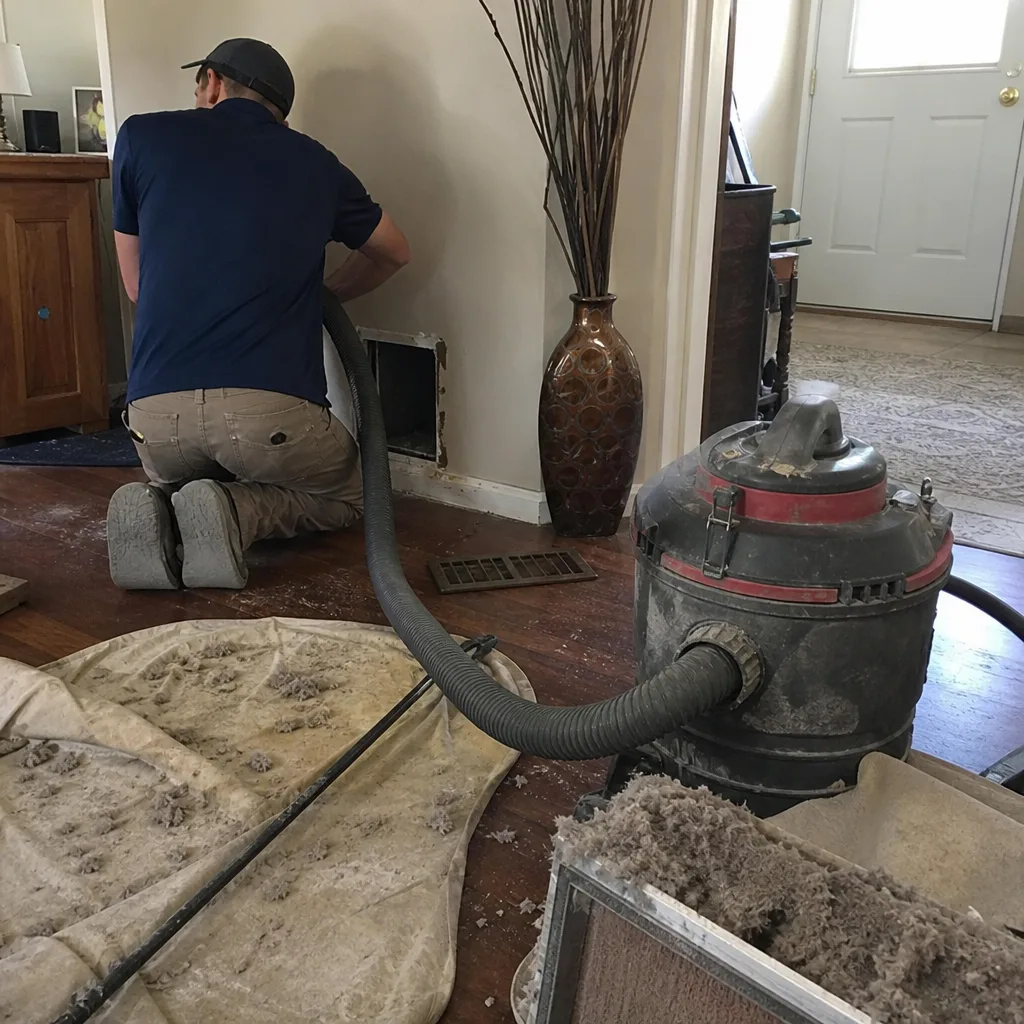 Before
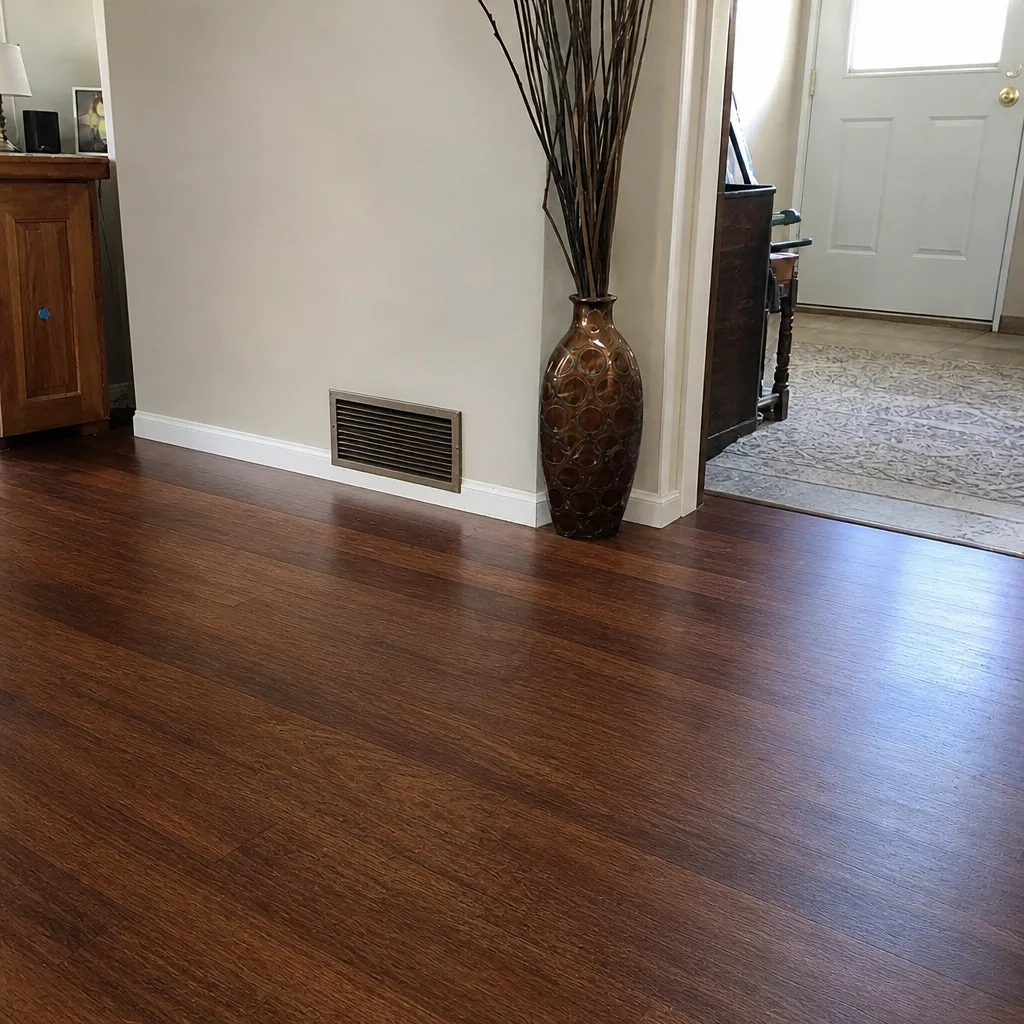 After
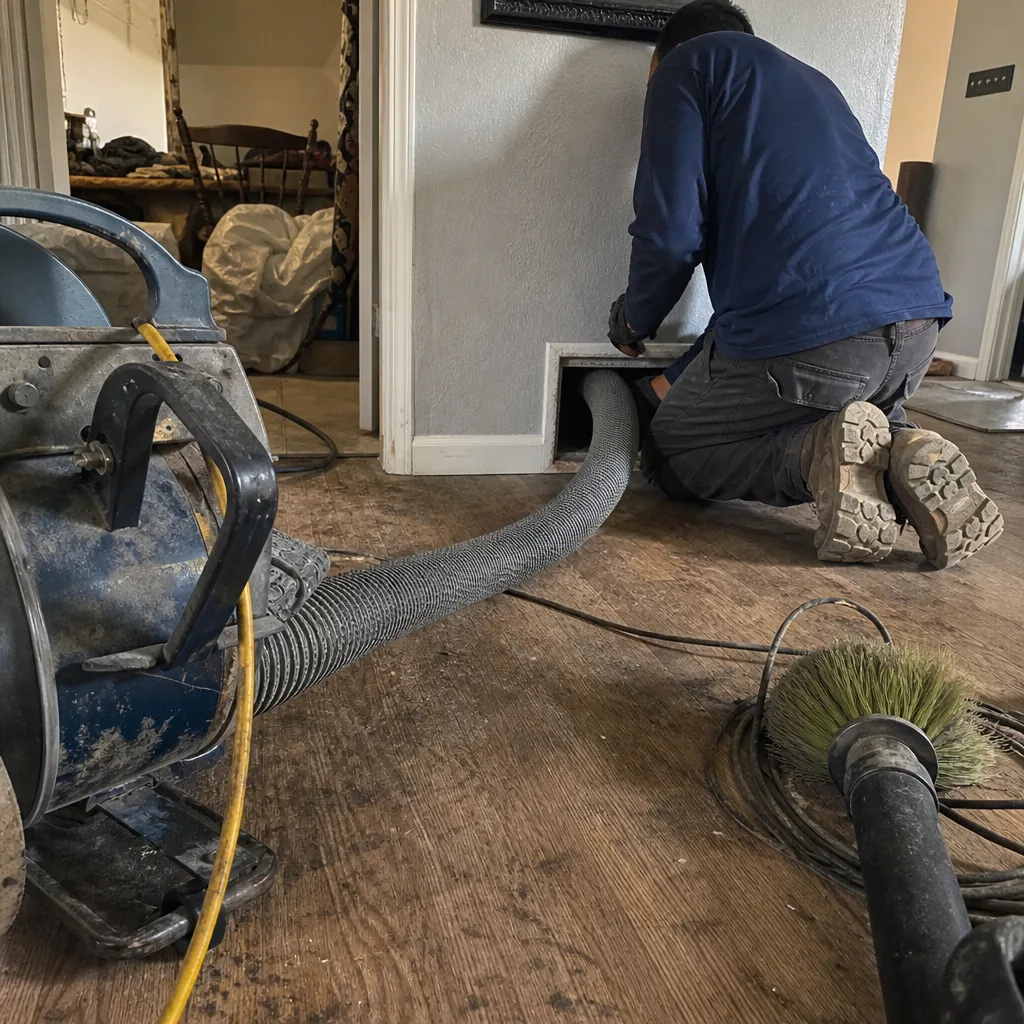 Before
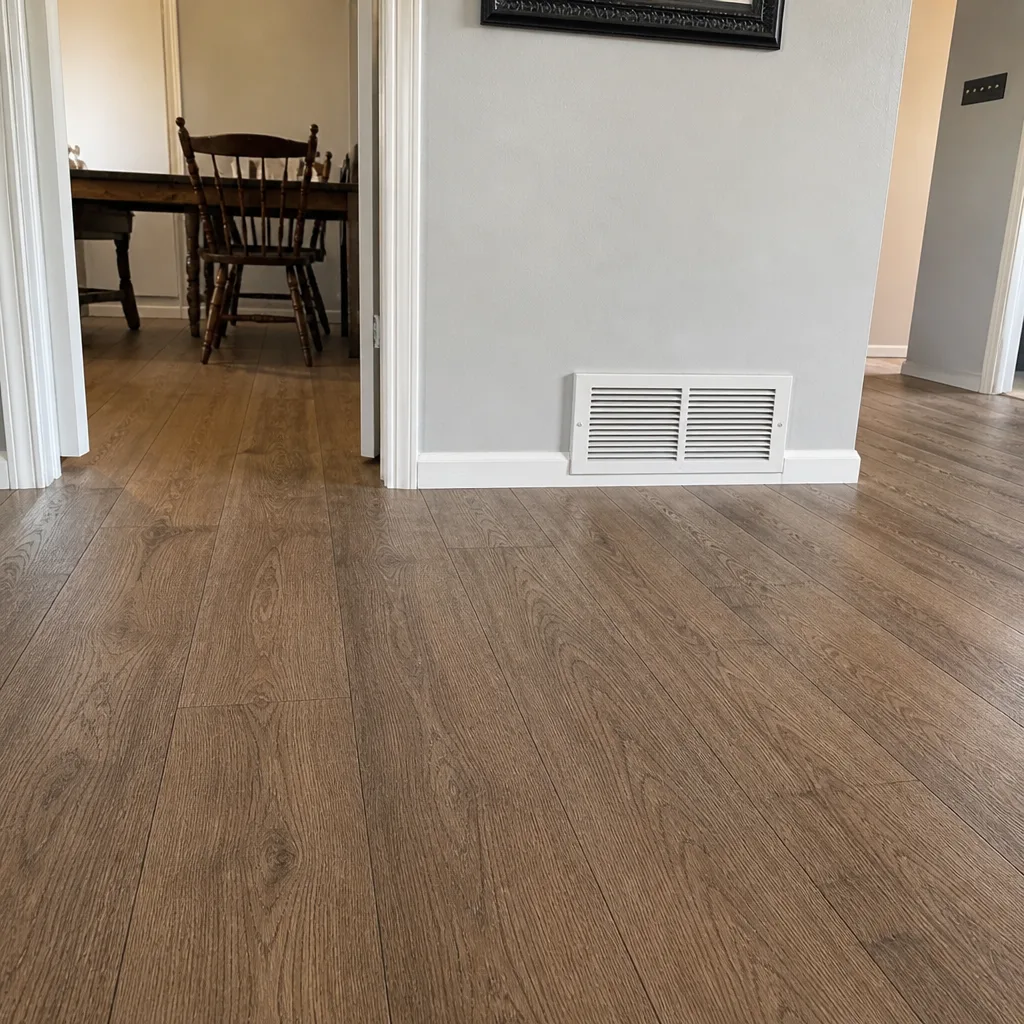 After
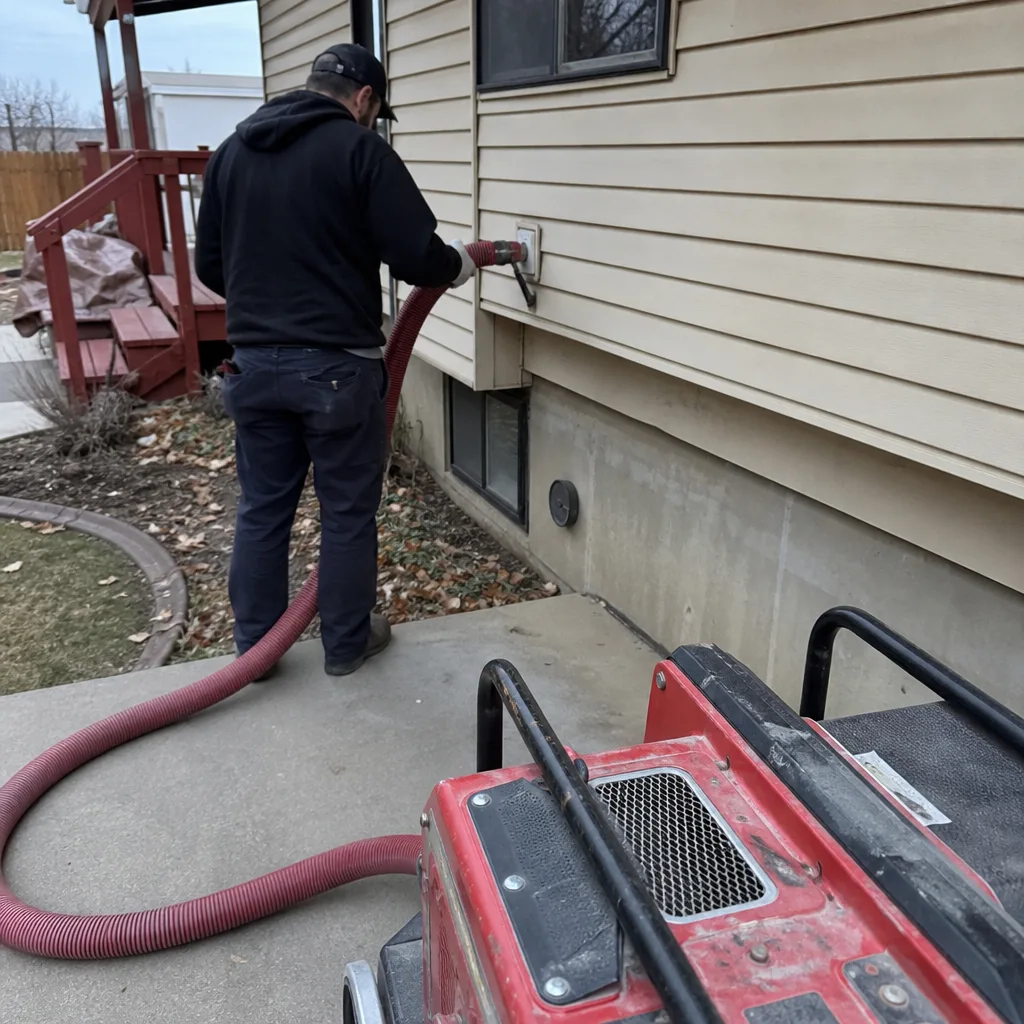 Before
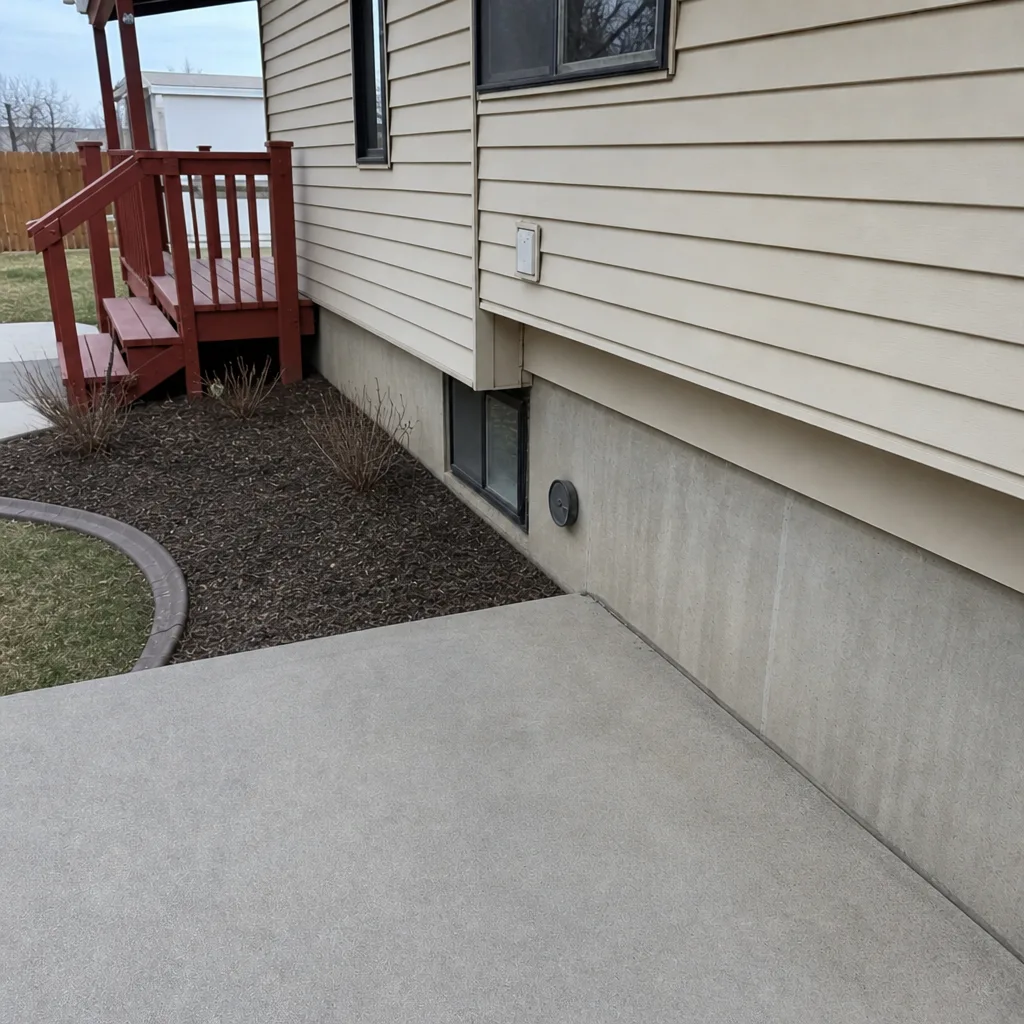 After
When to Call a Professional
Some duct problems look simple until you’re inside the system. Call a professional when you notice persistent dust on surfaces shortly after cleaning, musty or stale odors drifting from the supply registers, uneven airflow between rooms, visible gaps or crushed sections of duct at the register boots, or a duct repair proposal that involves cutting into the system without a permit discussion. Dryer vent problems are their own category and deserve their own focused service rather than being folded into a duct appointment; if your dryer is taking longer to dry clothes or the vent run behind the dryer is visibly clogged, that’s a fire-safety issue worth handling as its own job. Duct Cleaning West Jordan offers free estimates in West Jordan. Call (888) 351-4348. We answer 24/7. Fast dispatch from 7am to 7pm, Sunday through Friday.
Frequently Asked Questions
No, routine air duct cleaning in West Jordan does not require a permit. Cleaning doesn’t alter the mechanical system, so it falls outside the mechanical permit process. The permit question only enters when the scope includes duct repair, modification, or replacement. If the work stays on the cleaning side, no permit is needed.
Yes, duct repair and modification generally require a mechanical permit through the West Jordan City building department and must meet Utah Mechanical Code standards. A contractor who is going to cut into a trunk line, replace a section of duct, or open a plenum connection for repair should be pulling a permit before that work begins. Call (888) 351-4348 for a free estimate if you’re trying to figure out which category your situation falls into.
Ask the contractor in writing before work begins and confirm with the West Jordan City building department that a permit is open on your property. The permit number should be visible before any work starts, and the address on it should match yours. Also confirm the scope on the permit matches the work you’re having done. If a permit covers part of the job but not the part that requires one, that’s a problem.
Yes, unpermitted duct work can complicate a claim if the damage traces back to it. Insurers look for permits and inspection records when an HVAC-related loss is being assessed, and something as ordinary as an unsealed duct joint can become a coverage question if the work wasn’t permitted. A permitted and inspected repair removes that question from the record. Call (888) 351-4348 for a free estimate if you’re planning a duct repair and want it done with a documented permit.
The Utah Mechanical Code requires duct work to be sealed, supported, and connected with approved materials; flexible duct to be installed without crushing or kinking; clearances from combustibles to be maintained; and access to be provided for inspection and maintenance. Cloth duct tape used as a structural repair is not compliant. A permit inspection is designed to verify these conditions are met for the repaired section.
Summers in West Jordan run hot, and attic temperatures during the cooling season put real stress on duct joints, taped connections, and plenum seals. A joint that passes on the day it’s patched can fail within a season under that load, which is why the sealing and support requirements in the UMC matter beyond code compliance. Permitted, inspected work is more likely to hold through the temperature swings the system actually sees. Call (888) 351-4348 for a free estimate. We answer 24/7. Fast dispatch from 7am to 7pm, Sunday through Friday.
It depends on what “small patch” means. Sealing an existing joint during cleaning is typically part of maintenance. Cutting into the duct or replacing a section of duct is repair under the UMC and generally requires a permit. Get the scope in writing and confirm with the West Jordan City building department before the patch starts. If the contractor can’t explain the difference, that’s a signal to slow down and ask again.
The Bottom Line
Cleaning your ducts is a maintenance job and needs no permit. Repairing, modifying, or replacing them is mechanical work under the Utah Mechanical Code, and in West Jordan that means a permit through the city’s building department. The paper trail matters more than most homeowners realize: it’s what insurers look for during an HVAC-related claim, what a buyer asks for during a sale, and what prevents unpermitted work from becoming a problem years after the fact. Ask about the scope before work starts, get the permit number in writing, and confirm the inspection closes properly. A code-compliant repair is the one you don’t have to think about again.
If you’re in West Jordan and you’re not sure whether your duct situation is cleaning, repair, or both, we’re happy to look and give you a straight answer. On the dryer side, that work is a separate safety-focused job and we handle it as its own service through dryer vent cleaning. For West Jordan homeowners who want a full picture of the system before committing to a scope, see our overview at West Jordan. We use Rotobrush and Nikro equipment, work with Abatement Technologies filtration, and are familiar with Honeywell, Aprilaire, and Guardsman products when the conversation turns to whole-home air quality. Estimates are free, and we’ll tell you plainly what your job involves and what it doesn’t.
Call (888) 351-4348. We answer 24/7. Fast dispatch from 7am to 7pm, Sunday through Friday. We’re closed Saturday.
Written by the team at Duct Cleaning West Jordan.