
Last updated November 15, 2026
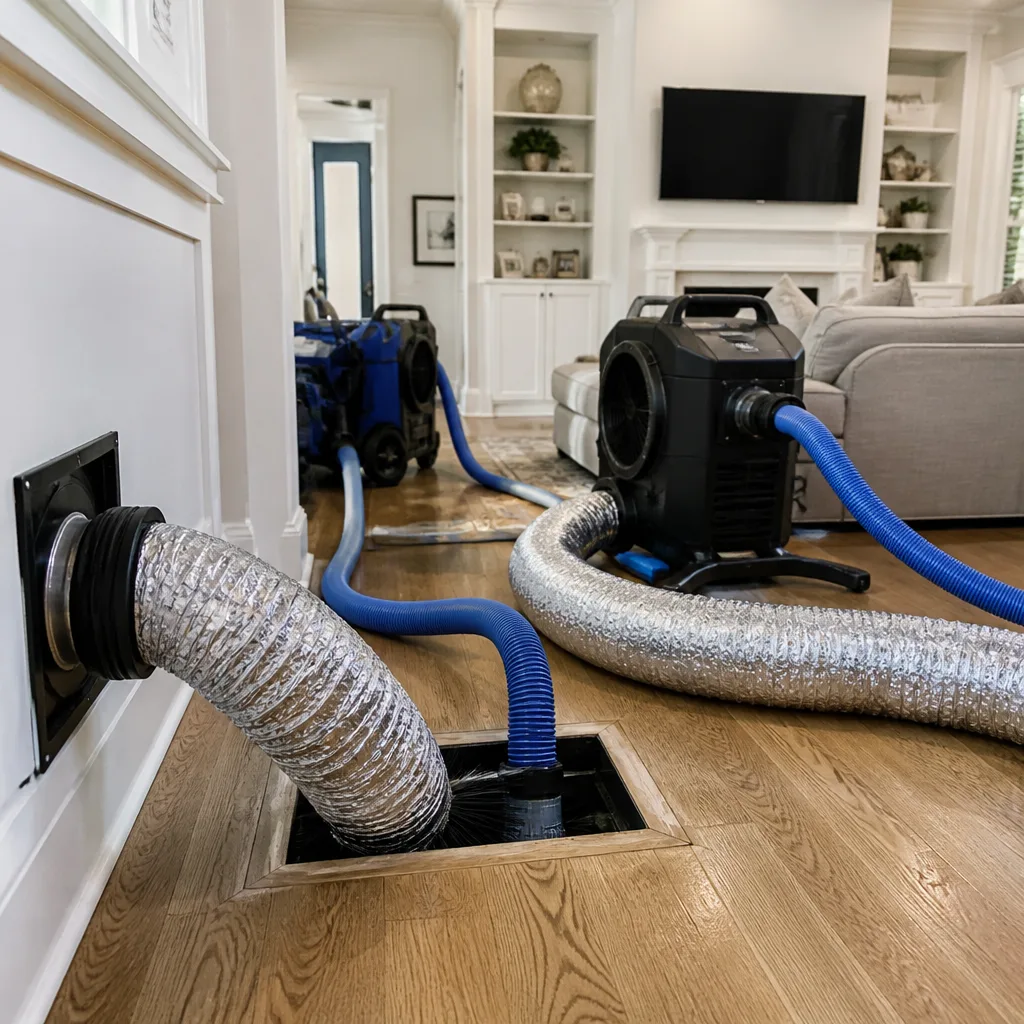 Whole-home duct cleaning
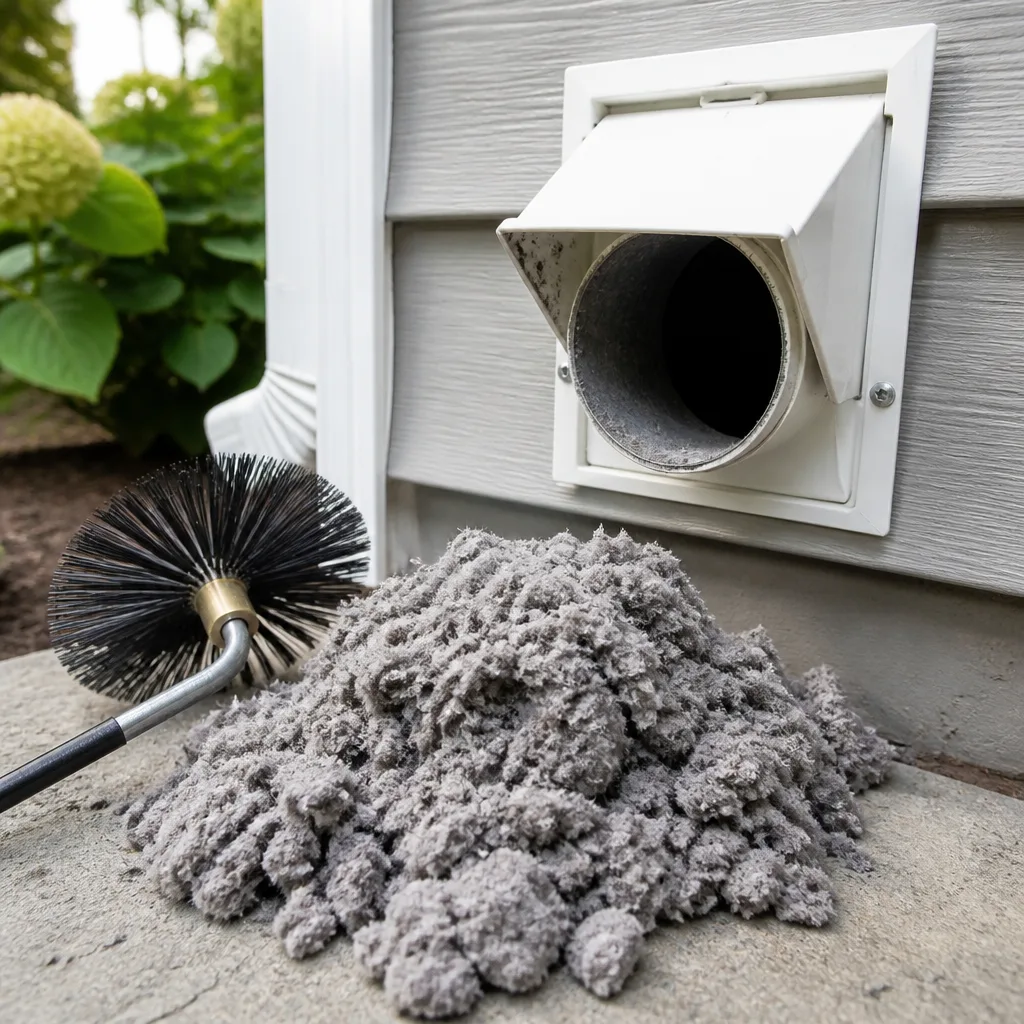 Dryer vent cleaning
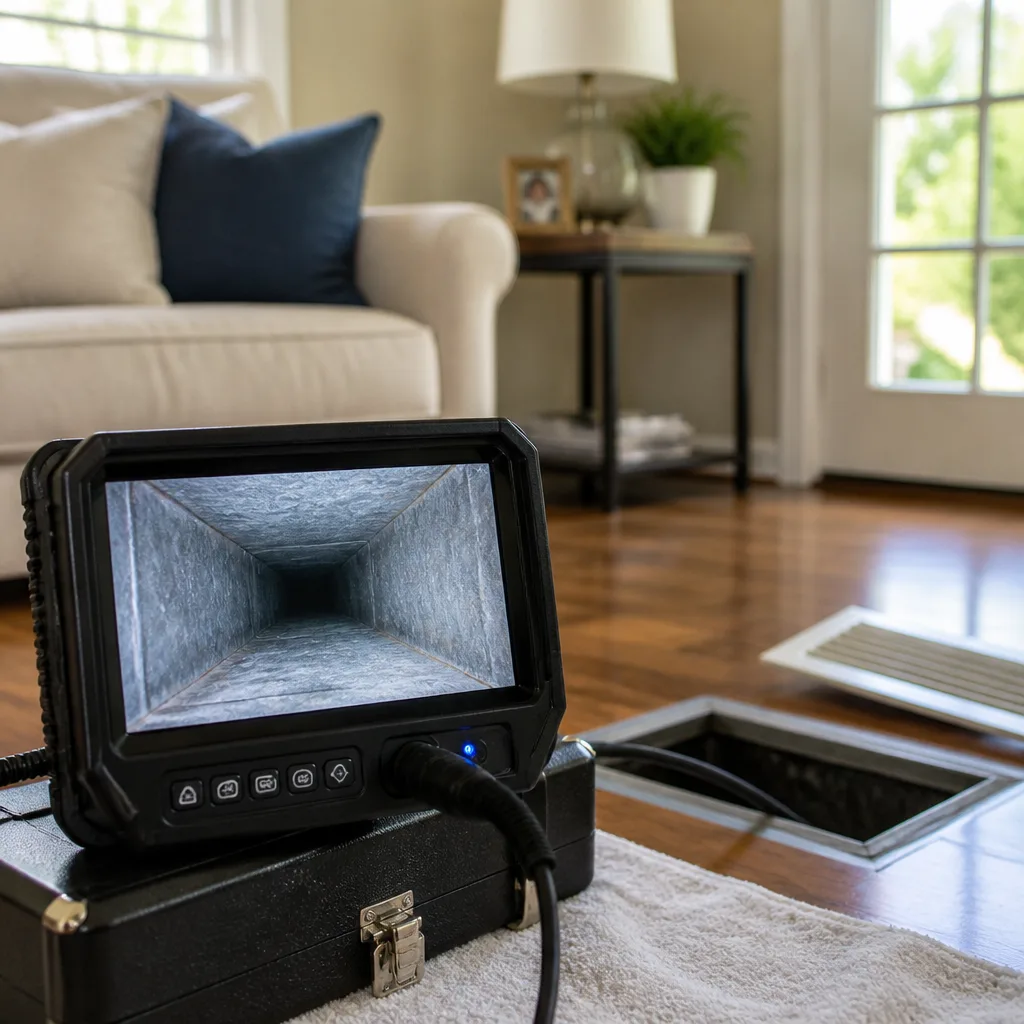 Camera inspection
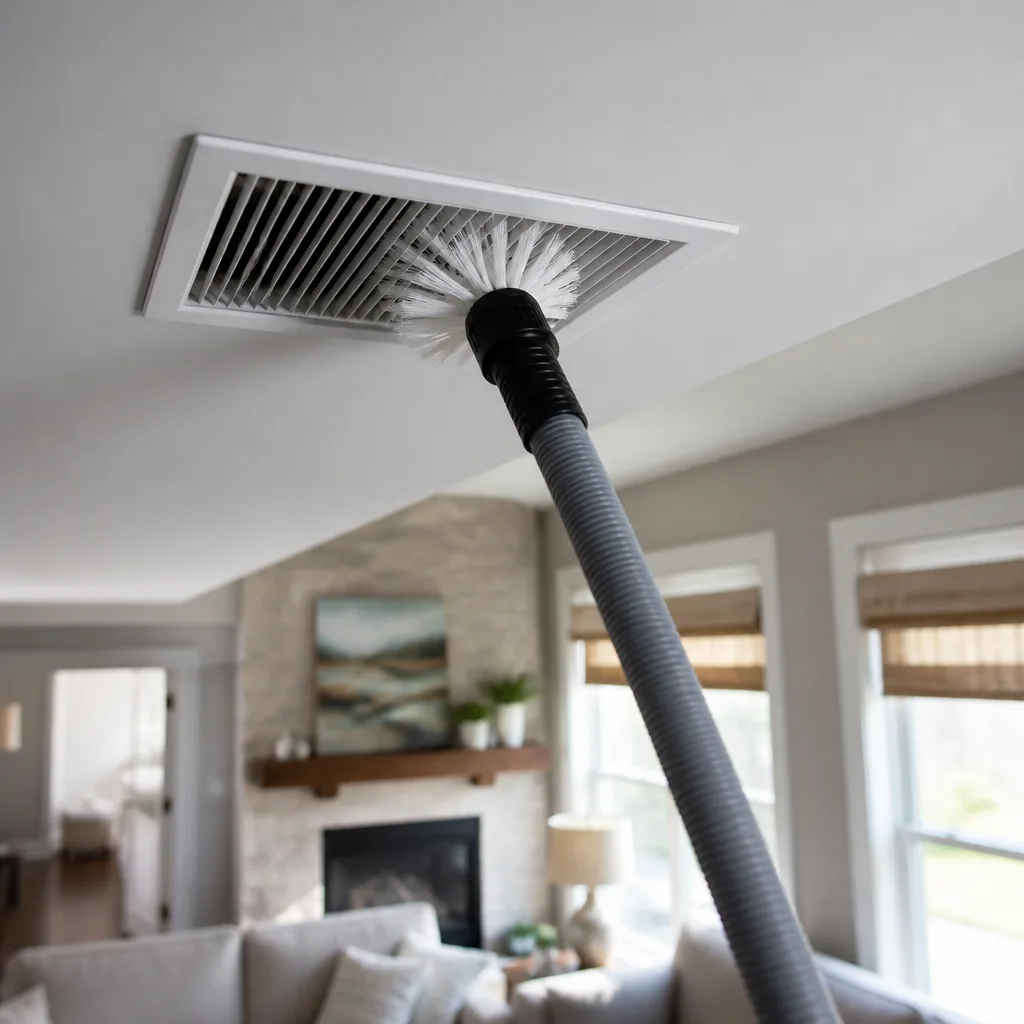 Sanitizing & deodorizing
Whole-system duct and dryer vent check with before-and-after photos - you see exactly what came out of your vents
That "$99 whole-house special" is a bait ad - the real number appears once they are in your hallway, or the "clean" is a shop-vac at the register. We photograph the inside of your ducts before and after instead.
Air Duct Cleaning Maintenance Checklist for West Jordan Homeowners
If your last filter change was “a few months ago” and you can’t name the MERV rating, your ducts are working against you, not for you. Most homeowners treat duct cleaning as a one-time reset: pay for the cleaning, forget about it, repeat in five years when the dust gets embarrassing. That approach wastes money, because the dust you paid to remove comes right back if the filter, the returns, and the dryer vent aren’t maintained on a rhythm. This guide gives you that rhythm, month by month, timed to West Jordan’s inversion season, its spring pollen surge, and the summer stretch when your HVAC carries its heaviest load.
Quick Answer
A real duct maintenance cycle for West Jordan has four moving parts: filter changes timed to the season (MERV 8 most of the year, MERV 11 to 13 during inversion and allergy season), return grille and supply register checks every month, a dryer vent lint and exterior cap check every few months, and professional cleaning every three to five years, or sooner if you’ve had a remodel or a pest issue. Follow the dated checklist below and you’ll spend less on cleaning over time, not more.
Styles & brands we work with
- Whole-home duct cleaning
- Dryer vent cleaning
- Camera inspection
- Sanitizing & deodorizing
Table of Contents
- Winter: The Inversion Season Checklist
- Spring: Pollen, Filters, and the First Real Test
- Summer: Peak Load and the Return-Air Check
- Fall: Pre-Season Reset Before the Furnace Runs
- Choosing the Right MERV Rating for West Jordan Air
- Self-Inspecting Returns and Registers Between Cleanings
- The Dryer Vent Check Most Homeowners Skip
- When to Call a Professional vs. When to Do It Yourself
Winter: The Inversion Season Checklist
Winter is the stretch that matters most in West Jordan, and not because of cold. The Salt Lake Valley’s winter inversions trap cold air near the ground under a warmer layer above, and that trapped layer holds whatever is in the air: fine dust, wood smoke, vehicle exhaust, and particulate that normally disperses. Your furnace is running constantly, pulling that air through the return system and pushing it back out through every register. Whatever your filter doesn’t catch ends up coating the inside of your ductwork.
Here’s what the winter months should look like on your calendar:
- Change the filter every 30 to 60 days. During inversion stretches, err toward 30. A loaded filter stops catching fine particulate and starts bypassing air around its edges, which means dust goes straight into the ducts.
- Step up to MERV 11 or 13 for the season. A mid-range MERV rating catches the fine particulate an inversion throws at you without choking airflow the way a MERV 16 can in an older system. Check your furnace’s rated maximum before you buy.
- Wipe the return grilles monthly. A damp cloth across the slats takes thirty seconds and tells you what’s happening inside. If the grille is grey again in a week, the dust is coming from the ducts, not the room.
- Watch for musty or smoky smells at the registers. A smell that shows up only when the heat runs is a strong signal that the duct interior is holding debris.
- Keep the dryer vent cap clear. Winter is when a blocked exterior cap shows itself, and we’ll get to why below.
One habit worth building: snap a photo of your filter when you install it and one when you pull it out. Two months of photos will tell you more about your home’s dust load than any general rule. Homes near the Redwood Road corridor and the older neighborhoods around West Jordan City Hall tend to run dustier than newer builds out toward the mountain side, and the photos will show you which category you’re in.
Spring: Pollen, Filters, and the First Real Test
Spring in West Jordan brings a pollen surge that hits ductwork harder than most homeowners expect. Cottonwood fluff, grass pollen, and the fine material that blows off the Oquirrh foothills all get pulled into the return system every time the system runs, and in April and May it runs a lot as temperatures swing between furnace weather and air conditioning weather. That on-again, off-again pattern is actually worse for your ducts than a steady season, because each startup lifts settled debris back into the airstream.
The spring checklist:
- Change the filter at the start of the pollen surge. If you closed out winter with a filter that ran through inversion season, it’s done. Replace it before the first warm week, not after.
- Switch to a MERV 11 if you’re allergy-sensitive. MERV 11 catches most pollen-sized particles. If someone in the house has spring allergies, this is the single cheapest change you can make.
- Vacuum the supply registers from the room side. Dust settles on the grille face and gets blown back into the room. Pull the grille, vacuum both sides, and put it back. Every spring, every register.
- Look for uneven airflow. One room that never gets enough air while another roasts is a sign of a disconnected or crushed run in the attic or crawlspace, not a thermostat problem. Note which rooms and mention it when you call for service.
- Schedule a professional cleaning if it’s been three or more years. Spring is the natural reset point before the cooling season starts.
This is also the season when we get the most calls about that grey dust film coming back within weeks of a cleaning. Almost always the answer is a filter that ran past its life during winter or a return system with a gap at a joint that’s pulling attic air. Cleaning the ducts without fixing the source is a temporary repair, which is why our Duct Cleaning West Jordan work always starts with a look at what’s feeding the problem.
Summer: Peak Load and the Return-Air Check
Summer is the HVAC system’s hardest stretch in West Jordan. The system runs near-continuously for weeks, and continuous runtime means continuous dust capture at the filter and continuous airflow through every duct. Two things go wrong in summer: filters load faster than the calendar suggests, and return-air problems that stayed quiet all winter become obvious because the system is moving more air for longer.
What to do between June and August:
- Check the filter every three weeks. The 90-day filter label is written for a mild climate and average runtime. A West Jordan July is neither.
- Stay at MERV 8 to 11. Don’t chase a higher rating in summer. A restrictive filter on a system already running nonstop costs you airflow and efficiency. The particulate load is lower in summer than in inversion season anyway.
- Listen at the return grille. A whistle or a hard pull at the return means the system is starved for air. That’s usually a filter issue or an undersized return, and it’s worth a professional look.
- Check the condensate and the closet, not just the ducts. A musty smell in summer often traces to a damp air handler closet rather than the ducts themselves. If the smell is strongest near the unit, say so when you call.
- Keep the dryer vent in the rotation. Summer heat plus a lint-clogged vent is the combination that starts house fires. The vent gets the same attention in July as it does in January.
We handle a lot of air duct cleaning calls in midsummer where the homeowner’s real complaint is uneven cooling. Sometimes the ducts are the answer. Sometimes the ducts are clean and the problem is a crushed flex run behind a knee wall. The only way to know is to look, which is why we treat duct repair as part of the job rather than a separate conversation.
Fall: Pre-Season Reset Before the Furnace Runs
Fall is the quiet season, and that’s exactly why it’s the best time to get maintenance done. Once the furnace kicks on for the season, every bit of debris sitting in your ducts since spring gets lifted into the air you breathe and pushed through the system. Doing the work before the first cold snap means the first run of the season pushes clean air, not a season’s worth of settled dust.
The fall checklist, in order:
- Pull the filter and look at it against a light. If you can’t see light through it, it’s done regardless of how recently you changed it.
- Schedule professional cleaning if you’re due. Three to five years is the typical interval for a West Jordan home without pets, remodels, or smokers. Two to three years if any of those apply.
- Book a duct inspection if you’ve had work done on the house. A remodel, an addition, or any HVAC replacement stirs up construction dust and often leaves a run disconnected. Cleaning the ducts without checking the connections is half a job.
- Give the dryer vent its full check. Pull the dryer out, disconnect the vent, and look inside the duct and at the exterior cap. See the dryer vent section below for what to look for.
- Test every register for airflow. Hold a tissue against each supply register. If one barely moves it, that run has a problem.
- Set your winter filter reminder now. Put it on the calendar for 30 days after the furnace starts running regularly.
Autumn is also the best window to have a conversation about whole-home air quality before the inversion season arrives. Filter housings, media cabinets, and bypass units from Aprilaire and Guardsman are things we know well, and fall is when upgrading them makes sense: you get the benefit during the season you actually need it.
Choosing the Right MERV Rating for West Jordan Air
MERV is a rating of how well a filter catches particles by size, and the right number for a West Jordan home changes with the season. Too low and you’re pushing fine particulate straight into your ducts. Too high and you starve the system of airflow, which costs you comfort and equipment life. The practical range for most homes here sits between MERV 8 and MERV 13.
Here’s how we think about it through the year:
- Inversion season (roughly December through February): MERV 11 to 13. The fine particulate that gets trapped under the inversion is exactly what the mid-to-high range catches.
- Spring pollen surge (April through May): MERV 11. Pollen particles are larger than inversion particulate but arrive in volume. MERV 8 catches some of it; MERV 11 catches most.
- Summer peak load (June through August): MERV 8 to 11. Prioritize airflow over filtration, because the system is running flat out.
- Fall shoulder season (September through November): MERV 8 to 11, whatever your furnace is rated for, as a baseline before you step up for winter.
Two things trip people up. First, check your furnace’s maximum rated MERV before you buy anything. Many older systems in West Jordan were installed with a 1-inch filter slot that can’t handle a MERV 13 without restricting airflow, and the fix is a media cabinet rather than an expensive filter. Second, the filter’s job is to protect the equipment and the ducts, not to clean the air in the rooms. A whole-home filter upgrade is a real improvement, but it doesn’t replace duct cleaning.
Our technicians have up to 11 years of experience reading these systems, and the conversation usually ends the same way: match the filter to the equipment slot and the season, change it on a real schedule, and let the ducts get cleaned when they’re actually due rather than on a guess.
Self-Inspecting Returns and Registers Between Cleanings
You don’t need special tools to catch most duct problems early. What you need is a routine and a flashlight. A monthly walkthrough of the visible parts of your duct system will catch the problems that get expensive when they’re ignored for a year.
Here’s the monthly inspection, step by step:
- Shine a light into every return grille. A return you can see clearly into should look like clean sheet metal with a light dust film. A heavy grey coating, debris chunks, or visible lint means the duct is loaded.
- Check the register faces for dust trails. Dark streaks radiating out from the slats mean the register is blowing dust, which means the duct behind it is dirty.
- Sniff at the return. A musty, earthy, or smoky smell at the return is the single most reliable early warning sign of duct debris and possible moisture.
- Feel the airflow at every supply. A register that’s noticeably weaker than it used to be is a duct problem, a damper problem, or a filter problem. Rule out the filter first, then get it looked at.
- Look for gaps and tape failure. Any visible joint in the ductwork with peeling tape or a gap is drawing attic or crawlspace air into your system. That’s the number one reason dust returns after a cleaning.
If you find a problem in step five, don’t let a cleaning crew clean around it and leave. Ask for the repair. When we take on West Jordan jobs, the ducts get cleaned first and then the compromised sections get sealed properly, because a cleaning with an open joint is a cleaning that undoes itself.
The Dryer Vent Check Most Homeowners Skip
Dryer vents are where maintenance most often turns into a safety issue. Lint is highly combustible, and a vent that’s blocked turns a routine appliance into a fire risk. The check takes ten minutes and should happen at least twice a year, more often if your dryer runs several loads a week.
Here’s what the check looks like:
- Clean the lint trap every load. This is not the maintenance item; it’s the baseline. The trap catches a fraction of the lint that goes through.
- Pull the dryer out once a season. Disconnect the vent hose and look into both the dryer exhaust port and the duct. A thin film of lint is normal. A visible mat or a solid mass is not.
- Inspect the exterior cap. The cap should open freely and the flap should swing without resistance. In winter, condensation inside the duct can freeze at the cap and seal it closed. A blocked cap looks like a flap that won’t lift, frost or ice buildup around the hood, or a dryer that takes longer than usual per load.
- Feel for strong airflow at the exterior cap while the dryer runs. Weak flow means a restriction somewhere in the run.
- Watch for extended dry times. If a load that used to take 45 minutes now takes 70, the vent is the first thing to check.
Dryer vent cleaning is one of our dedicated services, not a checkbox tacked onto a duct cleaning appointment. If the vent run in your home is long, has multiple elbows, or routes through an unheated space, it’s worth having a professional look even if you do the routine checks yourself. A clogged vent is one of the leading causes of house fires, and this is where routine checks pay off most.
When to Call a Professional vs. When to Do It Yourself
Most of what this checklist describes is genuinely homeowner work: filter changes, grille wiping, register checks, lint trap cleaning. Those are the habits that keep your ducts functional between professional visits. But some jobs need real equipment and a trained eye, and it’s worth being honest about the line.
Do these yourself:
- Filter changes, on the schedule above
- Wiping visible return and supply grilles
- Lint trap cleaning every load
- Checking the exterior dryer vent cap
- Feeling airflow at every register and noting the weak ones
- Photographing anything that looks wrong for the next service visit
Call a professional for these:
- Full duct cleaning, which requires rotary brush agitation and HEPA-rated negative-air extraction to actually remove debris from duct walls rather than stirring it into the room. Handheld vacuums and shop-vacs don’t get there.
- Any duct repair, including disconnected runs, crushed flex duct, or joints pulling attic air.
- Deep dryer vent cleaning, especially on long or complicated runs.
- Anything you smell but can’t see: persistent musty or smoky odors at the registers.
- Post-remodel or post-pest cleaning, where debris type and volume need containment, not a shop-vac.
Our dryer vent cleaning and duct work uses Rotobrush rotary brush systems and Nikro HEPA-rated extraction, with Abatement Technologies containment equipment on jobs where air quality matters most. That’s the difference between cleaning a duct and cleaning around it. Duct Cleaning West Jordan offers free estimates in West Jordan: call (888) 351-4348. We answer 24/7. Fast dispatch from 7am to 7pm, Sunday through Friday.
See the difference
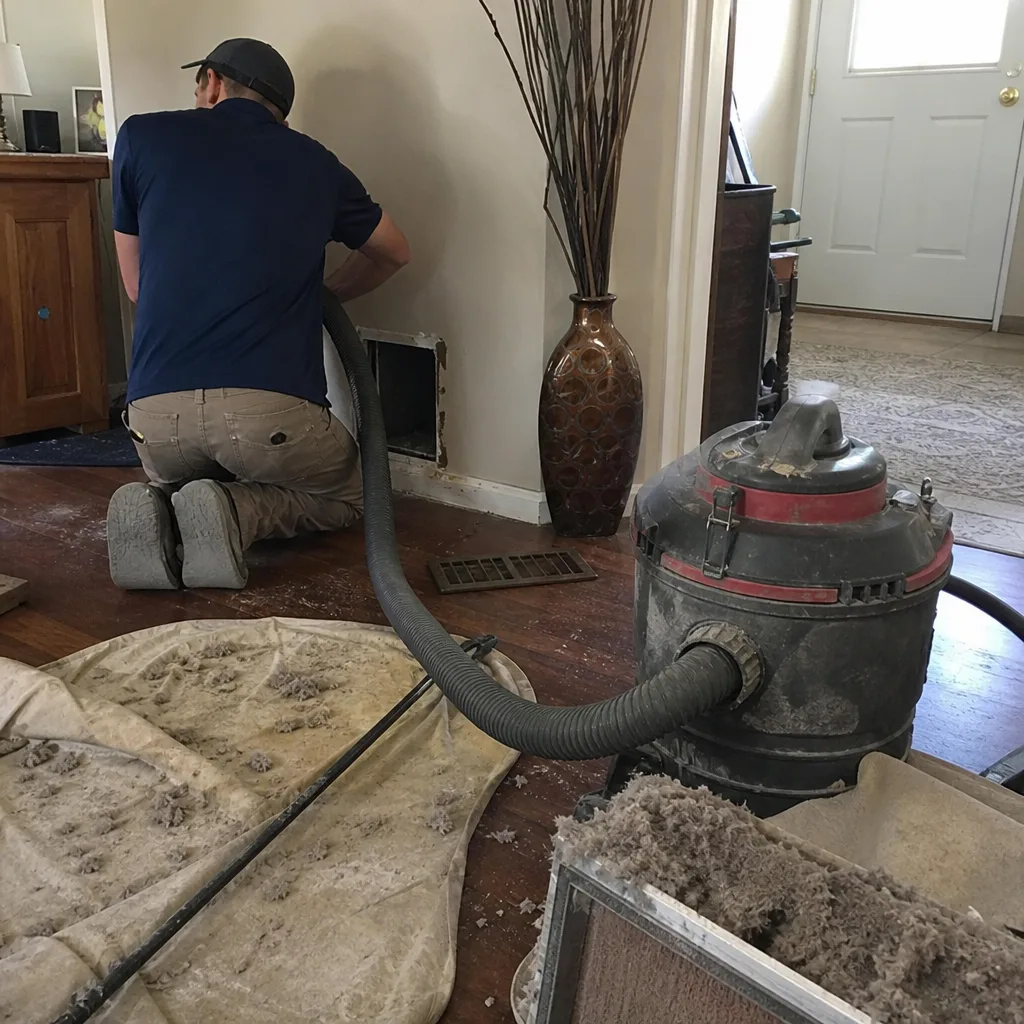 Before
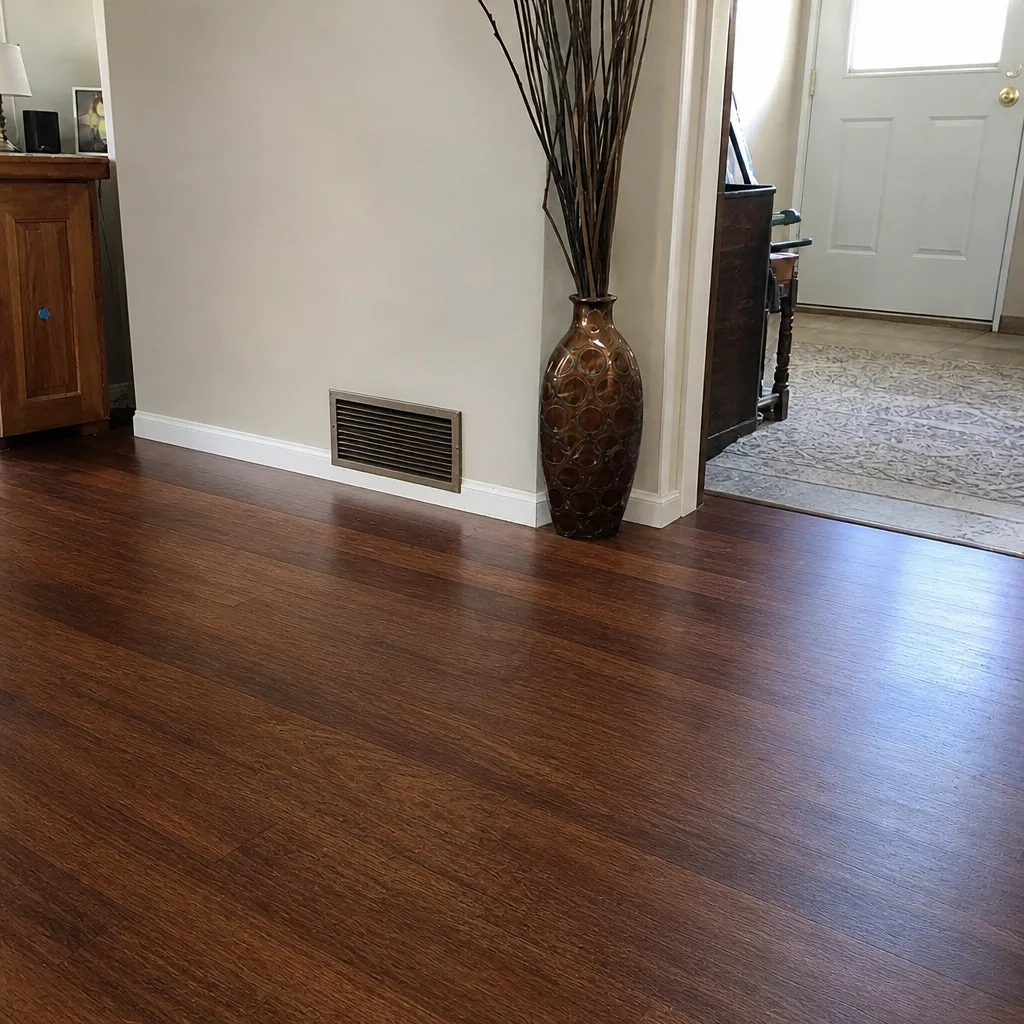 After
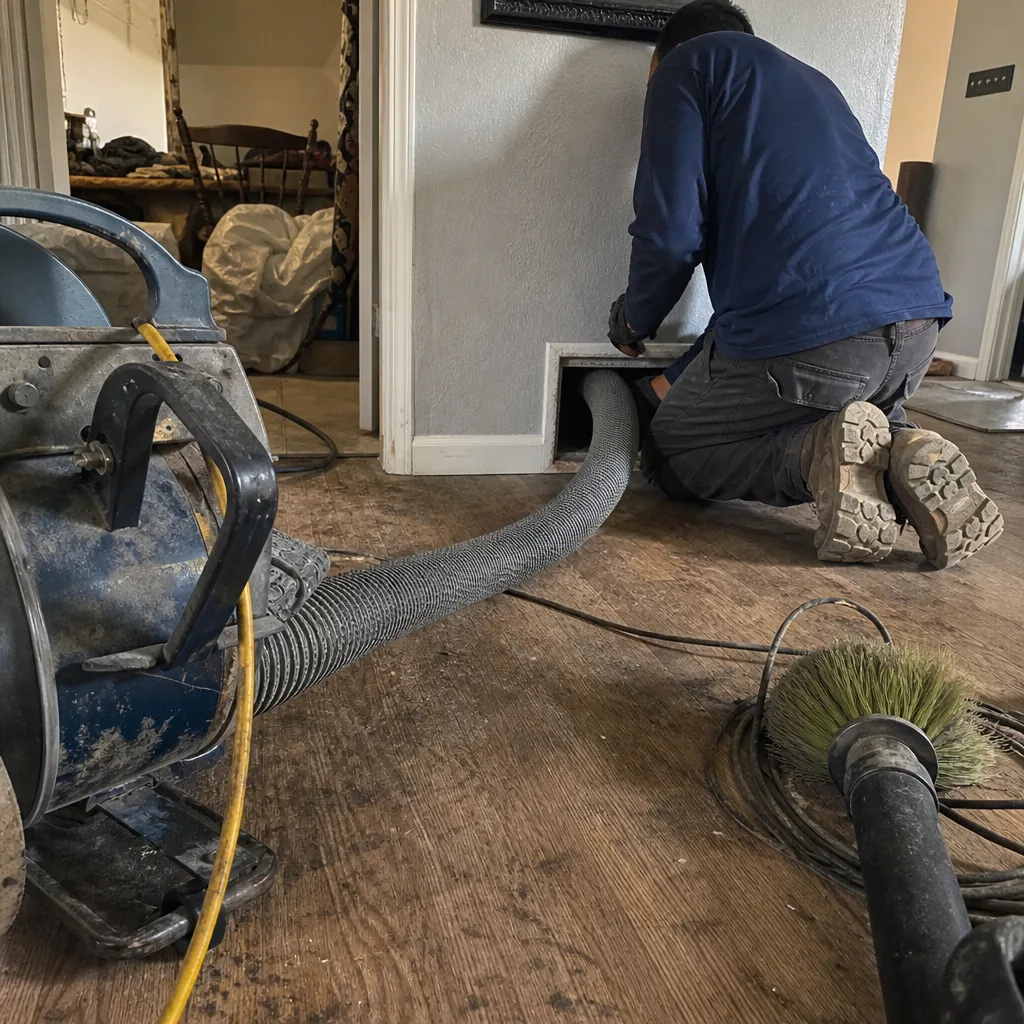 Before
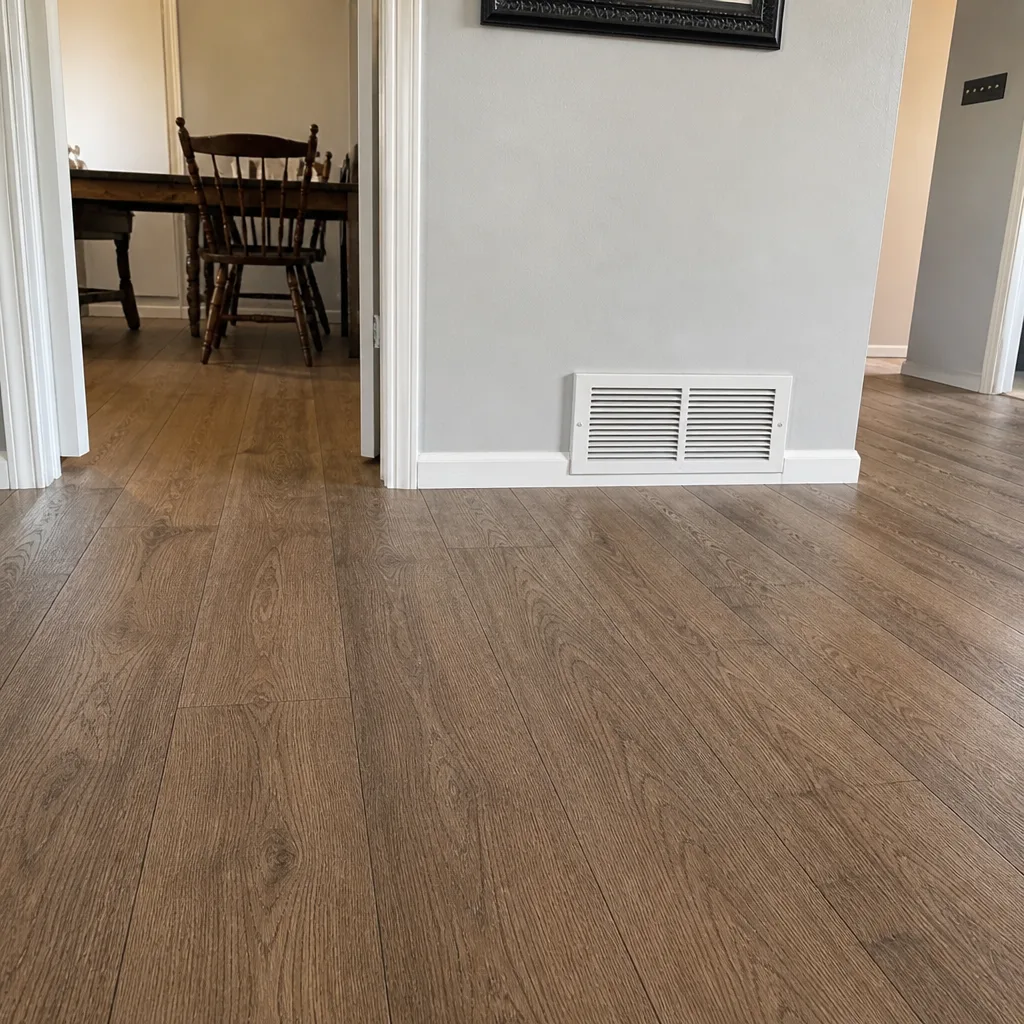 After
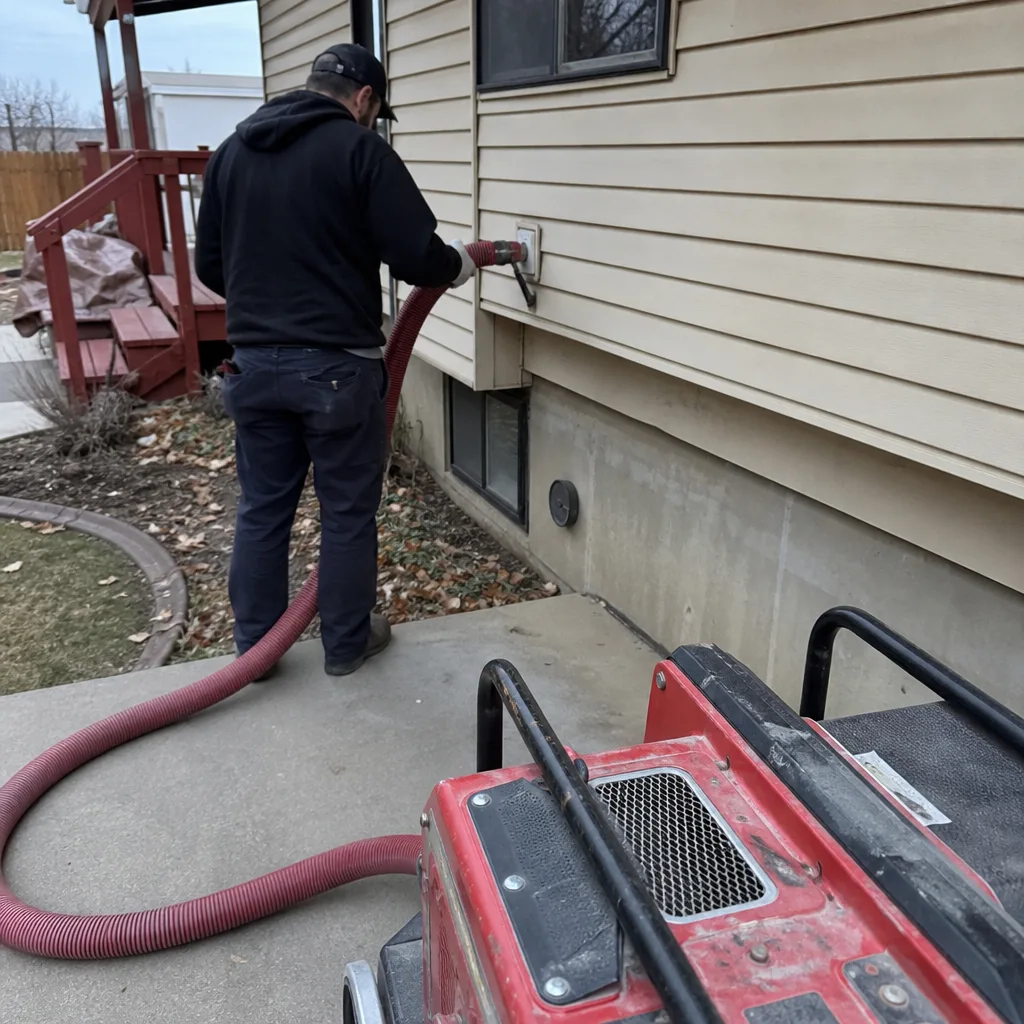 Before
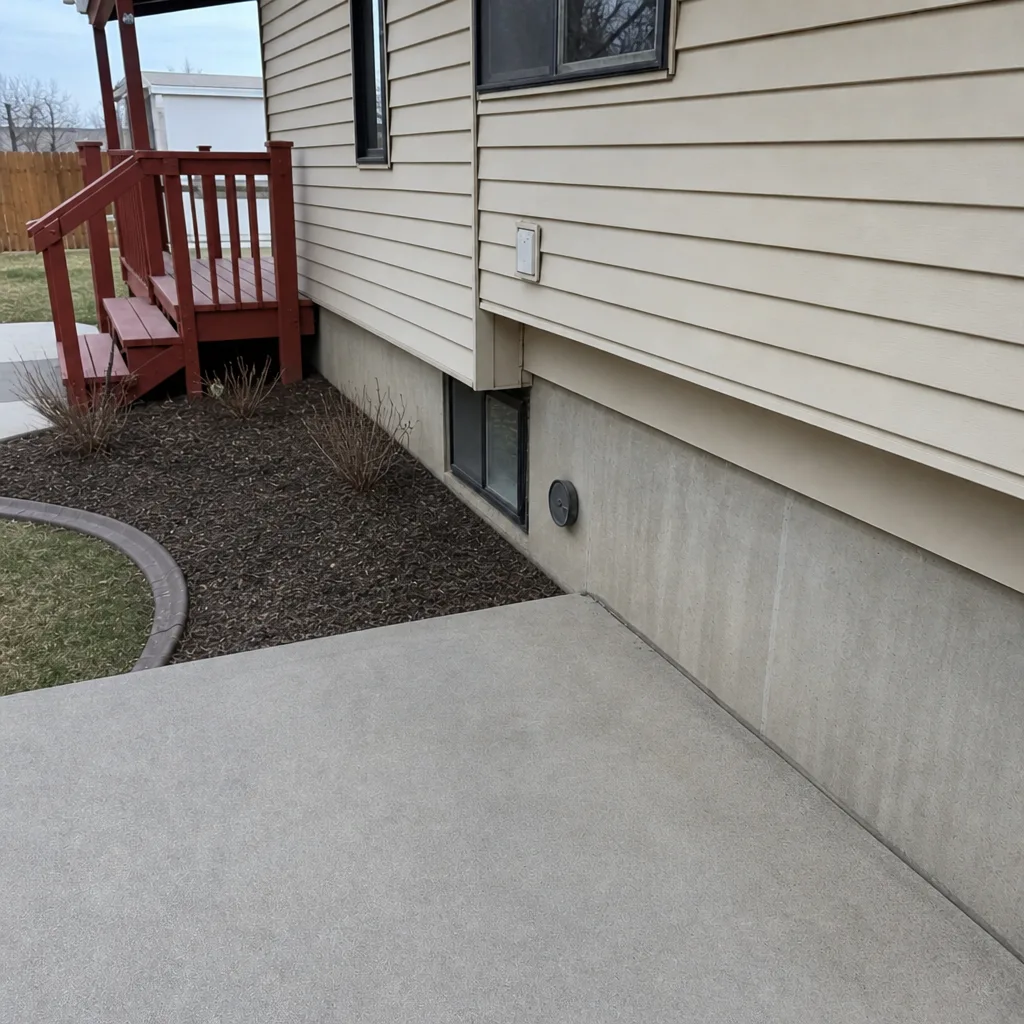 After
Common Mistakes to Avoid
- Chasing the highest MERV rating you can buy. A MERV 16 filter in a system designed for MERV 8 will restrict airflow and cost you comfort. Match the filter to what your furnace is rated for.
- Trusting the “90-day” filter label in summer. That label assumes average runtime. A West Jordan July is not average, so check the filter every three weeks during peak cooling.
- Cleaning ducts before fixing leaks. If a joint in your attic ductwork is pulling outside air, cleaning first is money thrown away. Fix the leak, then clean.
- Treating dryer vent cleaning as optional. A lint-clogged vent is a fire hazard, not a housekeeping item. Two checks per year is the minimum.
- Ignoring musty smells because “the ducts were just cleaned.” A musty smell after a cleaning almost always means a moisture source the cleaning didn’t address, and it needs investigating.
- Believing a shop-vac and a hose is a duct cleaning. Consumer equipment moves surface dust and stirs up the rest. Real cleaning requires rotary agitation and negative-air containment, and if a quote seems too cheap to include those, it probably doesn’t.
- Setting an aggressive cleaning schedule and then burning out on it. The right interval for most West Jordan homes is three to five years. Dial it to your home, not to a sales pitch.
Frequently Asked Questions
Every three to five years for most homes, and every two to three years if you have pets, have smokers in the house, or have done a remodel or had a pest issue. Inversion season adds fine particulate load, so homes that run their furnace heavily through the winter tend toward the shorter end of that range. Call (888) 351-4348 for an exact quote based on your system: estimates are free.
MERV 11 to 13 during inversion season, MERV 11 through the spring pollen surge, and MERV 8 to 11 in summer when airflow matters most. Check your furnace’s maximum rated MERV before you buy. The filter protects your equipment and ducts; it doesn’t replace cleaning.
Photograph your return grilles and registers, and if you’re seeing a heavy grey coating, dark dust trails, or a musty smell when the system runs, it’s time. If a room has weak airflow compared to the rest of the house, that’s a duct problem worth diagnosing before you clean.
Yes, and winter is when it’s most likely. Condensation inside the vent run can freeze at the exterior cap and seal it closed, which cuts airflow and turns the vent into a lint trap. Check the cap every few months and watch for longer-than-usual dry times.
Usually because they don’t include rotary brush agitation, HEPA-rated negative-air extraction, or any inspection of the connections. Without those three, the work doesn’t remove debris from the duct walls or verify the system’s integrity. Our prices are set per job by written estimate, not per vent, and we tell you what’s included before you commit.
It removes the reservoir of dust that feeds the problem, but only if the source is addressed. A filter that runs past its life, a joint pulling attic air, or a leaky return will refill your ducts within weeks. Cleaning plus repair is the fix that lasts.
The Bottom Line
Duct maintenance isn’t a single event, it’s a rhythm. Change filters on a season-aware schedule (MERV 11 to 13 in inversion season, MERV 8 to 11 in summer), wipe and inspect registers monthly, check the dryer vent twice a year, and schedule professional cleaning every three to five years or after any major disruption. Follow the checklist and you’ll spend less on cleaning, breathe better air through the West Jordan inversion season, and catch duct problems before they turn into repairs. The monthly inspection takes fifteen minutes. It’s the cheapest maintenance you’ll ever do on your home’s air system.
Call (888) 351-4348 for a free estimate on duct cleaning, dryer vent cleaning, or duct repair. We answer 24/7. Fast dispatch from 7am to 7pm, Sunday through Friday.
Written by the team at Duct Cleaning West Jordan.