
Last updated November 15, 2026
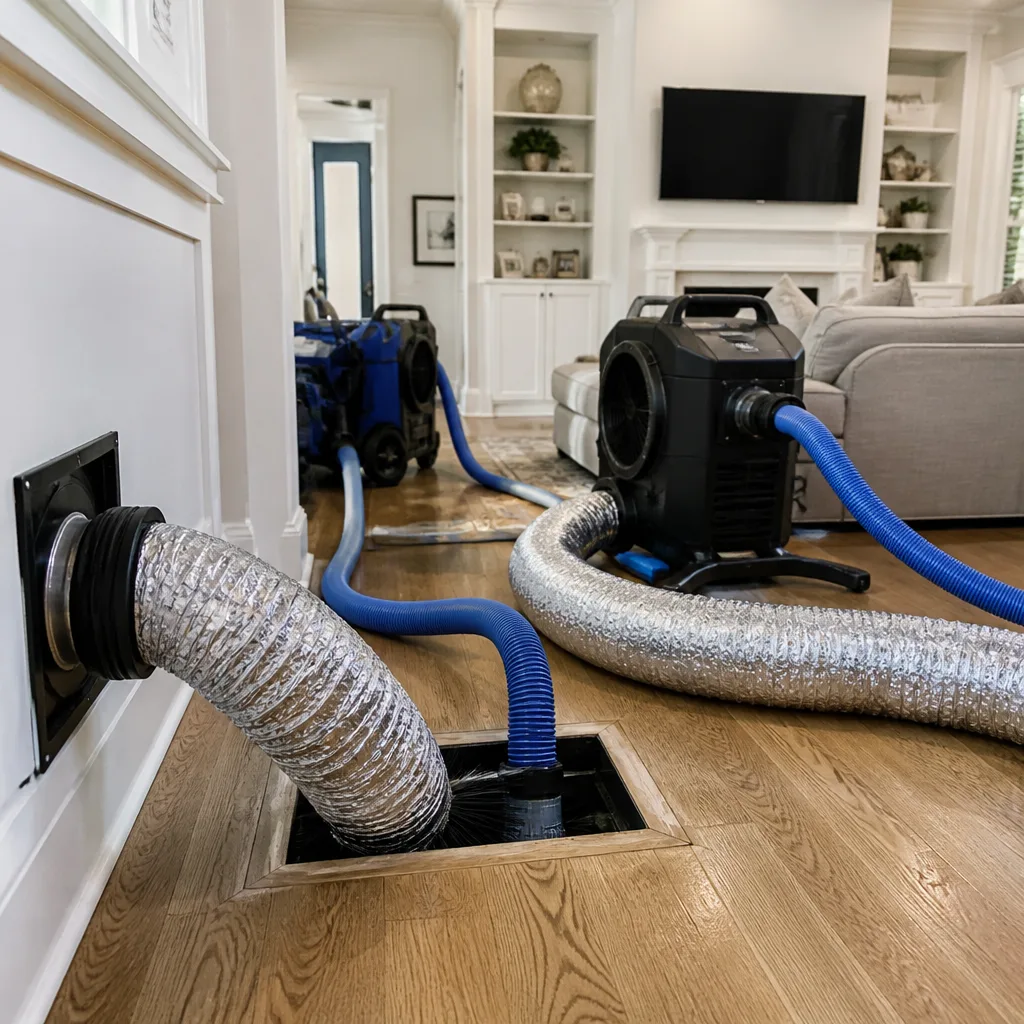 Whole-home duct cleaning
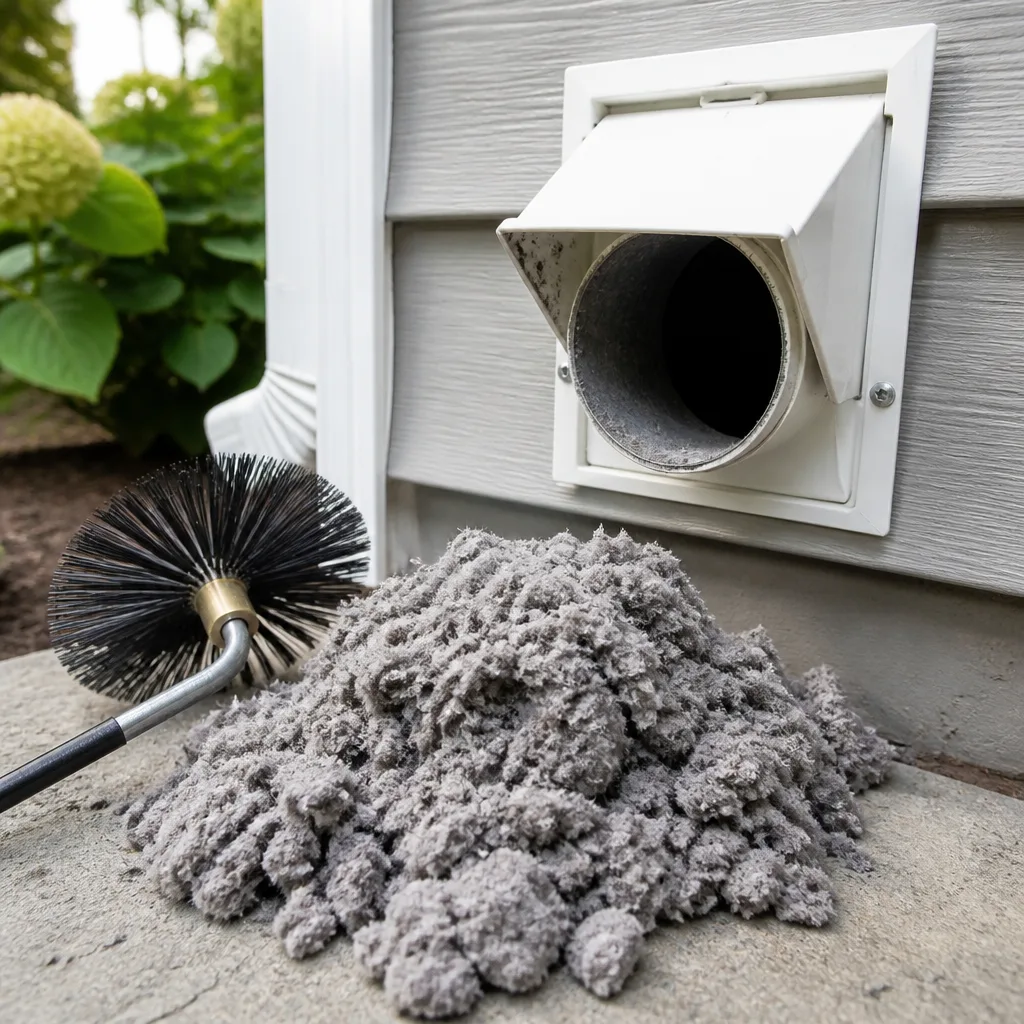 Dryer vent cleaning
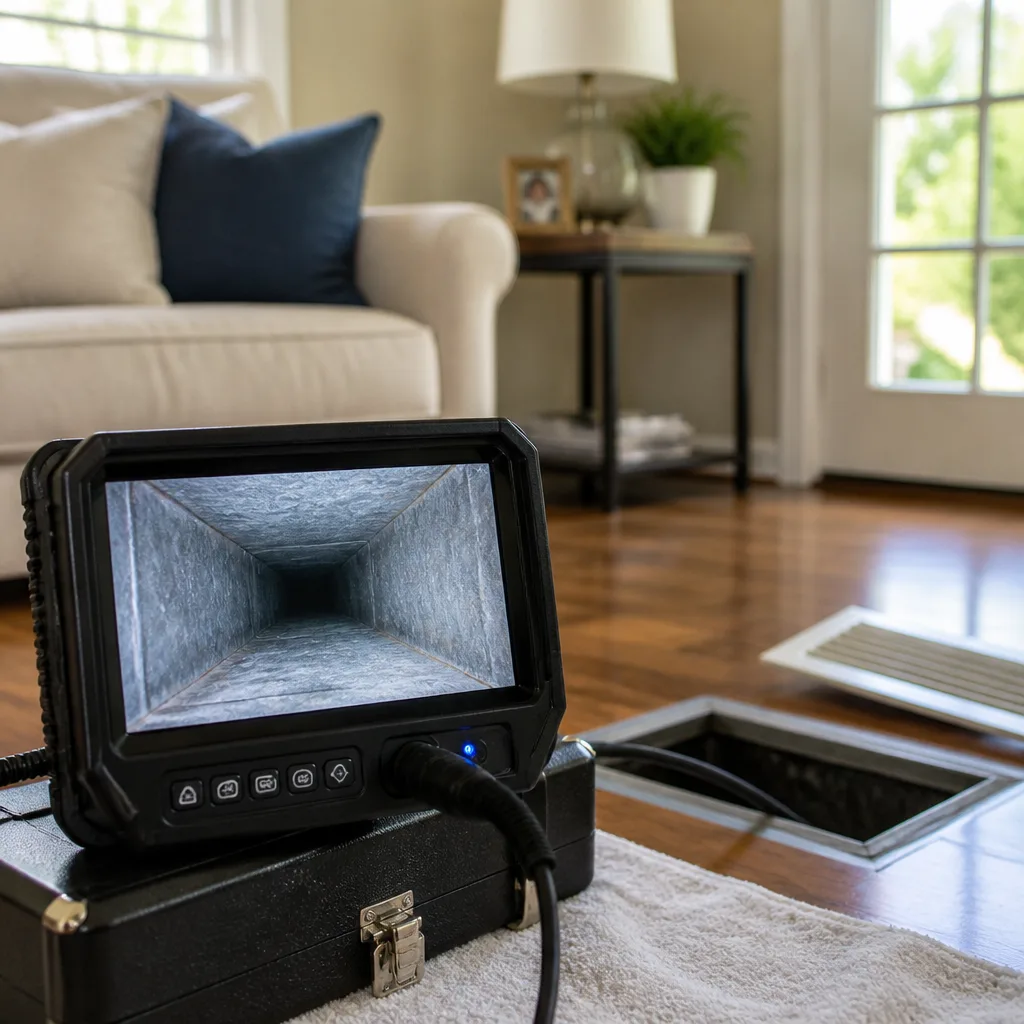 Camera inspection
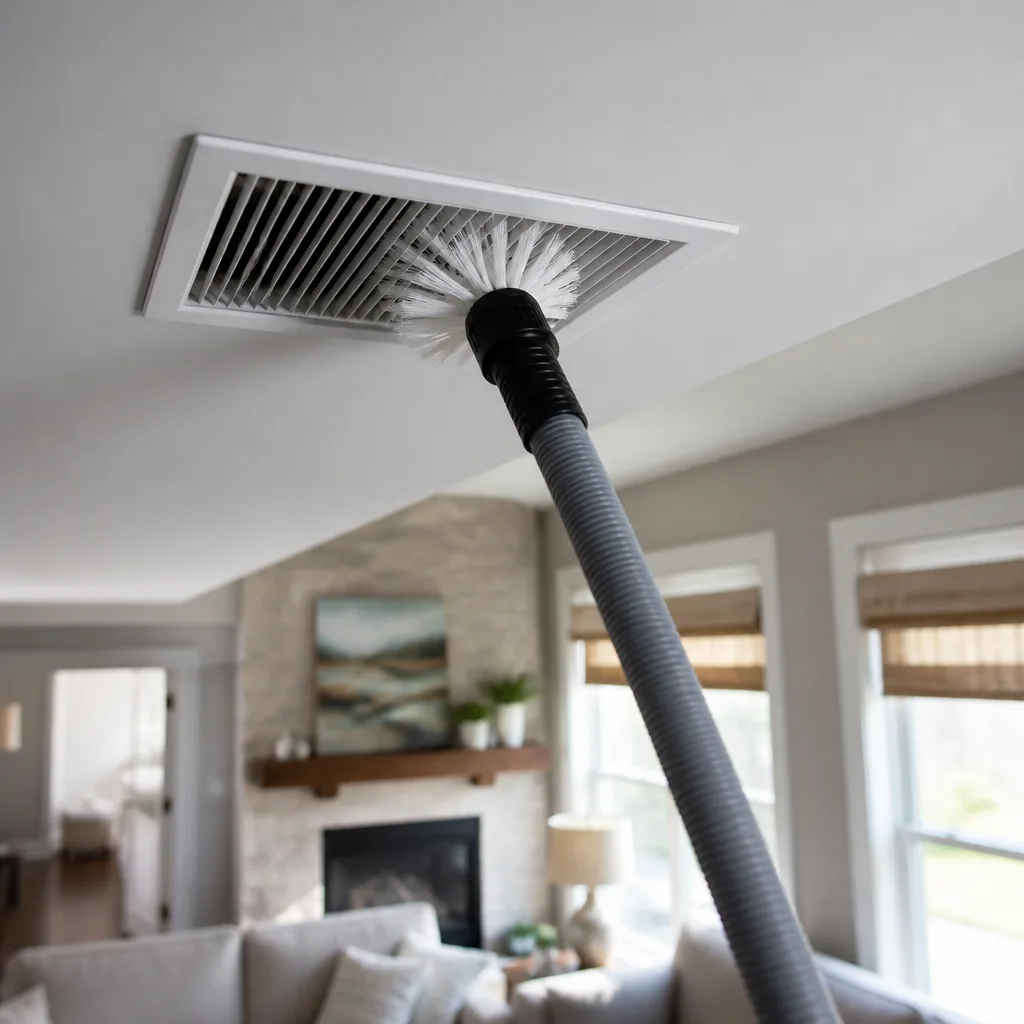 Sanitizing & deodorizing
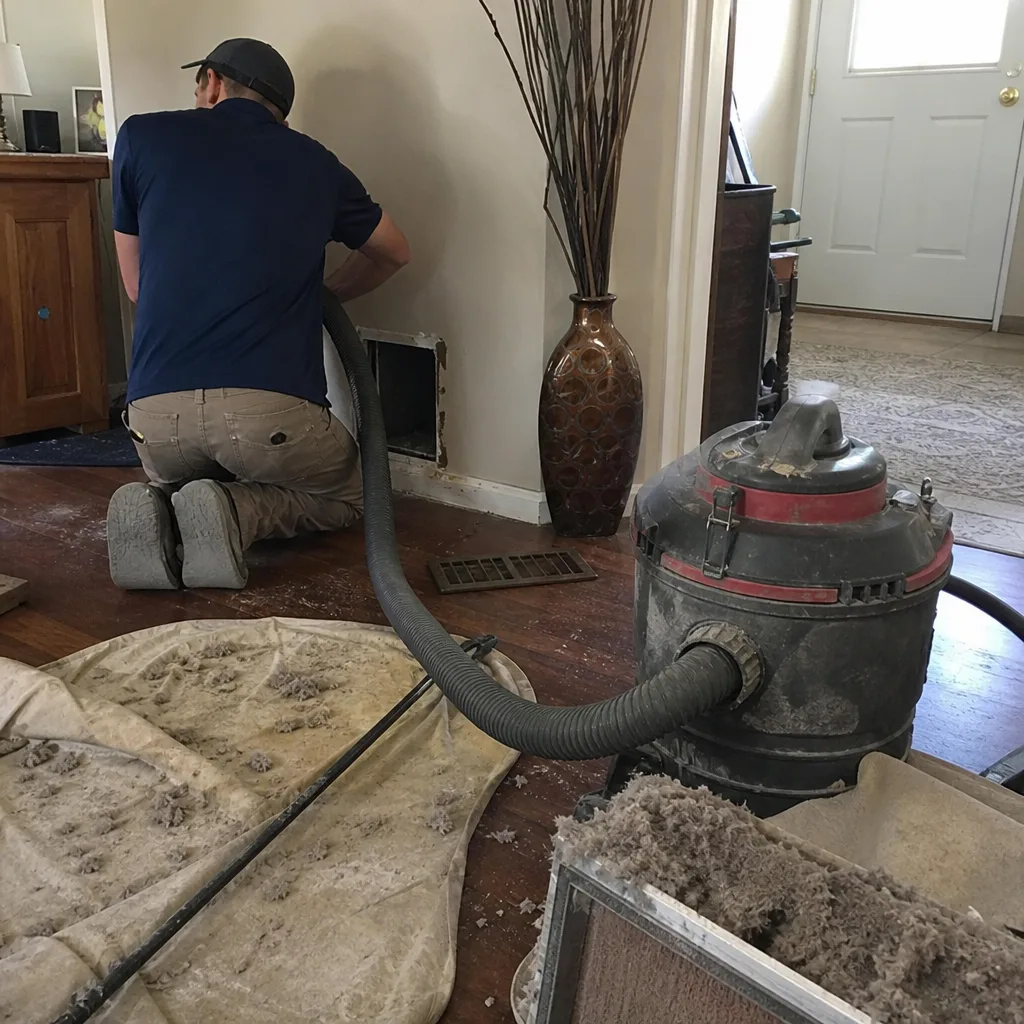
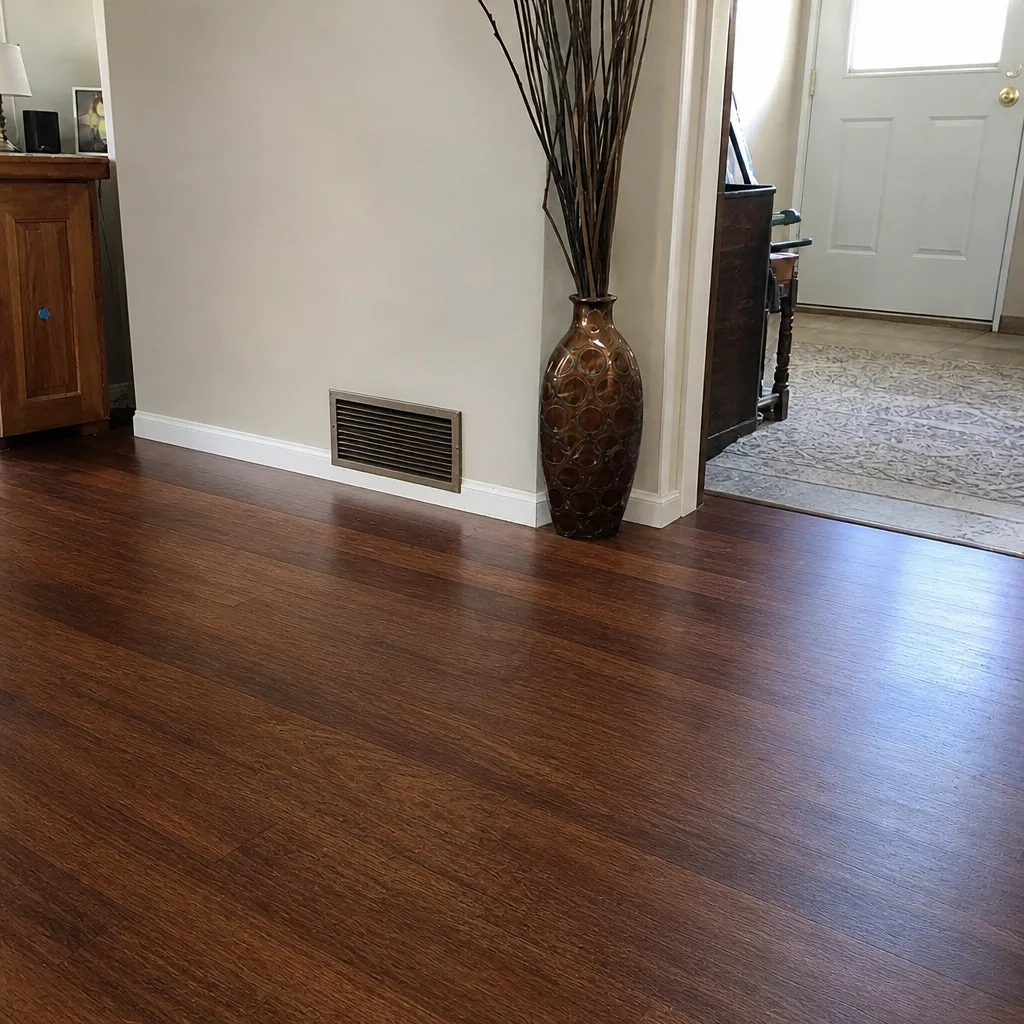
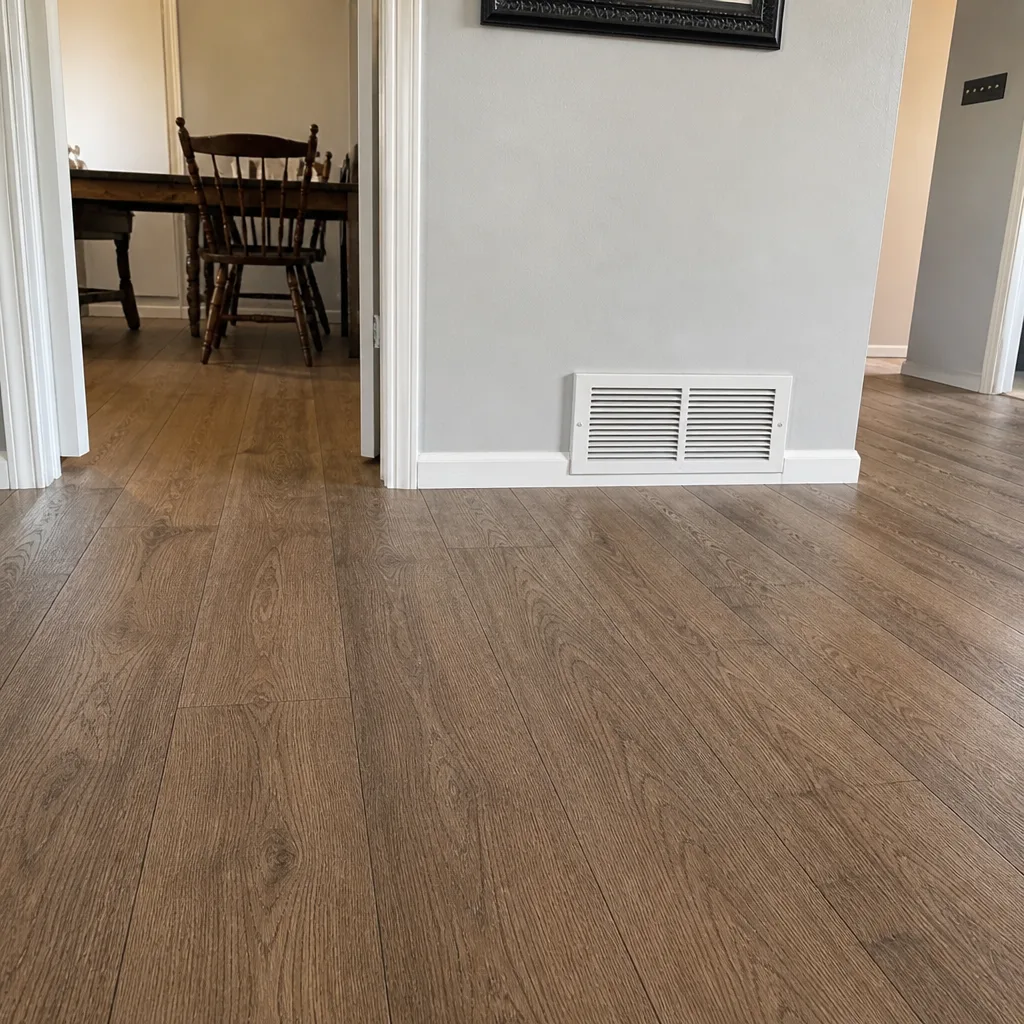
Whole-system duct and dryer vent check with before-and-after photos - you see exactly what came out of your vents
That "$99 whole-house special" is a bait ad - the real number appears once they are in your hallway, or the "clean" is a shop-vac at the register. We photograph the inside of your ducts before and after instead.
The Complete Guide to Air Duct Cleaning in West Jordan
Most homeowners assume that anyone who shows up with a hose and a vacuum is doing the same job. They’re not. A proper duct cleaning uses negative pressure strong enough to pull debris out of the system while a rotary brush physically scrubs the duct walls, and those two things have to happen together. A shop vac with a flex hose does neither well; it stirs up what’s already settled and leaves the rest. In this guide we’ll walk you through exactly what professional-grade equipment looks like, which access points a technician has to open in a typical West Jordan home, why Utah’s inversion seasons make duct contamination here different from other parts of the country, and what a real post-cleaning inspection should confirm before anyone packs up and drives away.
Quick Answer
A legitimate air duct cleaning in West Jordan involves three things: a rotary brush system that agitates debris off the duct walls, HEPA-rated negative-air extraction that pulls that debris out of the system rather than into your living room, and a post-cleaning verification that includes airflow checks, not just a look inside with a flashlight. If a company can’t tell you what equipment they’re running and where they’ll be cutting access, that’s your answer about how the job will go.
Styles & brands we work with
- Whole-home duct cleaning
- Dryer vent cleaning
- Camera inspection
- Sanitizing & deodorizing
Table of Contents
- What Professional-Grade Duct Cleaning Actually Looks Like
- The Access Points a Technician Has to Open
- How Jordan Valley Dust and Inversion Seasons Affect Your Ducts
- What a Post-Cleaning Inspection Should Verify
- Why Dryer Vent Inspection Belongs in Every Complete Service
- When Cleaning Isn’t Enough and Duct Repair Is the Real Fix
- What Air Duct Cleaning Costs in West Jordan
- How to Choose a Duct Cleaning Company in West Jordan
What Professional-Grade Duct Cleaning Actually Looks Like
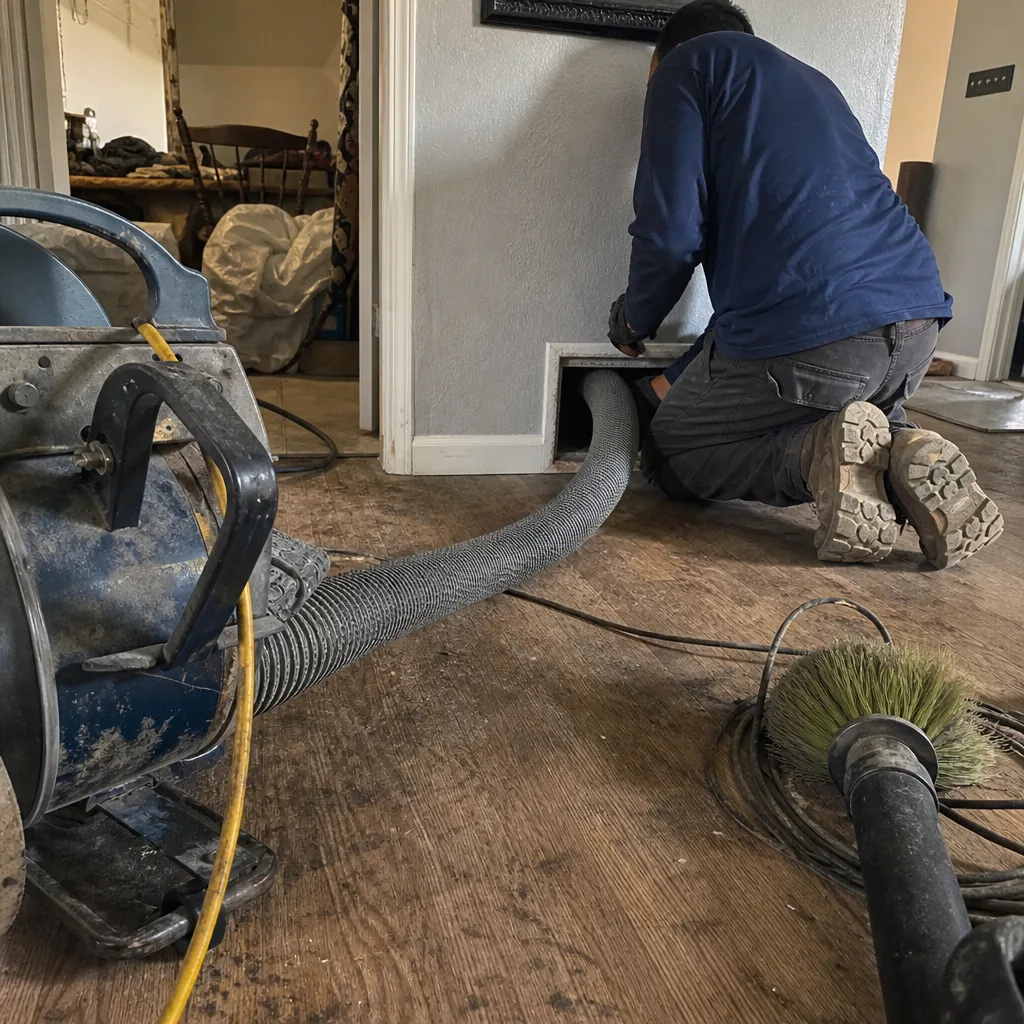
Professional duct cleaning starts with two pieces of equipment working in tandem: a rotary brush system and a high-capacity negative-air machine. The rotary brush is a motorized, spinning brush head on a flexible shaft that travels through the duct run, physically scouring dust, debris, and buildup off the interior walls. Without that agitation, dust that’s bonded to the duct lining stays put no matter how much suction you apply. The negative-air machine creates a pressure differential that pulls loosened debris toward the collection point instead of letting it drift into the rooms you live in.
We run Rotobrush systems for rotary brush cleaning and Nikro equipment for HEPA-rated negative-air extraction. Those names matter because they’re purpose-built for duct work. Rotobrush is the duct industry’s standard rotary brush platform, and Nikro is a name professional indoor air quality contractors know for HEPA filtration and containment. When you see a company advertise “professional equipment,” ask them directly: what brand of brush system, what brand of extraction unit, and what level of filtration does the vacuum exhaust use? If the answer is vague, the equipment probably is too.
Here’s what separates real professional equipment from consumer gear dressed up as pro:
- Airflow capacity. Purpose-built extraction units move enough air to maintain negative pressure across a whole system. A shop vac moves a fraction of that and loses suction quickly as its filter loads up.
- Filtration at the exhaust. HEPA-rated filtration means the air leaving the machine is clean, not just the air entering it. That’s the difference between extraction and redistribution.
- Rotary agitation. A spinning brush head contacts the duct walls. A hose and nozzle only reaches what’s already loose.
- Containment and filtration systems. Equipment from Abatement Technologies is the industry standard for filtration and containment on jobs where dust control has to be managed carefully. It signals that a contractor takes indoor air quality seriously beyond the duct itself.
For a deeper look at the service itself, see our air duct cleaning page. The equipment list is the single most reliable way to tell a real job from a pretend one.
The Access Points a Technician Has to Open
A duct cleaning technician cannot clean what they cannot reach, and in most West Jordan homes the system doesn’t come with ready access. A real job involves cutting and then resealing access holes at strategic points. If a company tells you they’ll clean “through the registers” and nothing else, they’re only hitting the last few feet of each branch run. That’s not a cleaning; that’s a surface wipe.
The access points a proper job typically requires:
- The main trunk line. One or more access ports get cut into the main supply trunk, usually near the air handler and at the far end of the run. This is where the rotary brush enters and where the negative-air connection attaches.
- Branch runs. In homes with a truss-framed attic and flexible branch ducts, technicians often need to access individual runs to insert the brush head. In slab-floor configurations with in-floor ductwork, access goes through the floor registers and any accessible plenum.
- The return side. Returns pull air back to the furnace or air handler and collect a large share of household dust. They need their own access ports, usually at the return plenum and at the return grilles.
- The air handler or furnace cabinet. The blower compartment and evaporator coil area collect dust. Cleaning the ducts without addressing the air handler leaves the source of much of the contamination untouched.
- Access port resealing. Every hole cut gets sealed afterward. Ask what they use: proper foil tape or a mechanical cap is standard, and anything less leaves a leak in a system that’s supposed to be sealed.
Truss-framed attics are common in newer West Jordan neighborhoods, and they can make routing the brush shaft more involved than in an older home with a wide-open attic. Slab-on-grade homes have their own complication: the supply ducts are buried, so the reachable ductwork is the trunk and the branch stubs that come up to each register. A technician who knows the difference will tell you up front which parts of your system can be cleaned and which can’t, before the truck is even unloaded.
How Jordan Valley Dust and Inversion Seasons Affect Your Ducts
Duct contamination isn’t the same everywhere. In a humid coastal climate, moisture and mold are the main concerns. In the Salt Lake Valley and the west-side communities around it, the dominant issue is fine particulate dust, and it builds up for reasons that are specific to this geography.
West Jordan sits in the Jordan Valley, west of the Wasatch Range. Several things converge here. First, the valley floor is naturally dusty: wind picks up fine soil and mineral particulate from the west desert and surrounding dry ground. Second, winter inversions trap cold air and particulate in the valley under a layer of warmer air above, which means the fine dust that would normally disperse stays at ground level for days or weeks at a time. Third, new construction on the west side of the valley generates its own particulate load, and homes near active construction pull that dust into their HVAC systems at a higher rate.
What that means for your ductwork:
- Fine dust coats duct walls in a thin, sticky layer that a shop vac won’t dislodge. Rotary brush agitation is what breaks it loose.
- Filter maintenance matters more here. A filter that’s adequate in a wetter climate loads faster in the Jordan Valley, and a loaded filter drives dust past the filter frame and into the ductwork.
- Inversion-season dust accumulates and then gets pushed through the system when heating season begins. The first cold snap of the year often pushes a season’s worth of settled particulate into the air of a home.
- Dry air contributes to static and dust suspension. Low humidity keeps fine particles airborne longer, which makes the ductwork and the air filter the only real catch points.
Salt Lake Valley duct contamination is a fine-particulate story, not a moisture or mold story. That changes which equipment matters and how often a system needs attention. We’ve found that homes in West Jordan often benefit from duct cleaning on a shorter interval than what’s recommended in the national guidelines, precisely because of the particulate load. To understand what’s happening in your specific home, our Duct Cleaning West Jordan page is a good starting point.
What a Post-Cleaning Inspection Should Verify
The biggest gap between a real duct cleaning and a fake one is what happens after the cleaning. A legitimate job includes verification. A less legitimate one includes a flashlight, a nod, and an invoice.
A proper post-cleaning inspection should confirm five things:
- Visual confirmation with a camera. Many professional setups include a duct camera that lets the technician (and you) see the interior of the ductwork before and after. Ask to see the before-and-after footage. If the company can’t provide it, you don’t have proof the work was done.
- Airflow measurement. A technician should check airflow at the registers, typically with a balometer or anemometer, before and after. This confirms that the system is flowing more freely, not just that the ducts look cleaner.
- Access port inspection. Every port cut into the ductwork should be properly sealed. A technician should walk the system and confirm each one.
- Air handler and coil check. The blower compartment, evaporator coil, and drain pan should be visibly cleaner than when the job started. Dust that collects here circulates back into your home.
- Filter replacement or recommendation. A cleaning that leaves a loaded filter in place is a job half done.
Ask up front: “Will you walk me through the after photos and the airflow readings?” The response tells you a lot. A technician who expects to be held accountable plans for it. Duct cleaning in West Jordan should be something you can verify, not something you have to take on faith.
Why Dryer Vent Inspection Belongs in Every Complete Service
Most homeowners think of dryer vent cleaning as an optional add-on. It isn’t. A dryer vent is the one part of a home’s ventilation that lint can actually block completely, and when it does, the consequences are serious. Dryer fires are among the leading causes of home fires nationally, and lint buildup in the vent is the common cause.
We treat dryer vent cleaning as its own dedicated service, not a checkbox tacked onto the end of a duct cleaning appointment. That’s a meaningful distinction. A five-minute brush-down through the flexible connector doesn’t clean the full length of the vent run, and the most dangerous blockages are usually farther along: at elbows, at the transition from the dryer to the wall, and at the exterior vent hood. A dedicated service means the technician runs the full length of the vent from the back of the appliance to the outside cap.
What a proper dryer vent service includes:
- Full-length cleaning from the appliance connection to the exterior termination.
- Elbow and transition clearing, since lint collects at every change of direction.
- Exterior vent hood inspection. A stuck flapper or a crushed hood is a common catch.
- Flexible duct inspection for kinks or crushing behind the appliance.
- Airflow check. A dryer that’s running hot, drying slowly, or leaving clothes damp at the end of a cycle is telling you something.
Because West Jordan homes often vent dryers through flexible or semi-rigid ducting that runs a decent distance from the appliance to an exterior wall, the total length of the run matters. Every extra foot is extra lint capacity. If your dryer vent has never been professionally cleaned, or if you can’t remember the last time it was, that’s reason enough to have it looked at.
When Cleaning Isn’t Enough and Duct Repair Is the Real Fix
Cleaning an already-compromised duct system is a waste of money. If the ducts are disconnected, crushed, torn, or leaking at the joints, the cleaning is happening in a system that will just re-contaminate itself from attic dust and return-side infiltration. That’s why we offer duct repair as a dedicated service rather than cleaning around the problem and letting you discover it six months later.
The problems that call for duct repair rather than cleaning:
- Disconnected or separated joints. Flexible duct sections come apart, especially in attic runs where thermal cycling loosens connections. Every disconnected joint is a dust intake.
- Crushed or collapsed duct runs. A duct that’s been stepped on, pinched behind a unit, or collapsed under attic insulation can’t carry the airflow it was designed for.
- Torn or unsealed duct lining. Flex duct can tear; the inner liner can separate from the outer jacket. Once the barrier is gone, the duct is drawing air from wherever it’s routed.
- Poorly sealed transitions and plenums. Every gap at a plenum or a trunk transition leaks air, which changes your pressure balance and pulls in unfiltered air.
- Register boots that don’t seal to the drywall. A gap around a register boot is a direct path from the attic or wall cavity into the living space.
When a technician is inside your ductwork anyway, they can see what the system’s real condition is. If the ducts are sound, they’re cleaned and that’s the end of it. If they’re not, we tell you what’s wrong and repair it before the cleaning becomes pointless. That’s the full-picture approach: clean what’s cleanable, fix what’s broken, and confirm both.
What Air Duct Cleaning Costs in West Jordan
Air duct cleaning is priced per system, not per vent. That one fact explains most of the sticker shock people experience when they compare quotes. A per-vent price sounds cheap until a technician walks the house and counts every register. A real quote is a whole-system price, agreed before any work begins, based on the size and configuration of the system.
Typical ranges for a residential air duct cleaning in West Jordan look roughly like this:
- Standard whole-home duct cleaning (typical single-family home, standard attic or basement configuration): roughly $300 to $500 for the full system, depending on system size and access.
- Duct cleaning plus dryer vent cleaning: generally $400 to $650 combined, when both are done in one visit.
- Dryer vent cleaning as a standalone service: roughly $100 to $200, depending on the length and accessibility of the vent run.
- Duct repair (additional, priced separately): quoted after the technician identifies what’s actually wrong with the ductwork.
Those ranges are typical, not fixed. The written estimate is what sets the final price. The most important thing to understand about cost is this: a quote that seems too low to cover the equipment and labor for a proper job is almost never a bargain. It’s an opening offer, and the real number comes after the technician is on site. A flat, whole-system price agreed before the work starts is the way to avoid that trap.
For more on pricing, or to get a written estimate, call (888) 351-4348. Estimates are free.
How to Choose a Duct Cleaning Company in West Jordan
Choosing a duct cleaning company in West Jordan comes down to asking better questions than “how much?” The price question is easy to answer; the equipment and accountability questions are the ones that reveal what kind of job you’re actually buying.
Ask these five questions before you book:
- What specific equipment do you use? “Rotobrush and Nikro” is an answer. “Advanced professional equipment” is not. If they can’t name the machinery, ask again.
- Do you cut access ports, and how do you reseal them? A company that only cleans through the registers is doing a partial job.
- Will I see before-and-after photos or video of my own ducts? Proof of the work is the whole conversation. Before-and-after footage of your own system is not optional in a good job.
- Is the price per system or per vent? Per-vent pricing almost always increases once a technician is on site. Per-system pricing with a written estimate is the standard that protects you.
- Do you offer duct repair as a separate service? A company that can’t fix problems it finds will clean around them. That’s not what you want when you’re paying for a solution.
One more question worth asking: do they understand whole-home air quality beyond the duct itself? We’re familiar with Honeywell, Aprilaire, and Guardsman air quality products, which means we can talk about filtration, humidification, and air treatment as part of the same conversation. If a company only talks about ducts, they’re only solving part of the problem.
You can browse our service area and learn more about us on the West Jordan page. Our technicians have up to 11 years of experience, and they’re equipped for this work specifically.
Common Mistakes to Avoid
- Hiring on price alone. The lowest quote in the Jordan Valley is usually the one that grows the most once a technician is standing in your hallway. A per-system written estimate from a company with real equipment is what you’re looking for.
- Believing a technician who cleans only through the registers. If the only thing opened is the supply and return grilles, the trunk line and air handler never got cleaned. Ask where the access ports will be cut.
- Accepting a “before and after” from a phone gallery. Photos from another job prove nothing about yours. Ask for before-and-after evidence of your own system, not a demonstration.
- Skipping the dryer vent. Lint in the vent is a fire risk, and a partial cleaning of the flexible connector doesn’t clear the whole run. Make sure the technician cleans from the appliance to the exterior cap.
- Cleaning a duct system with disconnected or crushed runs. Cleaning without repair just re-contaminates the system. Insist that duct repair be available as part of the service, and have the technician check the ductwork’s condition as part of the job.
- Ignoring the air handler and coil. The blower compartment and evaporator coil collect dust too. A cleaning that stops at the duct openings leaves a major source untouched.
- Settling for a vague answer on equipment. “We use professional equipment” tells you nothing. Ask for brand names, and expect a specific answer.
See the difference
 Before
 After
 Before
 After
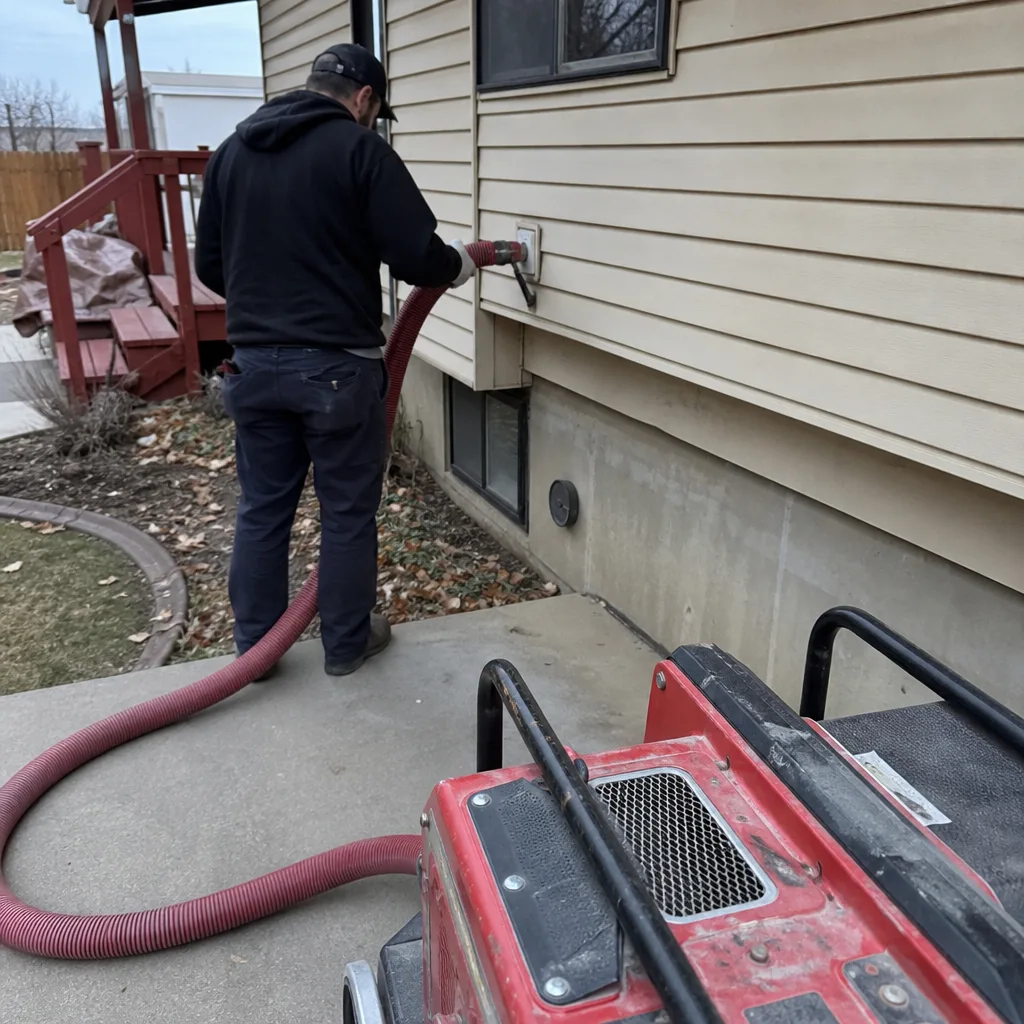 Before
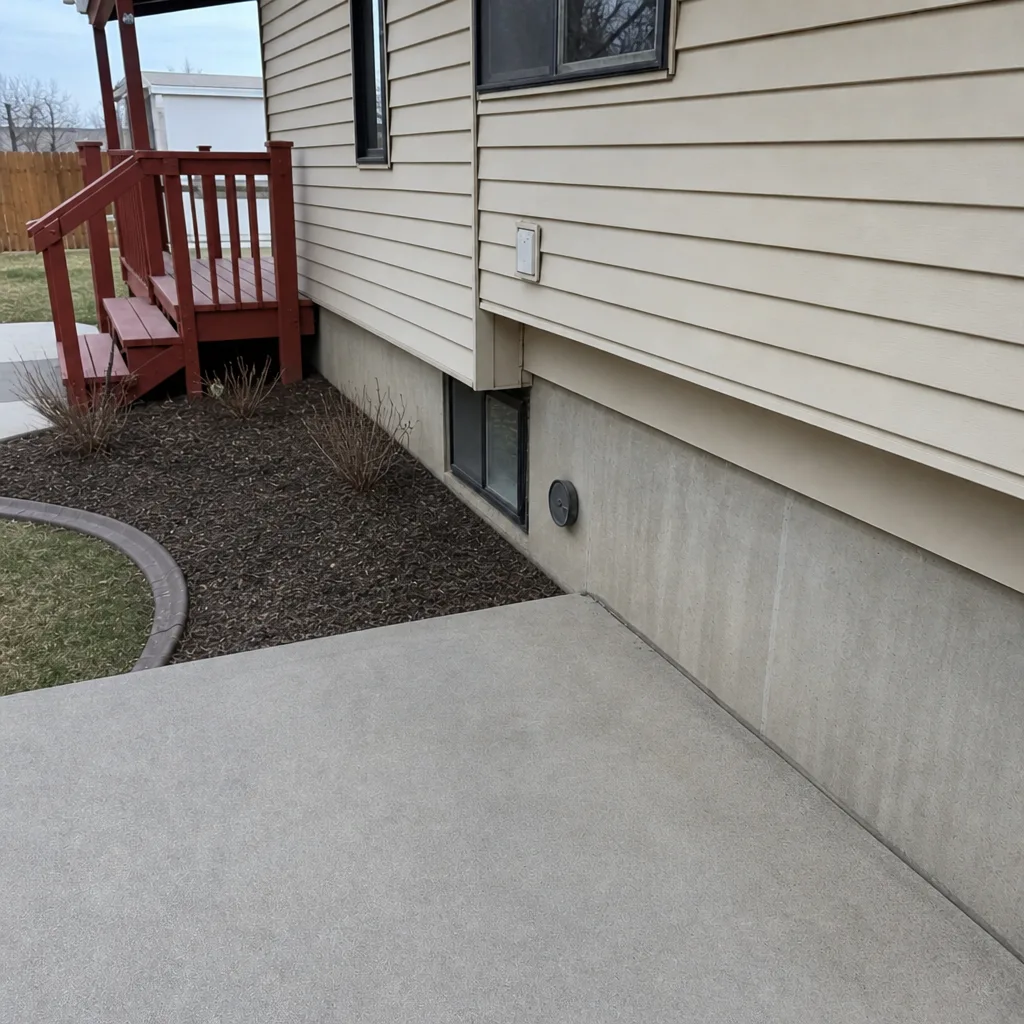 After
When to Call a Professional
If you’re seeing a visible dust film on furniture within a day or two of cleaning, if every family member’s allergies seem worse inside the house than outside it, or if the airflow from certain registers is noticeably weaker than others, the ductwork is worth inspecting. A musty or dusty smell when the furnace or air conditioning kicks on is another sign. A dryer that leaves clothes damp at the end of a normal cycle, or that gets too hot to touch on the exterior, is a dryer vent issue rather than a duct issue, but both belong in the same service. Duct Cleaning West Jordan offers free estimates in West Jordan. Call (888) 351-4348 and we’ll walk you through what the job involves. We answer 24/7, and we dispatch technicians from 7am to 7pm, Sunday through Friday.
Frequently Asked Questions
A standard whole-home air duct cleaning in West Jordan typically runs roughly $300 to $500 per system, depending on the size of the home and the duct configuration. Adding dryer vent cleaning in the same visit usually brings the combined total to roughly $400 to $650. These are typical ranges, not quotes; the written estimate sets the final price. Call (888) 351-4348 for an exact quote; estimates are free.
Because they’re for a different job. A low quote is often priced per vent and can climb once the technician starts counting registers, or it reflects a shop vac setup that doesn’t agitate the duct walls or hold negative pressure. A real professional job uses rotary brush equipment and HEPA extraction, and it’s priced as one flat system price in a written estimate before any work begins. Ask what equipment is used and whether the price is per system or per vent. Call (888) 351-4348 if you want the full-system price up front.
You should see before-and-after photos or video of your own ducts, and the technician should check airflow at the registers before and after the cleaning. Visual confirmation inside the duct, combined with an airflow measurement and a walkthrough of the sealed access ports, is what separates a verified job from a claim. Ask to see the evidence on your own system. Call (888) 351-4348 to schedule an inspection.
It depends on the home and the dust load. National guidelines generally suggest every three to five years for a typical home, but Jordan Valley particulate levels, inversion seasons, and nearby construction can load a West Jordan system faster than that. Homes with pets, recent remodeling, or visible dust on the registers benefit from a shorter interval. If you’re unsure, a quick inspection will tell you whether the system actually needs cleaning. Call (888) 351-4348 and we’ll help you decide.
Yes, and it should be treated as its own service, not an add-on. A dryer vent runs from the appliance to an exterior wall, and lint collects at every elbow and transition along the way. A technician who only clears the flexible connector isn’t cleaning the full run. Dryer vent cleaning should be done from the back of the appliance to the exterior cap, with an inspection of the termination. If it’s been a while, call (888) 351-4348 to schedule it.
Duct repair addresses disconnected joints, crushed or collapsed runs, torn duct lining, unsealed transitions, and register boots that aren’t sealed to the drywall. You need it when the ductwork can’t hold pressure or is drawing unfiltered air, because cleaning a compromised system just re-contaminates it. A technician can check the ducts during the cleaning and tell you whether repair is needed. Call (888) 351-4348 for a free estimate on the full job.
The Bottom Line
A proper air duct cleaning in West Jordan comes down to equipment, access, and verification. The equipment should be rotary brush and HEPA extraction systems like Rotobrush and Nikro, not a shop vac dressed up as professional gear. The access should be cut and resealed trunk lines, branch runs, returns, and air handler ports, not just a pass through the registers. The verification should be before-and-after evidence of your own system plus an airflow check. And any found problems in the ductwork should be repairable on the same job. If a company can’t speak to all three, keep looking. Call (888) 351-4348 for a free estimate. We answer 24/7, and fast dispatch is available from 7am to 7pm, Sunday through Friday.
Written by the team at Duct Cleaning West Jordan.